
.png?width=1920&height=1080&name=VERSUS%20(1).png)
What Matters Most
|
You've probably seen fiberglass tubs and showers everywhere, but you're not sure how well they hold up. Then there’s BP-Cor2, a shower material most homeowners have never heard of. How does each shower material compare?
Shugarman's Bath has completed more than 6,500 tub and shower remodels using BP-Cor2 materials. We don't install fiberglass. However, we want to do a fair comparison of each option so you can determine which material works best for you.
This article compares BP-Cor2 and fiberglass side by side on cost, installation, durability, and cleaning. You’ll see which option works for your lifestyle and budget.
Table of Contents:
- What Is Fiberglass, and Where Is It Still Used Today?
- What Is BP-Cor2? What Is It Made Of?
- How Do BP-Cor2 and Fiberglass Compare In Cost?
- How Does Installation Differ Between the Two Materials?
- How Do BP-Cor2 and Fiberglass Hold Up to Scratches and Wear?
- How Do BP-Cor2 and Fiberglass Compare on Cleaning and Maintenance Over Time?
- Can a Fiberglass Tub or Shower Be Refinished Instead of Replaced?
What Is Fiberglass, and Where Is It Still Used Today?
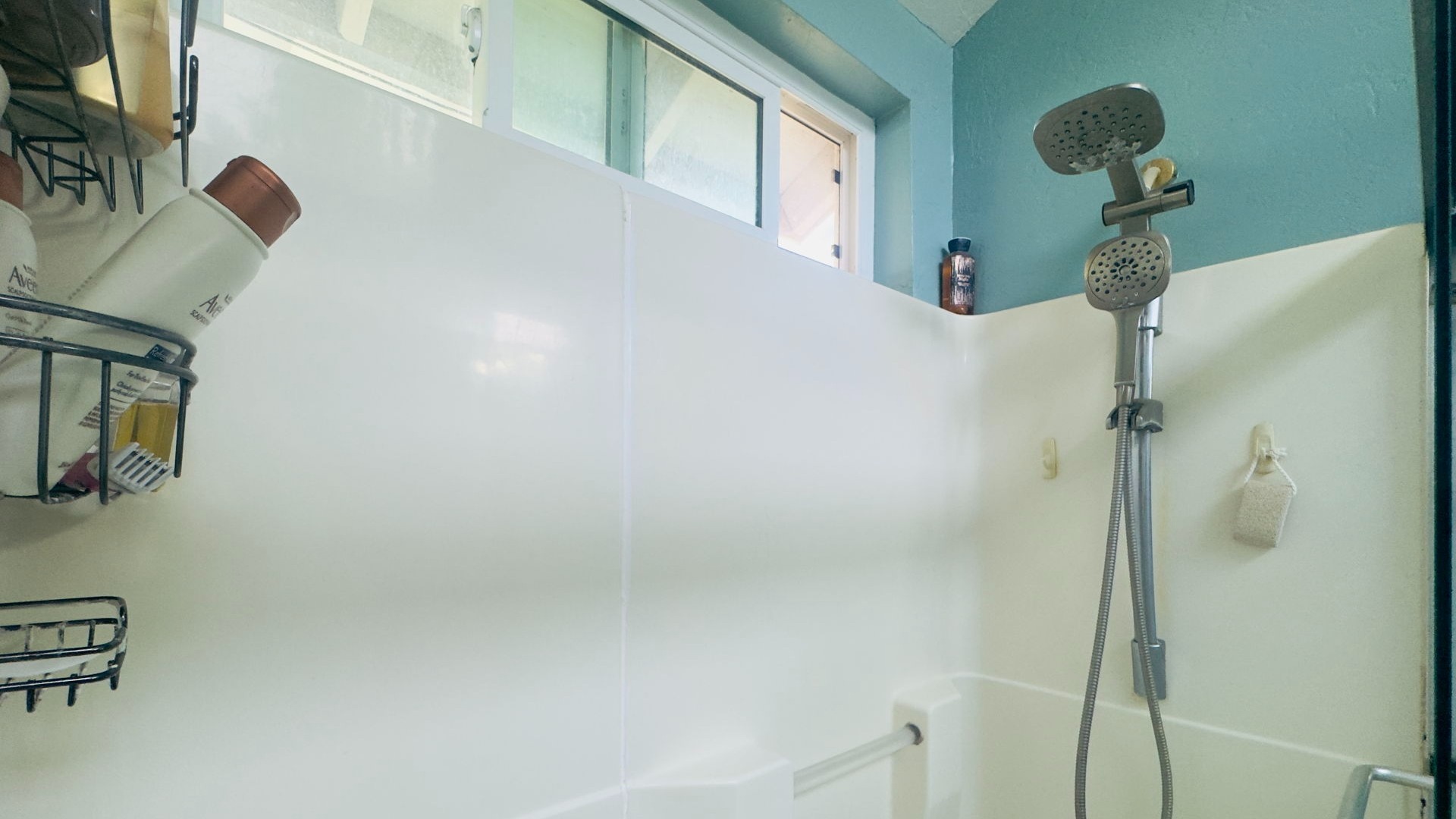
Fiberglass is a lightweight material made from woven glass fibers set in resin. It is coated with a thin, glossy gel coat. That gel coat is what gives a new fiberglass tub or shower its shiny look.
Fiberglass usually shows up in new home construction. Builders use it since it’s cheaper and looks okay on day one.
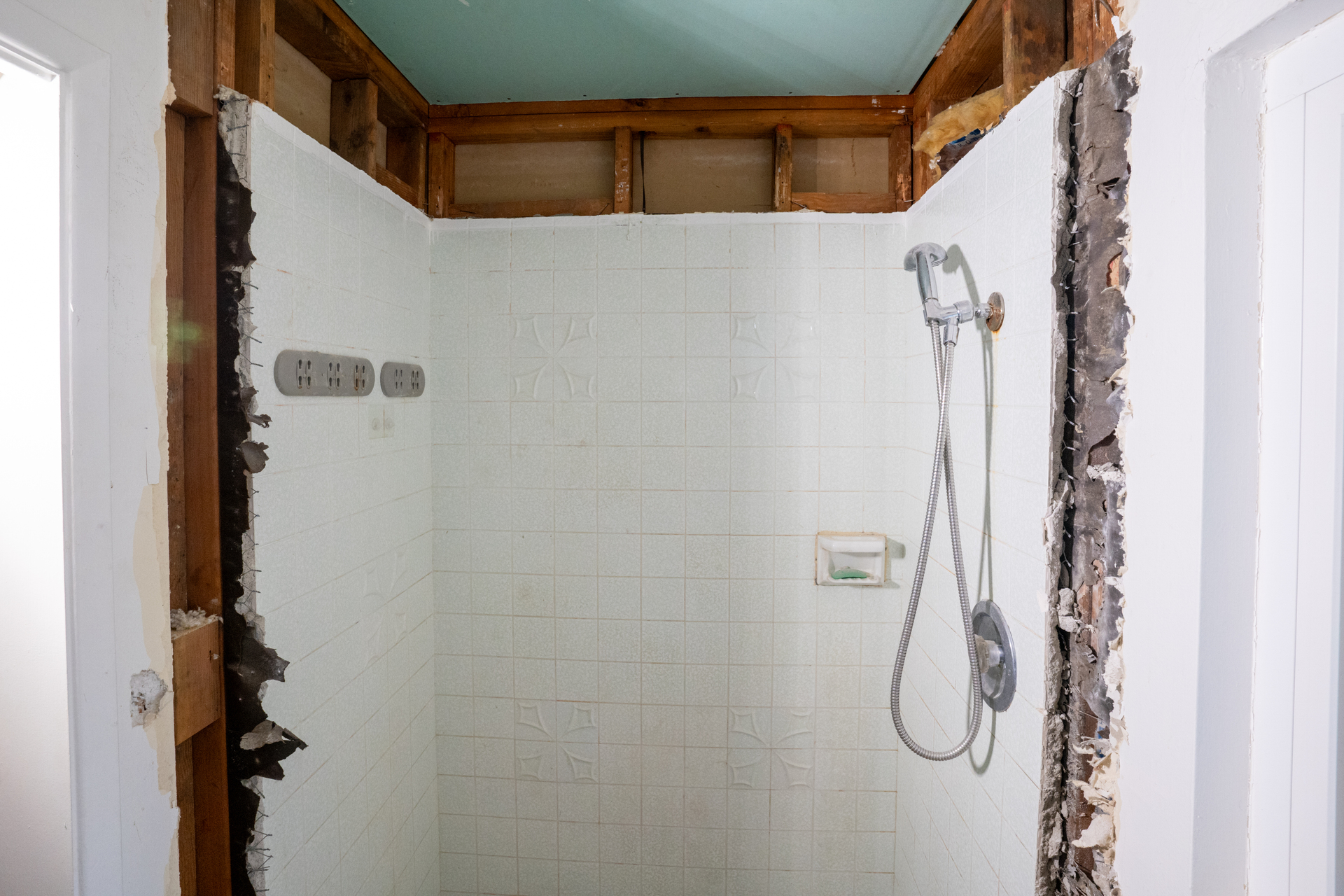
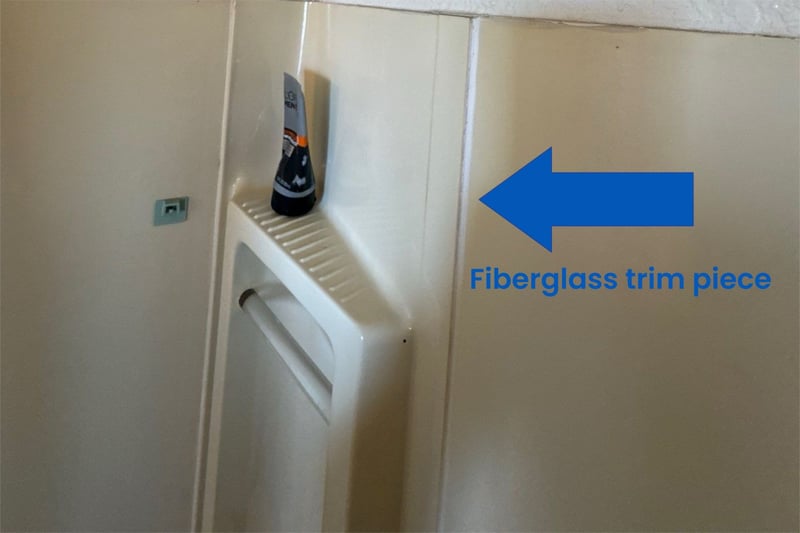
When fiberglass is used on a remodel, it usually comes as a multi-piece system with a base and several wall panels. Each seam requires a trim piece to cover the gaps.
What is BP-Cor2? What Is It Made Of?
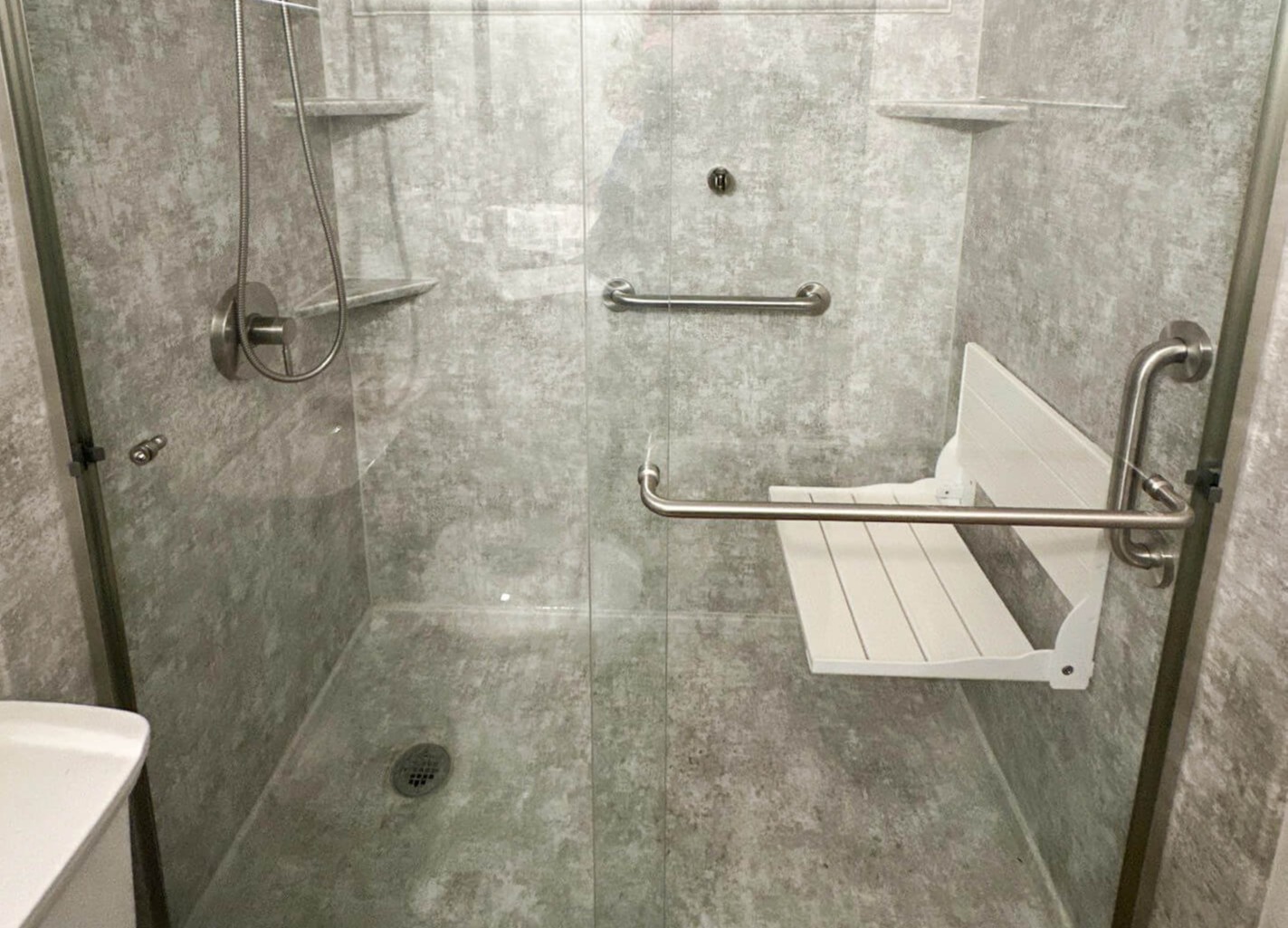
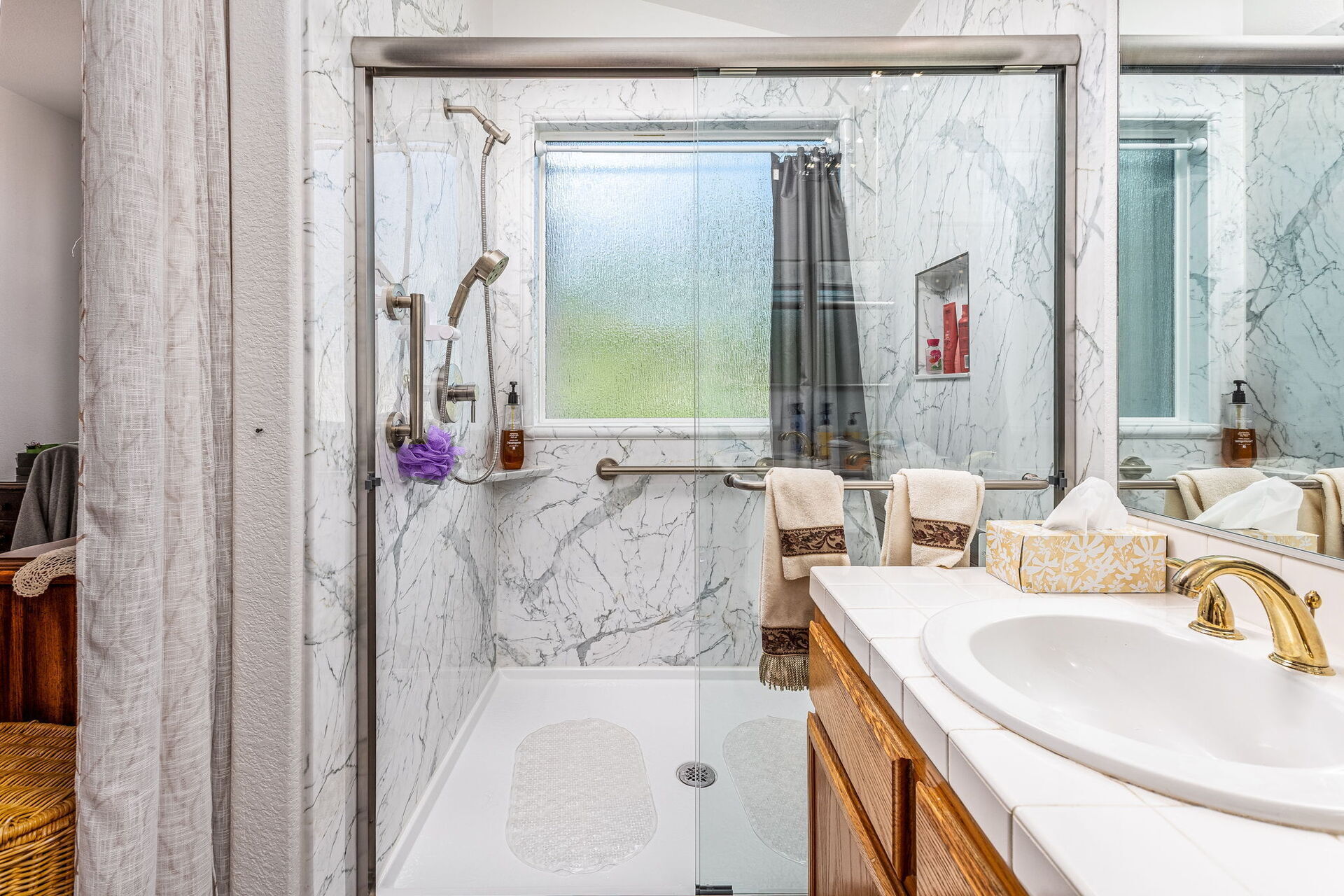
BP-Cor2 is a solid-surface material designed to withstand the conditions in the tub and shower area, handling temperature fluctuations, moisture, and movement inside the space.
It is made of about 85% ABS, the same impact-resistant material used in things like car bumpers. It’s the portion that gives the material strength and flexibility. The remaining 15% of the material is paired with a co-extruded acrylic outer layer. This layer gives the material its shine while protecting the design.
How Do BP-Cor2 and Fiberglass Compare In Cost?
The advantage fiberglass has over BP-Cor2 is cost. With the lower cost comes a shorter lifespan and limited use. Fiberglass has a shorter lifespan of 3 to 12 years. Compare that to BP-Cor2, which is designed to last 30+ years or the lifetime of the home.
Fiberglass typically starts at around $8,000 for installation. BP-Cor2 costs more upfront, running $12,500 to $22,000 or more, depending on the size and scope of the project.
|
Fiberglass |
BP-Cor2 |
|
|
Upfront Cost |
$8,000+ |
$12,500-$22,000+ |
|
Typical Lifespan |
3-12 years |
Designed to last 30+ years or the lifetime of the home. |
How Does Installation Differ Between the Two Materials?
Fiberglass needs trim pieces at every seam and corner. Trim pieces create new seams where water can eventually work its way behind the wall. Installing a new tub or shower with fiberglass typically takes 1-3 days, depending on the scope of work.
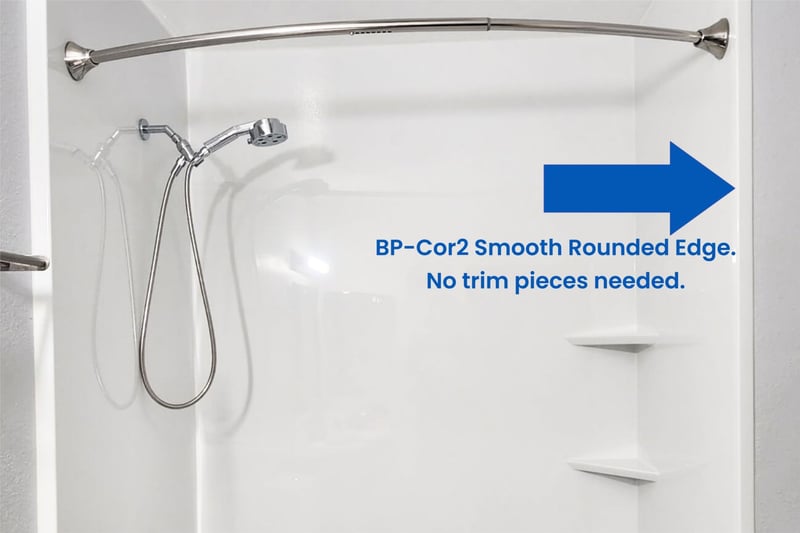
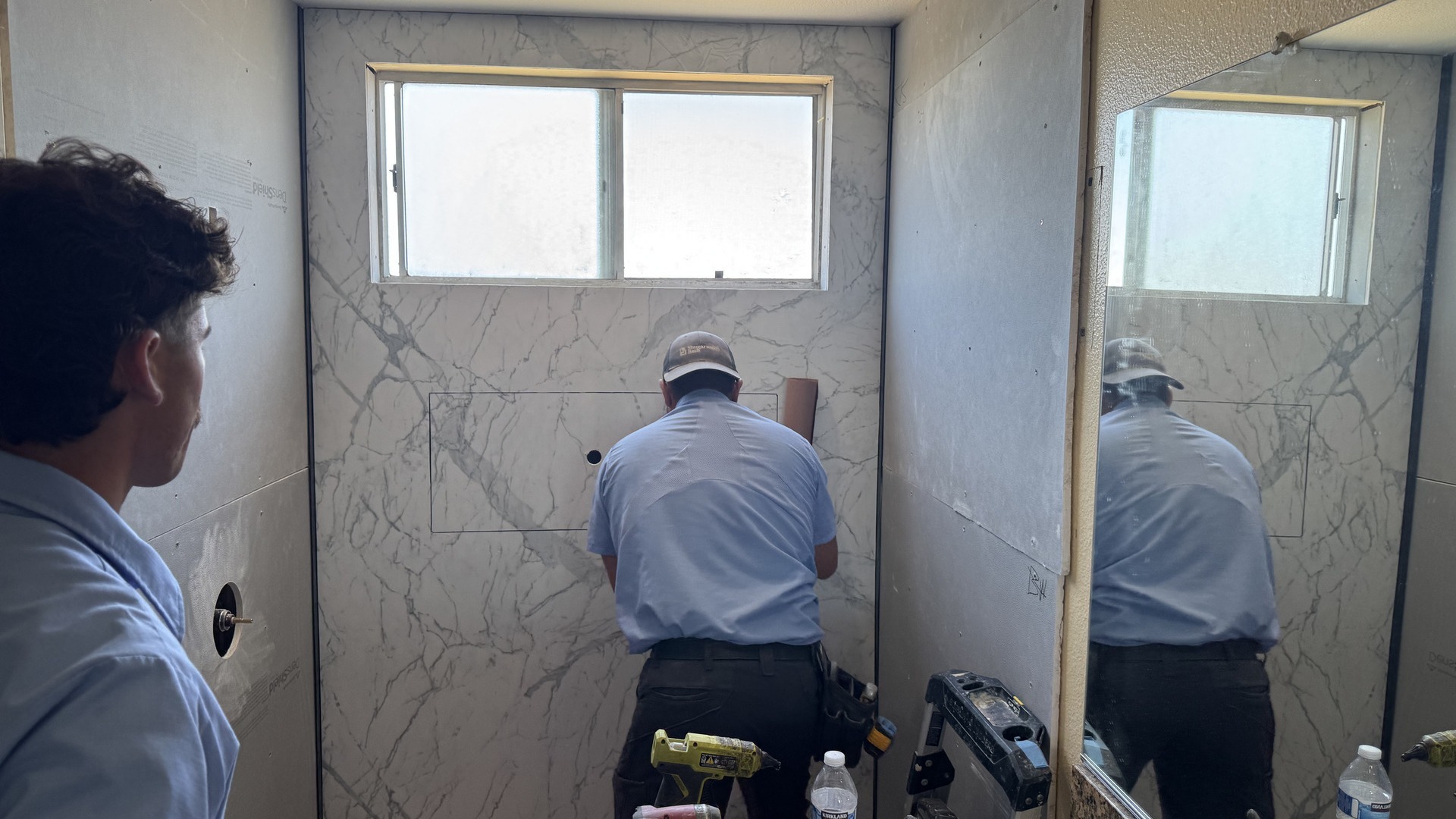
BP-Cor2 doesn't need trim pieces because the panels bend around corners on their own. Installers can create smooth, continuous corners without adding trim. Fewer seams mean fewer places for water to get in over time. Installing a new tub or shower with BP-Cor2 typically takes 1-2 days, depending on the scope of work.
|
Fiberglass |
BP-Cor2 |
|
|
Trim Pieces Needed |
Trim pieces are needed at every seam and corner. |
Does not need trim pieces since panels bend around corners. |
|
Number of Seams |
Has more seams. |
Has fewer seams. |
|
Installation Time |
Typically 1-3 days. |
Typically 1-2 days. |
|
|
|
|
How Do BP-Cor2 and Fiberglass Hold Up to Scratches and Wear?
Fiberglass scratches are permanent. Once the surface is scratched, there is no fixing it without a full refinish.
A new fiberglass installation starts with a thin gel coat that protects the surface. That coating wears down within a couple of years, especially with regular scrubbing and abrasive cleaners. The scratches will go straight into the material.
Fiberglass itself is porous, meaning it has tiny pores that soak up water, soap, oils, and minerals. The gel coating thins, causing the exposed fiberglass to absorb whatever it can and stain.
For BP-Cor2, the co-extruded outer layer protects the design. Light scratches can often be buffed out. If that surface layer does wear down, the material underneath is non-porous to begin with. It won’t stain.
|
Fiberglass |
BP-Cor2 |
|
|
Scratch Resistance |
Scratches are permanent |
Light scratches can be buffed out. |
|
Surface Protection |
Gel coat wears down, exposing a porous surface that stains permanently. |
Outer layer resists wear, and the non-porous core resists staining even if worn. |
How Do BP-Cor2 and Fiberglass Compare on Cleaning and Maintenance Over Time?
Fiberglass is easy to clean when it’s new. When the coat wears down and the pores are exposed, it stains. The stains stay there no matter how hard you scrub.
BP-Cor2 is nonporous and doesn’t have a gel coat that wears down. The surface is as easy to clean on day one as it is on year five!
|
Fiberglass |
BP-Cor2 |
|
|
Cleaning the first year |
Easy |
Easy |
|
Cleaning a few years down the line |
Difficult, staining as the gel coat deteriorates. |
As easy as year one. |
Can a Fiberglass Tub or Shower Be Refinished Instead of Replaced?
Refinishing a fiberglass tub or shower is possible, but we don’t recommend it. It’s not a long-term fix. Plus, the chemicals involved are hazardous to work with.
Refinishing tends to work best on rigid materials like porcelain or cast iron. Fiberglass tubs and shower walls are not perfectly rigid, moving slightly with everyday temperature changes and pressure. The rigid coating begins to crack. Refinishing a fiberglass tub or shower often becomes a recurring expense that you can only do a few times.
Which Material Is Best for Your Tub and Shower Area?
If you’re looking for a cheap install for the space, fiberglass can work. You might be looking to sell your home or rent it out. The issue with the cheaper fiberglass installation is that it will probably need to be replaced within a few years.
BP-Cor2 is a longer-lasting material that works well and looks as good on year five as it did on year one. Read more on our breakdown of how BP-Cor2 compares to other shower wall materials.
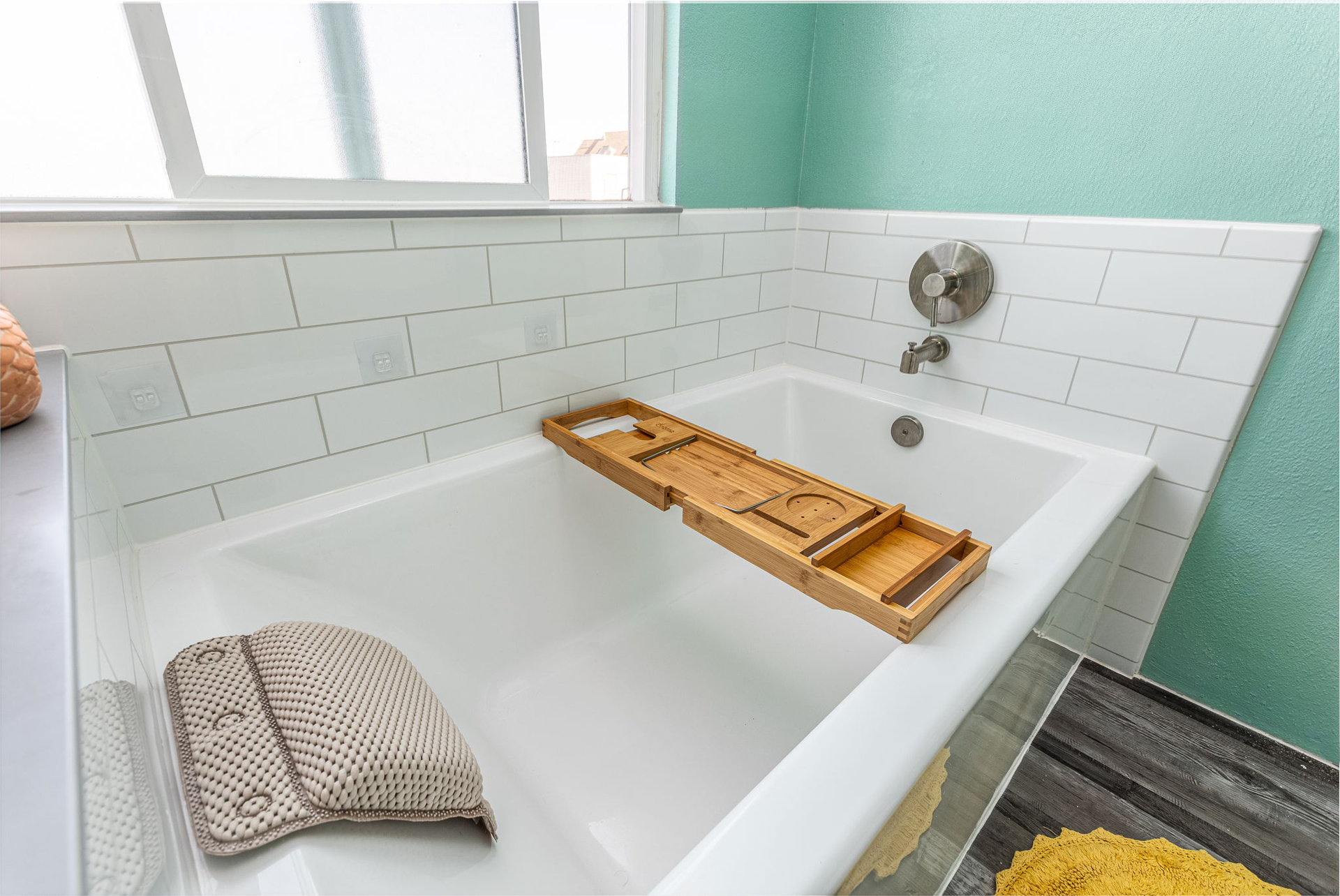
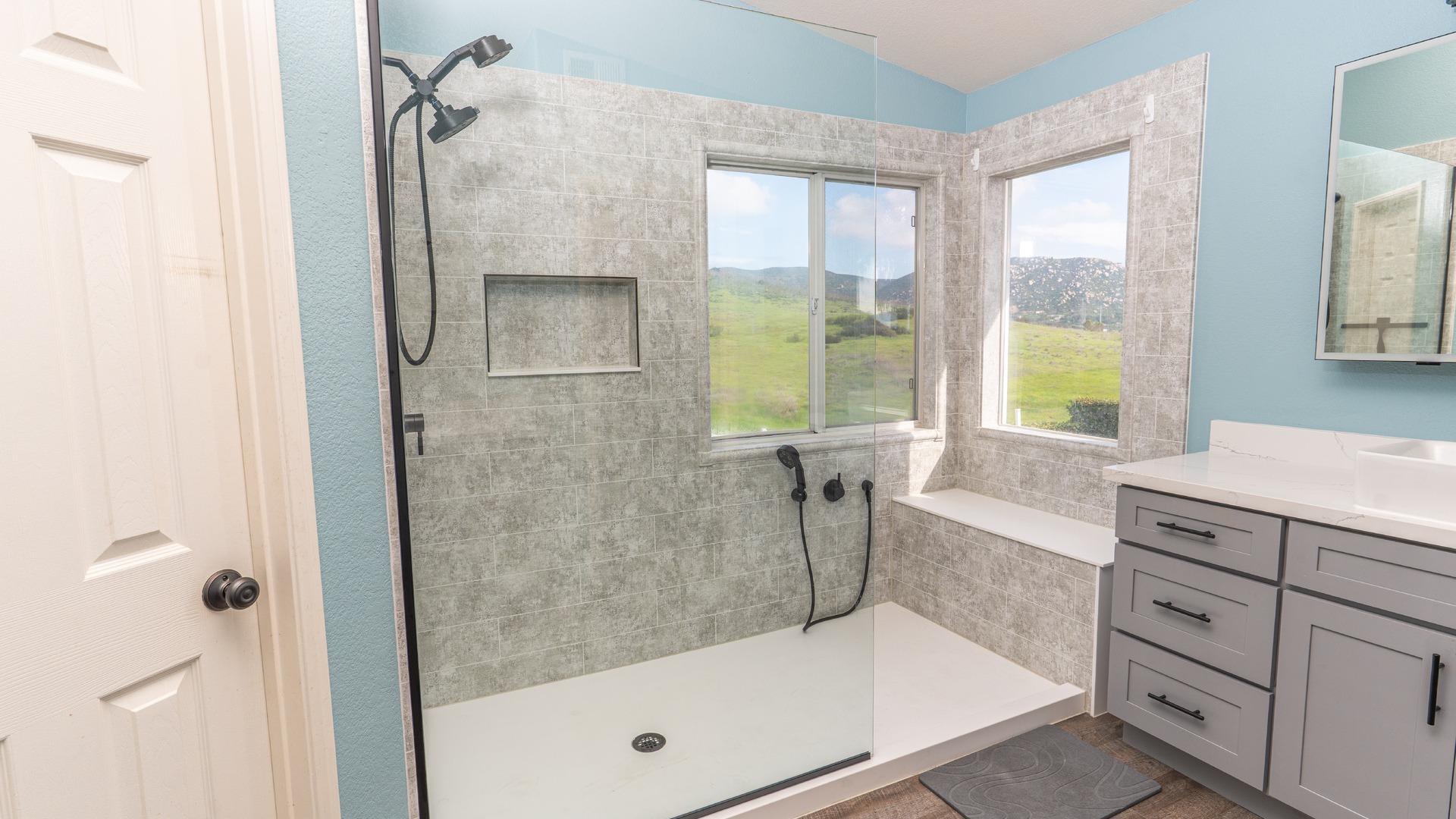
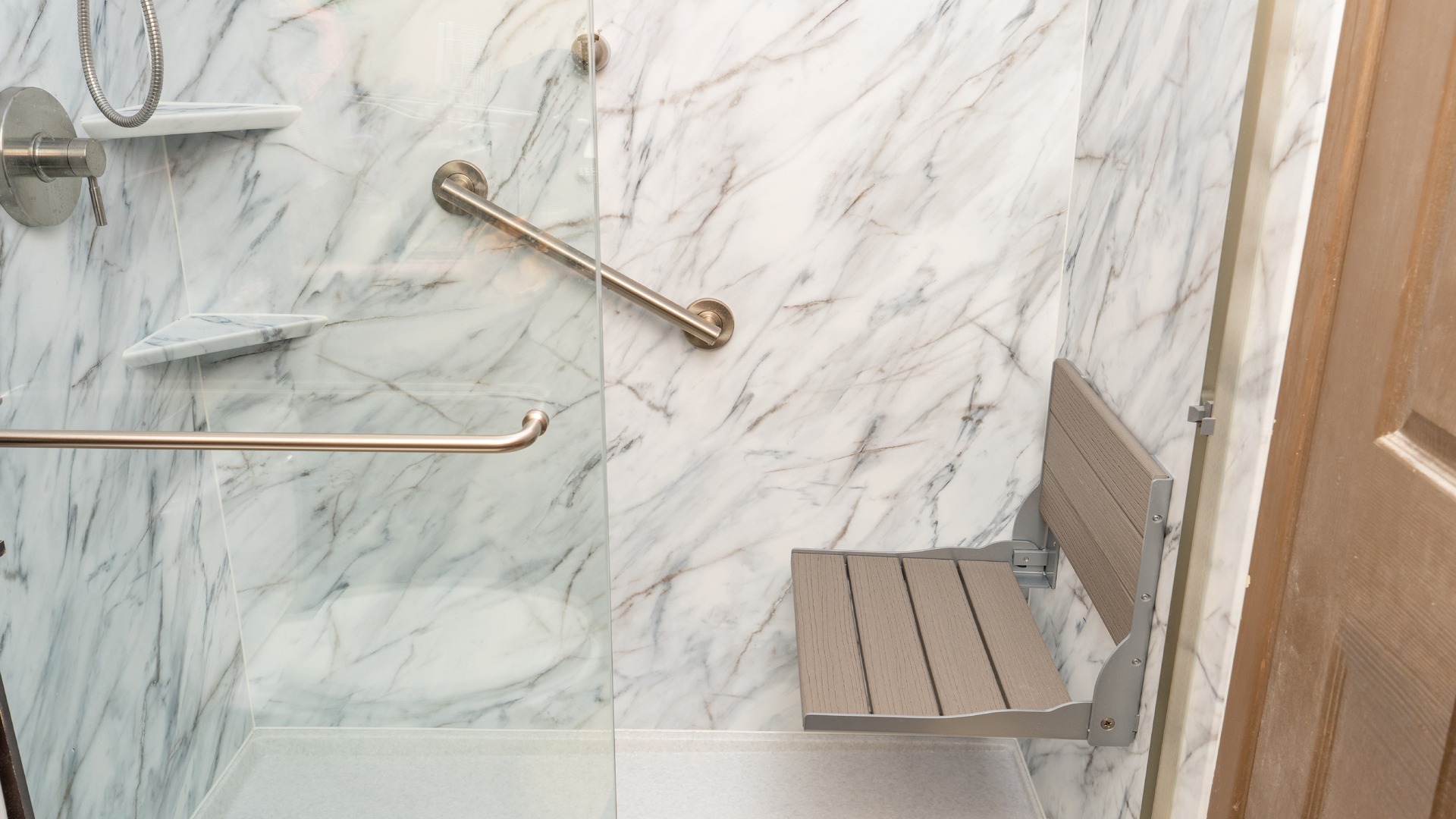
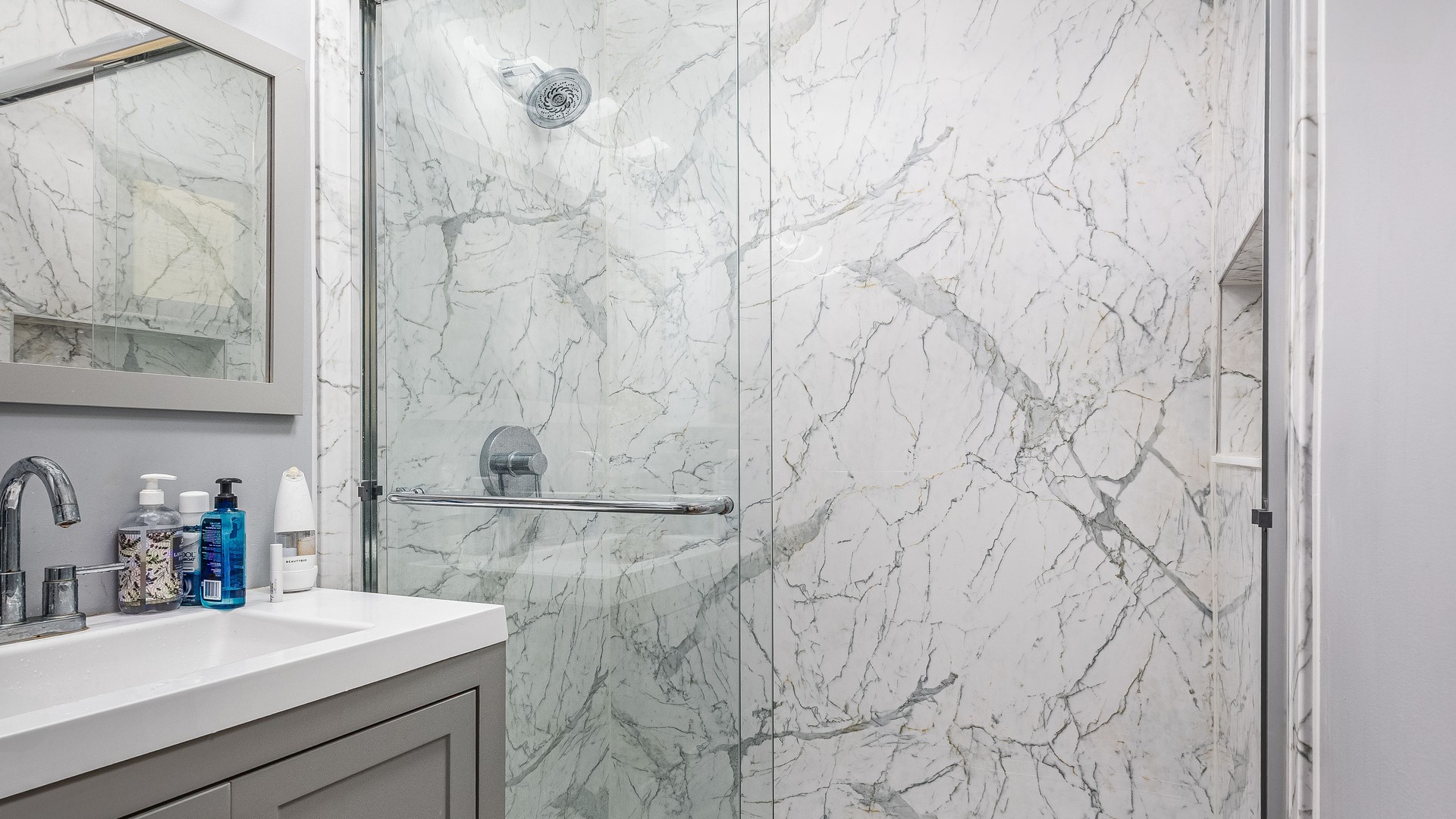
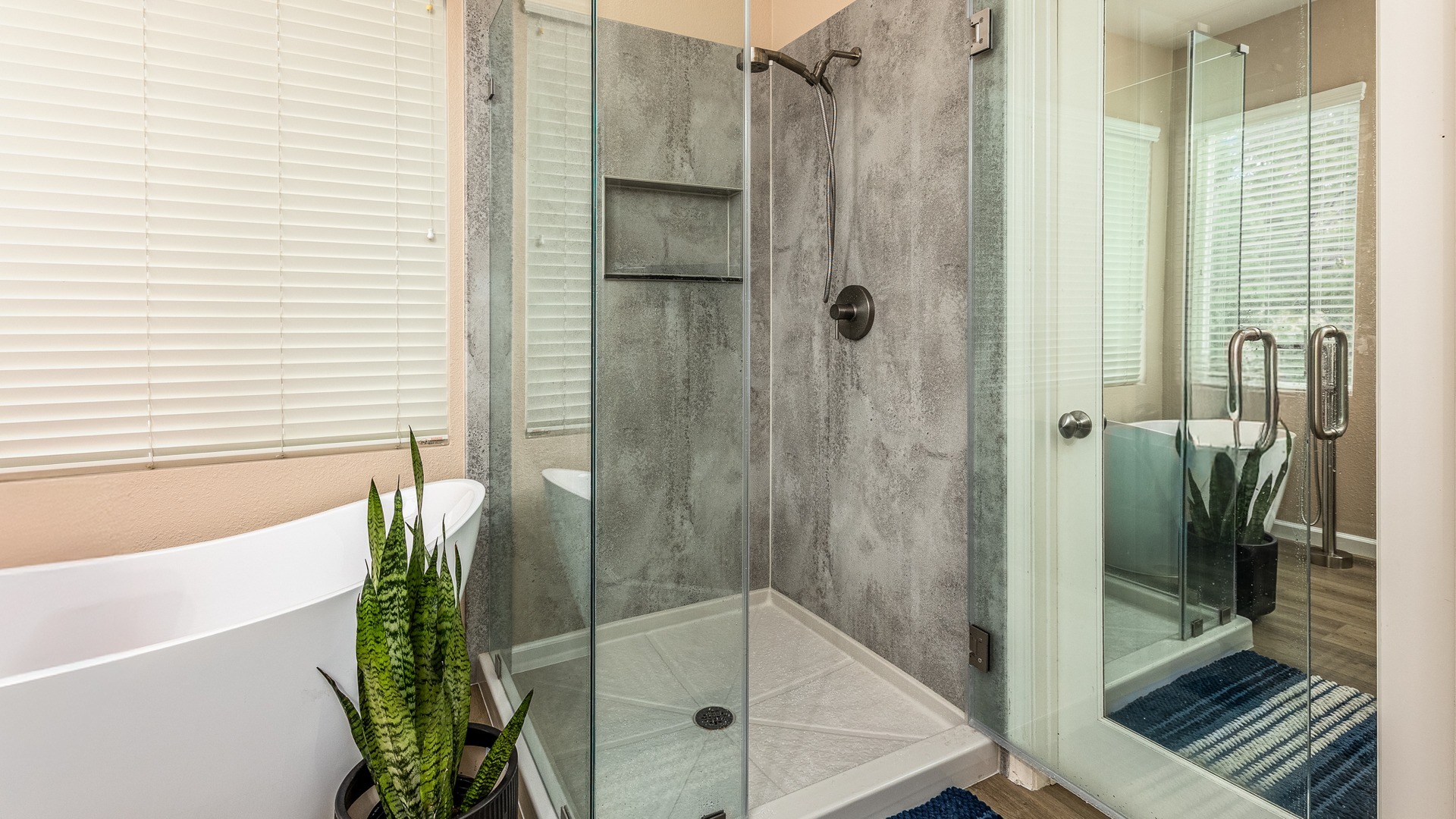
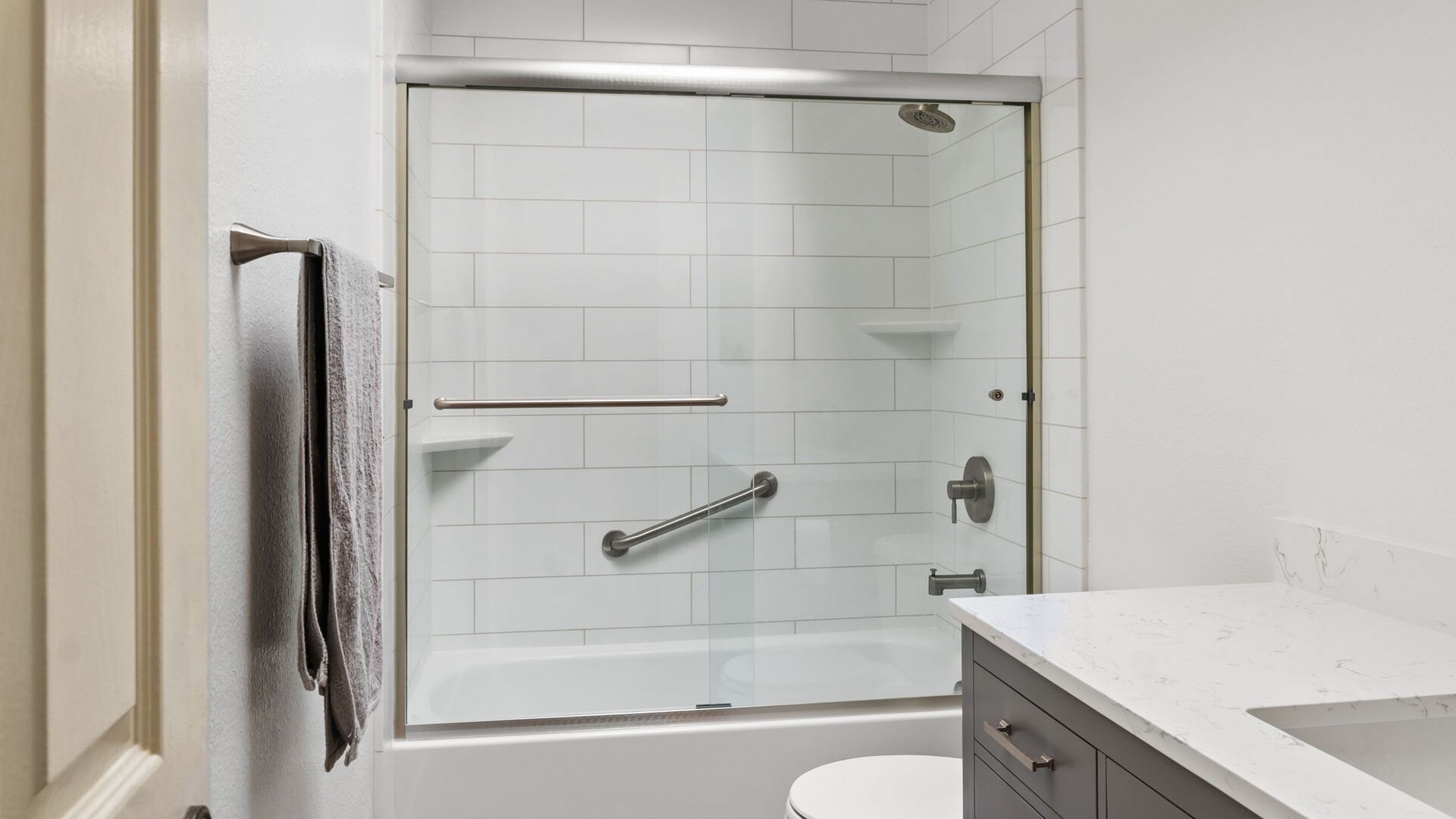
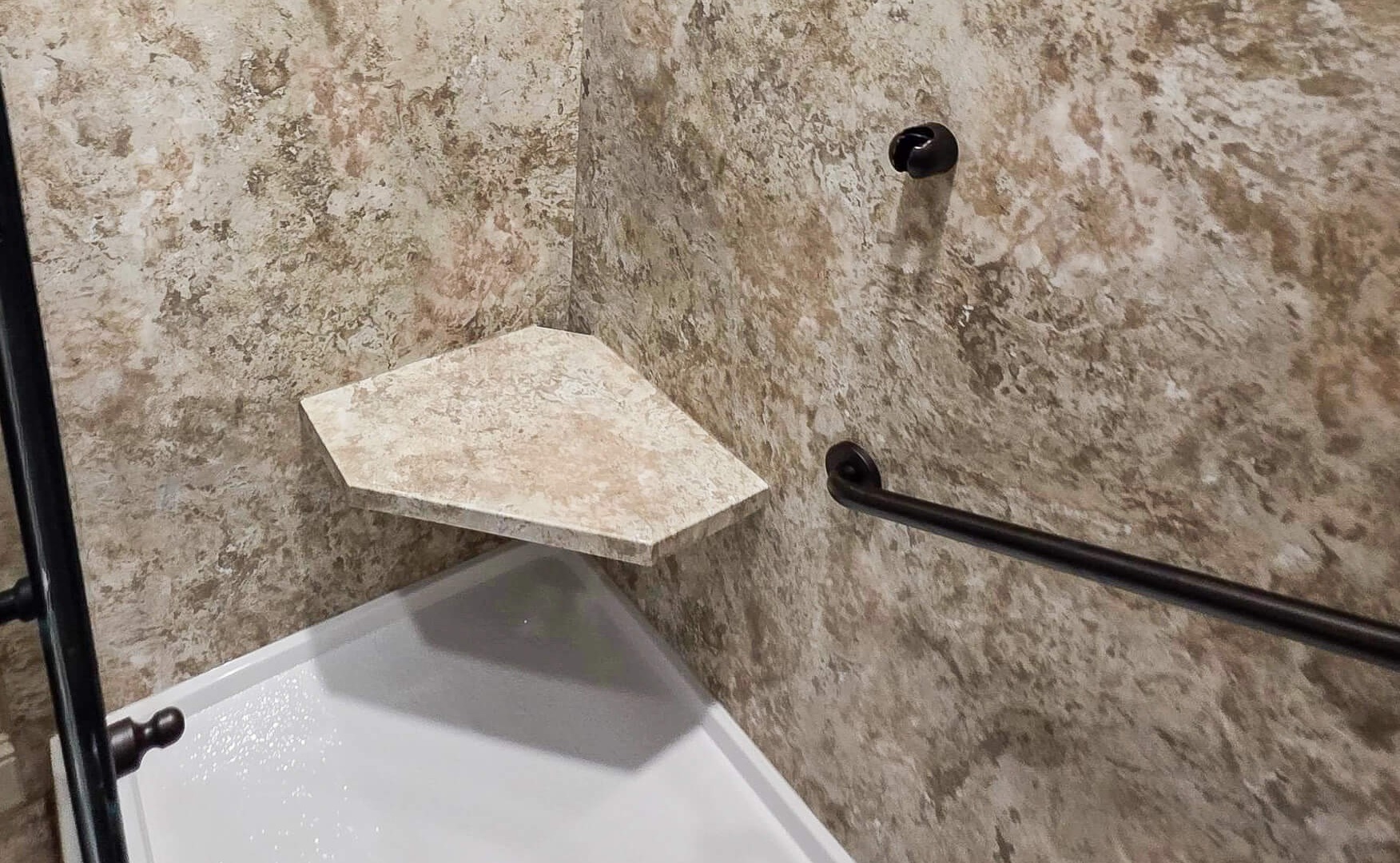
Shugarman's Bath installs BP-Cor2 because it holds up the way we tell customers it will. View our project gallery to see how it can look in your bathroom.
FAQs on Tub and Shower Remodeling:Q: How long does a typical shower remodel take?A typical shower remodel takes 1-2 days. More complex projects in larger areas can take longer. Q: What materials do you use for your tub and shower products?Our products are mainly composed of a material called BP-Cor2. It's a high-tech polymer made up of 15% acrylic and 85% ABS, the same material used to make football helmets. It's a step up from traditional tile and standard acrylic. We can laser-etch grout lines into the material to give it the look of tile without the cleaning and maintenance that comes with it. We call it Modern Tile. Q: Do you remodel the whole bathroom or just the tub and shower area?We're specialists in the tub and shower area. That's where our focus stays. For other parts of your bathroom, we work with trusted contractors regularly and can refer you to the right people at no extra charge. |
Topics:
-1.jpg?width=1920&height=1080&name=JoniCoci_Demo23%20(1)-1.jpg)

-1.jpeg?width=1920&height=1080&name=After%203%20(1)-1.jpeg)