
What Matters Most
|
Look, we get it. Figuring out how to remodel the tub and shower can be confusing (to say the least). It seems simple at first. Then, you learn that there is so much to choose from.
One contractor might recommend acrylic shower walls at a lower price. Then another contractor might have mentioned BP-Cor2 (pronounced “Bee-Pee Core Two”), which you’ve likely never heard about and is generally at a higher price.
It makes the decision-making process that much more confusing.
At Shugarman’s Bath, we specialize in tub and shower remodeling. While we install BP-Cor2 for all our clients, our materials may not be what you want to move forward with. And that’s okay. We want to educate you on these two options to see which material best fits your needs.
This article will explain:
- What Do I Need to Know About Acrylic and BP-Cor2?
-
Okay, But How Good Are These Materials at Waterproofing My Tub or Shower Area?
-
How Are Acrylic Shower Walls and BP-Cor2 With Long-Term Wear and Tear?
By the end, you’ll have a better idea of which material to choose for your tub or shower remodel.
What Do I Need to Know About Acrylic and BP-Cor2?
You would think materials that look similar also perform the same, right? Unfortunately, that isn’t the case. Certain materials can show their problematic sides years down the road.
When you remodel your tub and shower area, the material you choose for the space matters more than you think. Materials affect how the space looks, how it performs, and how long it lasts.
One of the more common materials is, of course, acrylic shower wall panels. You also have BP-Cor2, which is what Shugarman’s Bath installs.
What Is Acrylic? How Is It Used for My Bathroom?
Acrylic baths and showers have been used for decades. It’s a fiberglass-reinforced plastic material that is formed into panels and bases. Acrylic is popular for its availability, light weight, and ease of installation.
The material is also non-porous, meaning water does not soak into acrylic’s surface, preventing staining and making cleaning fairly simple when the system is new. However, it can deteriorate, discolor, or develop cracking over time. Its limitations become apparent over time, especially in homes where the tub and shower area sees heavier use.
If you’re working on a tight budget, acrylic could be an option for you. Just keep in mind that it needs more upkeep if you want it to last. The lifespan of acrylic is along the lines of 10–15 years.
What the Heck is BP-Cor2?
Don’t worry. Even though the name sounds like a crazy chemical, it’s not. BP-Cor2 is a strong, non-porous material made for tub and shower areas, built to be long-lasting. It’s made of 85% ABS, commonly used in bumpers and football helmets, and 15% co-extruded acrylic.
BP-Cor2 panels are thicker and denser. The thickness changes how the material responds to weight, movement, and temperature changes inside your tub and shower area.
The material is also non-porous. It has antimicrobial properties that help surfaces resist bacteria and make harsh cleaners unnecessary.
While BP-Cor2 is not as well-known and is more expensive compared to acrylic, it’s designed to (quite literally) last you a lifetime. As in, you pay for it once, and you hopefully don’t need to worry about remodeling your tub or shower ever again.
What is the Construction, Thickness, and Cost Comparison?
Because the physical makeup of each material is different, you can also expect a difference in price and performance.
|
Feature |
Acrylic |
BP-Cor2 |
|
Base Material |
Fiberglass-reinforced acrylic |
ABS-based composite |
|
Typical wall thickness |
Generally thinner sheets |
Thicker solid surface - around 1/8th of an inch thick. |
|
Flexibility |
More rigid |
Flexible under movement |
|
Weight |
Lighter than BP-Cor2 |
Slightly denser and at least 10-20% heavier than acrylic shower walls |
|
Cost by comparison |
Lower |
Higher than acrylic |
How Does the Installation Differ Between the Two Materials?
Well, installation for any item can vary by contractor. However, the materials themselves influence how these systems are typically assembled.
Acrylic shower wall systems are typically installed over a substrate (the underlying surface or the layer hidden behind what is seen) and often rely on trim pieces to cover seams where panels meet. Because the material is comparatively more rigid, it can’t easily bend. Because of this, seam trims are more common.
BP-Cor2 can be installed in larger sections because it is a thicker, more flexible material. This can reduce the number of visible seams in the tub and shower area.
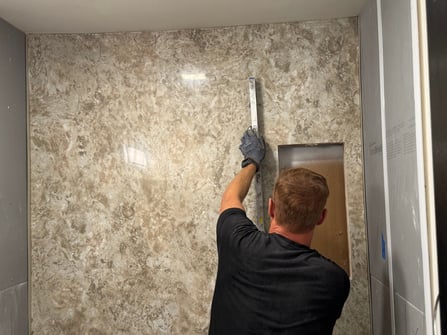
Regardless of which material you go with, proper installation matters for both materials. Material choice does not replace quality workmanship.
Okay, But How Good Are These Materials at Waterproofing My Tub or Shower Area?
Both acrylic and BP-Cor2 systems are designed to protect your tub and shower area from water. The primary differences are in how reliably they maintain that protection over time.
Acrylic wall systems are great at keeping water out when they’re new. The issue is that your standard acrylic shower walls are a little more brittle. The material is more likely to crack, bow, or separate at seams. Any crack or separation creates an opportunity for water to get behind the walls.
They also tend to rely on trim pieces and seam covers at edges, corners, and transitions. Those trim pieces create another joint that must remain sealed.
BP-Cor2 is a more flexible, durable material designed to move with the tub and shower area rather than fight it. Because it’s less likely to crack and doesn’t require exposed trim materials, there are fewer opportunities for water intrusion.
Keep in mind that, regardless of the material you choose, any tub and shower area can fail, especially with a botched installation. When comparing the materials and their performance over time, BP-Cor2 is more water-resistant and durable.
How Are Acrylic Shower Walls and BP-Cor2 With Long-Term Wear and Tear?
Homes don’t sit perfectly still, especially the tub and shower area. Consider this: The area is exposed to temperature fluctuations when you turn the hot water on and off. As a result, each of these materials responds differently to movement over time.
Table: Long-Term Performance of Acrylic Shower Walls vs BP-Cor2
|
Performance Area |
Acrylic Shower Wall Panels |
BP-Cor2 |
|
Resistance to cracking |
More prone to hairline cracks over time, especially if the bases flex or the home shifts. |
Cracking is rare with the material being thicker and more flexible. |
|
Reaction to home movement |
Rigid material can stress at seams and corners as the tub and shower area expands and contracts. |
Flexes slightly with movement, reducing stress at joints and corners. |
|
UV Exposure |
May yellow or fade over time, especially in natural light |
More resistant to discoloration and fading from light exposure. |
|
Base Support Strength |
Bases typically have a lower weight rating compared to BP-Cor2 and can flex under repeated use. Though flexing of the material depends more on the quality of installation. |
Bases are built to support higher weight loads to prevent instability or “squishiness.” |

Of course, these differences don’t usually show up right away. In many cases, they appear after years of daily use. How each material handles these factors can affect how a tub and shower area looks and functions the way it should a decade later.
How Is Cleaning, Maintenance, and Daily Use?
It’s cool that acrylic shower walls and BP-Cor2 are non-porous, which helps limit staining and buildup. Either of these options can be simple to clean.
Acrylic and BP-Cor2 can generally be cleaned with gentle, non-abrasive cleaners to avoid scratching or dulling the surface. Harsh chemicals and abrasives can damage the finish over time. It’s recommended to use 409 or wipe down with a damp towel.
What Affects The Costs of Acrylic Shower Walls and BP-Cor2?
Generally speaking, acrylic costs less upfront, which makes it more appealing for lower-budget remodels. If you prioritize immediate affordability over long-term durability, acrylic shower walls may be a good fit. A great quality installation will allow your acrylic walls to last a while.
BP-Cor2 does cost more initially. The cost is reflected in thicker material, stronger bases, and systems designed for long-term use. If you’re planning to own your home for many years, the higher upfront cost may be offset by fewer repairs and less maintenance over time.
How Do I Choose the Best Materials for My Tub or Shower?
The best material depends on how you use your bathroom, how long you plan to own the home, and what you value the most in a remodel.
Here are factors to consider:
- Budget and upfront cost
- Acrylic generally costs less to install
- Cost now vs later
- Keep in mind that lower costs now could lead to higher costs later if the materials wear out faster.
- Length of home ownership
- If you plan to continue owning your home for many years, long-term durability may matter more than upfront savings.
- Daily use and household needs
- Homes with multiple users or frequent daily use may benefit from materials designed to handle more wear over time.
- Maintenance expectations
- Both materials are simple to clean. You don’t want to use abrasive cleaners or chemicals for either.
- Risk tolerance
- More rigid materials can be more sensitive to movement over time.
Still Have Questions About Acrylic Shower Walls and BP-Cor2?
Acrylic Shower Walls and BP-Cor2 are solid-surface materials. However, they behave differently and differ in thickness, flexibility, cost, and long-term performance.
Depending on your preference, there may not be a single “best” material for your tub or shower area. It depends on what you’re looking for.
What matters is understanding how each material responds to movement, moisture, and wear in a tub or shower area. You don’t want surprises years down the line when you go through with a tub and shower remodel.
This article briefly describes the differences between acrylic shower walls and BP-Cor2. Next, read our in-depth article on BP-Cor2.
Have any additional questions or want to schedule a FREE consultation for your tub and shower area? Contact Shugarman’s Bath today!
The opinions expressed in the referenced materials are those of the authors only, not necessarily of Shugarman’s Bath. While these referenced materials are useful in answering generalized questions, each bathroom is unique. For a particular question about your tub or shower remodeling project, contact your Shugarman’s Bath consultant.
FAQs About Shugarman's Bath Materials:Q: Does Shugarman’s Bath use tile?Shugarman’s Bath doesn’t use conventional tile with grout. We use BP-Cor2 walls that are nonporous and antimicrobial. Grout lines can be laser-etched into the walls to give the look of tile without the extra labor and costs. Q: Does Shugarman's Bath Install Alternatives to Tile?Yes. Instead of conventional tile, Shugarman's Bath installs a modern shower wall system with a non-porous, antimicrobial surface. The grout lines are laser-etched, giving you the look of tile without the upkeep that comes with it. If you want to learn more, read our full breakdown of traditional tile vs. modern shower wall systems. Q: How many design options does Shugarman's Bath offer?Shugarman's Bath offers 500-600 color and style options, so you can find a combination that fits your bathroom and your taste. |
Topics:
.jpg?width=1440&height=1080&name=Bazaart_CF3F9E2C-23B2-4FB0-8B3B-1D470C00D9FE%20(1).jpg)