
What Matters Most
|
When you’re aging in place, it can feel like grab bars and shower seats make your bathroom feel more like something in a hospital room. You shouldn’t have to choose between safety and style. You can have a space that looks good and keeps you safe.
Shugarman's Bath has completed more than 6,500 tub and shower remodels, many for homeowners aging in place. We know how to install a tub and shower area with all the safety features and a good look. We don't install walk-in tubs or handle full bathroom remodels. That said, we understand the area well and can point you in the right direction for the whole bathroom space.
This guide walks you through grab bar placement, shower seat options, safer fixtures, and door or curtain choices that will help you design your space for aging in place.
Table of Contents:
- Why Does Bathroom Design Matter As You Age in Place?
- Where In Your Shower Should You Place Grab Bars (and Why)?
- Should a Walk-In Shower Include a Seat?
- Are There Shower Controls and Fixtures That Improve Safety?
- Does a Shower Door or Curtain Make a Difference for Aging in Place?
- What Aging-In-Place Options Should Be Considered for the Rest of the Bathroom?
Why Does Bathroom Design Matter As You Age in Place?
Your bathroom matters because it’s a common spot where you can fall. This is especially true in the tub and shower area, which has plenty of slippery surfaces. If you have a bathtub, that’s a 15- to 19-inch threshold you have to overcome every time you want to get clean.
Falls are the leading cause of injury death for adults 65 and older. They caused over 38,000 deaths in 2021, and emergency rooms saw nearly 3 million fall-related visits that same year.
A high-quality bathtub or shower remodel typically ranges between $12,500 and $22,000, depending on materials and scope. That cost pales in comparison to a fall serious enough to require emergency care (plus recovery time and follow-up visits).
Removing the bathtub for a walk-in shower is one of the most common design choices for aging in place. A walk-in shower allows for low- or zero-threshold options that remove the hurdle that is the bathtub. Plus, you get to enjoy the full length and width of your tub and shower space.
A walk-in tub is an option worth considering if you enjoy soaking. It gives you a low threshold and a built-in seat, though the fill-and-drain cycle takes 10 to 15 minutes. A good-quality walk-in tub installation costs around $30,000.
Shugarman’s Bath does not install walk-in tubs. That said, it might be the ideal solution for you as you age in place.
Where In Your Shower Should You Place Grab Bars (and Why)?
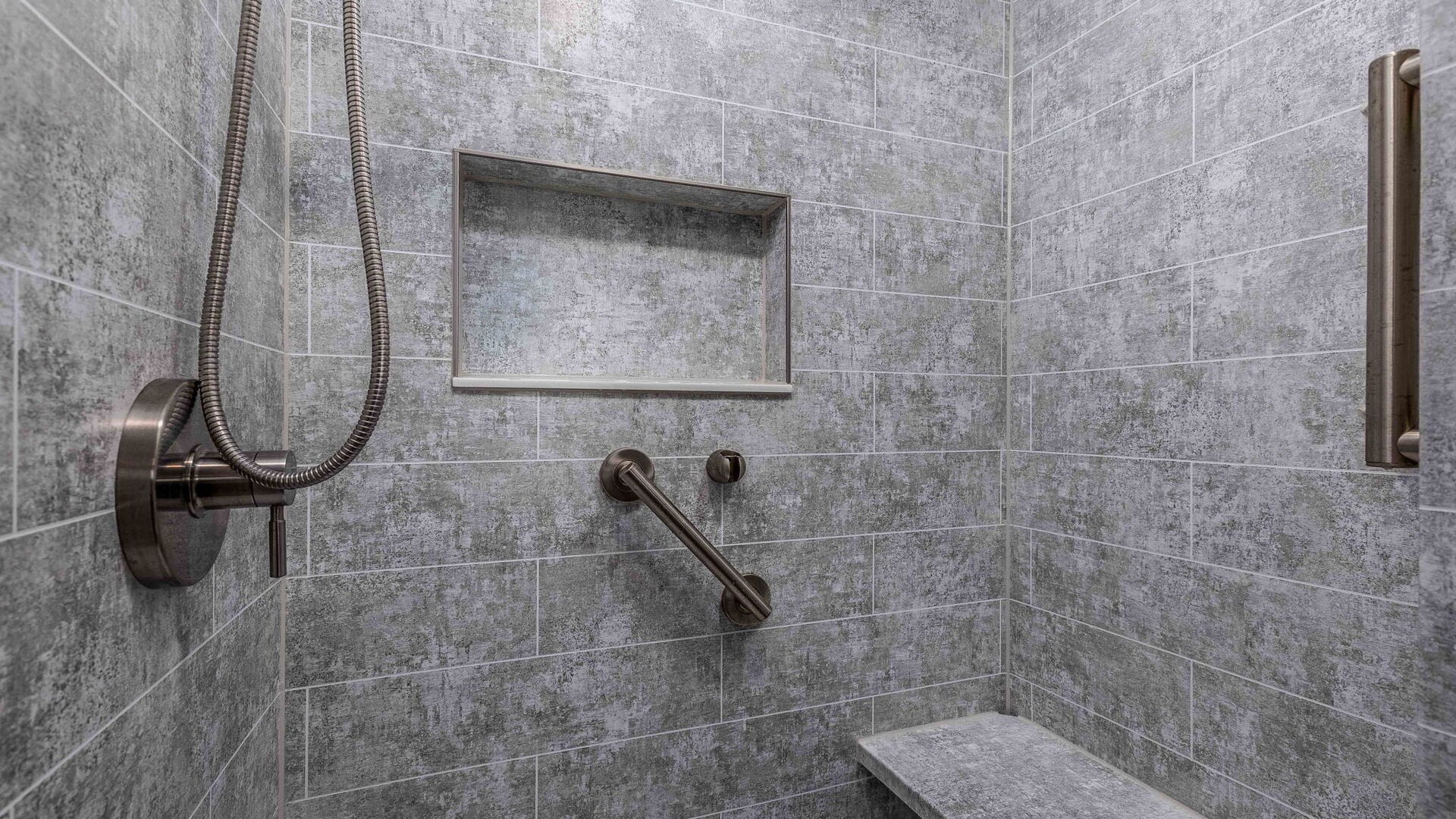
The standard setup is two bars, one at the shower entry and one inside. If you have a shower seat, install one of your grab bars next to it so it’s easier to sit and stand up.
A grab bar next to the seat, or wherever you stand while showering, is useful at an angle. An angled position makes it easier to pull yourself up.
The most important parts of a grab bar are that it’s easily accessible and can support your weight. This means it needs reinforced backing that can be installed during your shower remodel. If you can’t install a grab bar now, you can have backing installed to add a bar later.
Suction cup grab bars are not a safe substitute. Suction is the only thing holding them to the wall, making them susceptible to popping off if you lean on them with your full weight.
Here’s why fixed grab bars are important:
A 2023 study found that when someone lost their balance while stepping out of a slippery bathtub onto a dry surface, those with a grab bar were 75.8% more likely to recover their balance than those without one.
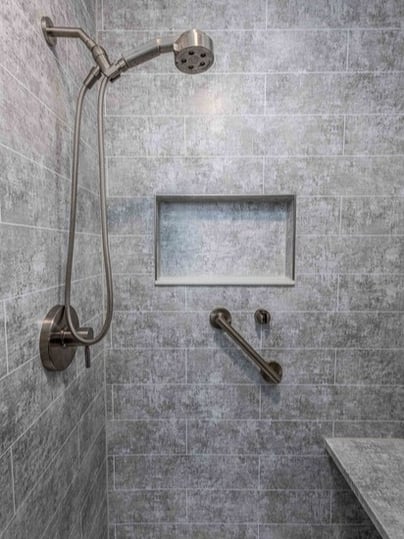
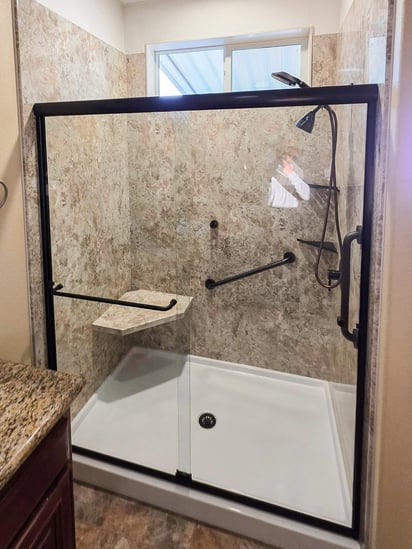
A grab bar benefits everyone, especially older adults, people with mobility issues, those recovering from surgery, and people with special needs. Plus, installing grab bars can make your tub and shower area look so good, especially with modern finishes like brushed nickel and matte black.
|
Brushed Nickel Finish |
Matte Black Finish |
|
|
|
Should a Walk-In Shower Include a Seat?
Adding a seat is one of the best choices you can make for a safer shower area. Sometimes, standing throughout the whole duration of a shower can feel tiring and difficult. Plus, you can have an easier time bathing if you can sit and use a handheld showerhead.
Portable seats can work well since you can move them where you need them. Keep in mind that a portable seat needs to be secured in place and have as little risk of slipping as possible. You can’t rely on a portable shower seat with weak (or zero) traction.
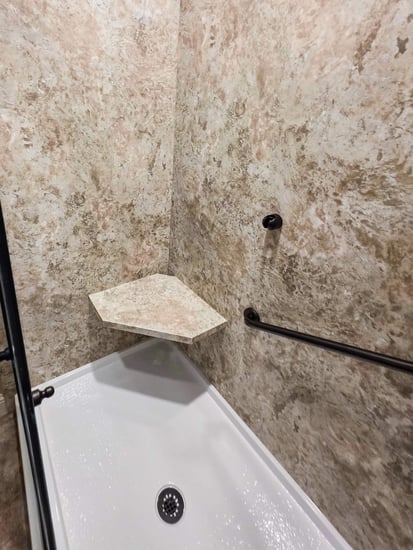
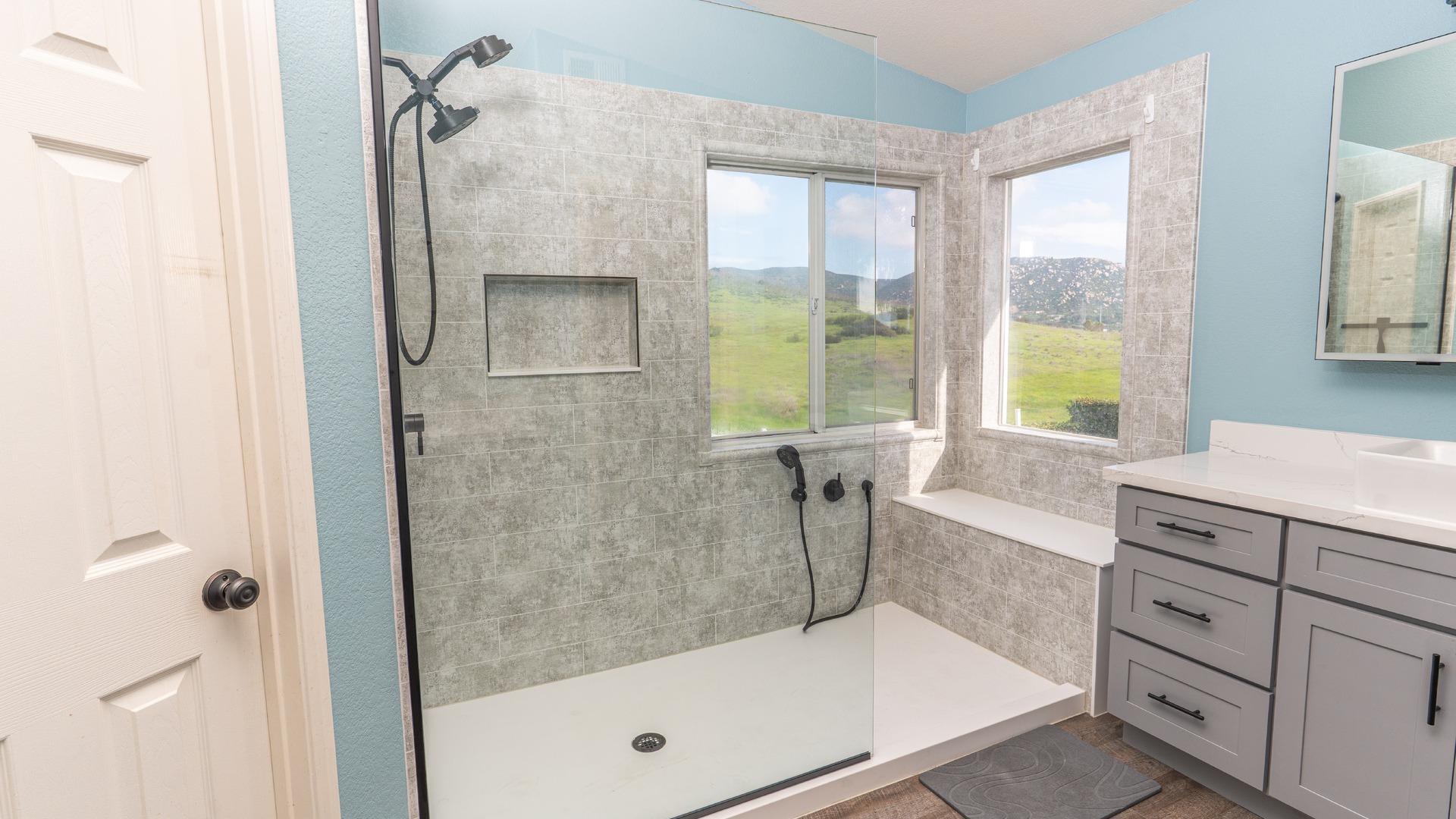
A built-in seat is a safer option since it is bolted to your walls with reinforced backing to support your weight. Placing your seat near a handheld shower head or a slide bar makes it easier to reach the water without needing to reposition your whole body. It’s also valid to place a seat near the opposite wall of your shower valve, so long as you have a place to sit safely and comfortably.
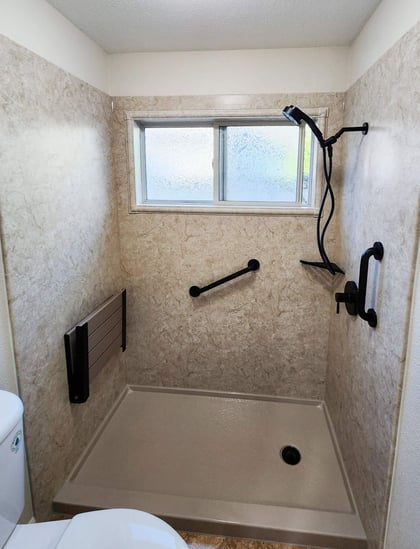
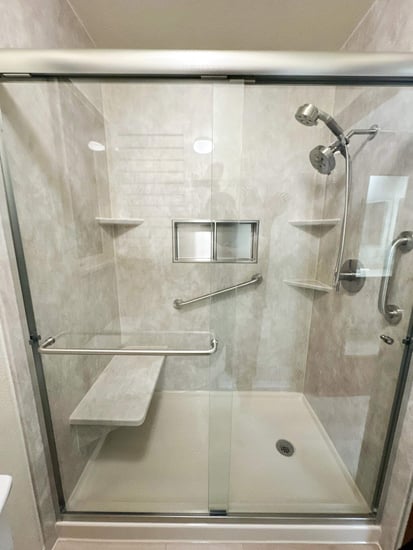
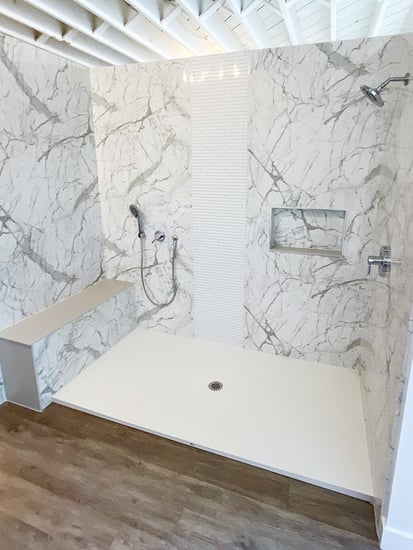
There are plenty of fixed seat options to choose from, whether it’s a corner seat, a folding seat, a shower bench, or a custom option. Most seat styles come in colors and finishes that match or complement the walls. A design consultant can walk you through which option fits your space best.
|
Corner Seat |
Folding Seat |
|
|
|
|
Shower Bench |
Custom |
|
|
|
Are There Shower Controls and Fixtures That Improve Safety?
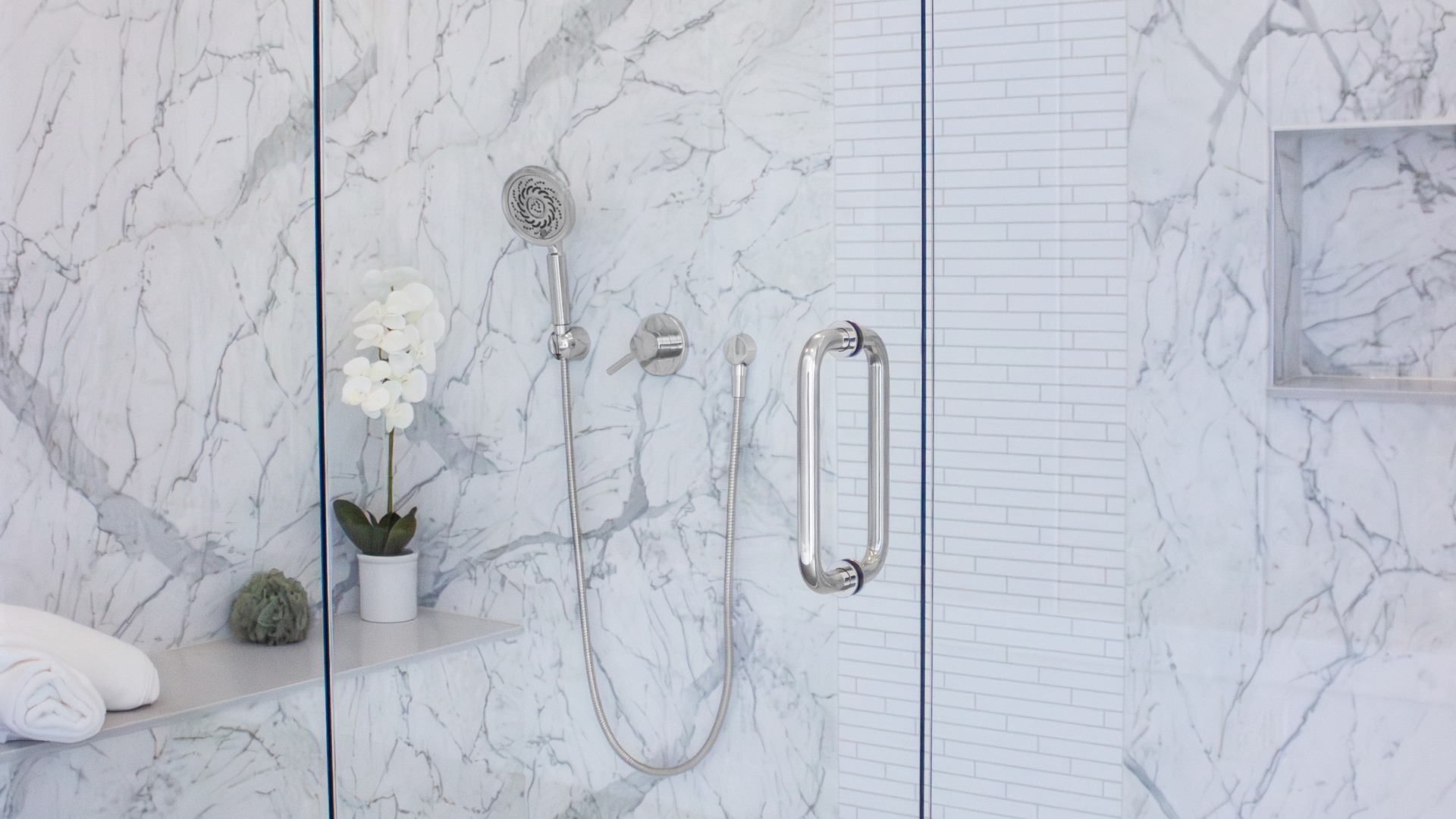
An ADA slide bar with a handheld shower head is one of the easiest safety upgrades to add. It gives you another point of contact while you shower and allows you to bring the water to where you need it.
Older bathrooms often had separate hot and cold handles, which made it easy to turn the water too hot accidentally. Current California building codes require new shower and tub-shower valves to include scald and thermal lock protection. A single-action valve starts cold and gets warmer as you turn it up.
Anti-slip strips on the shower floor are a simple, low-cost addition that adds traction and reduces your chance of slipping.
Does a Shower Door or Curtain Make a Difference for Aging In Place?
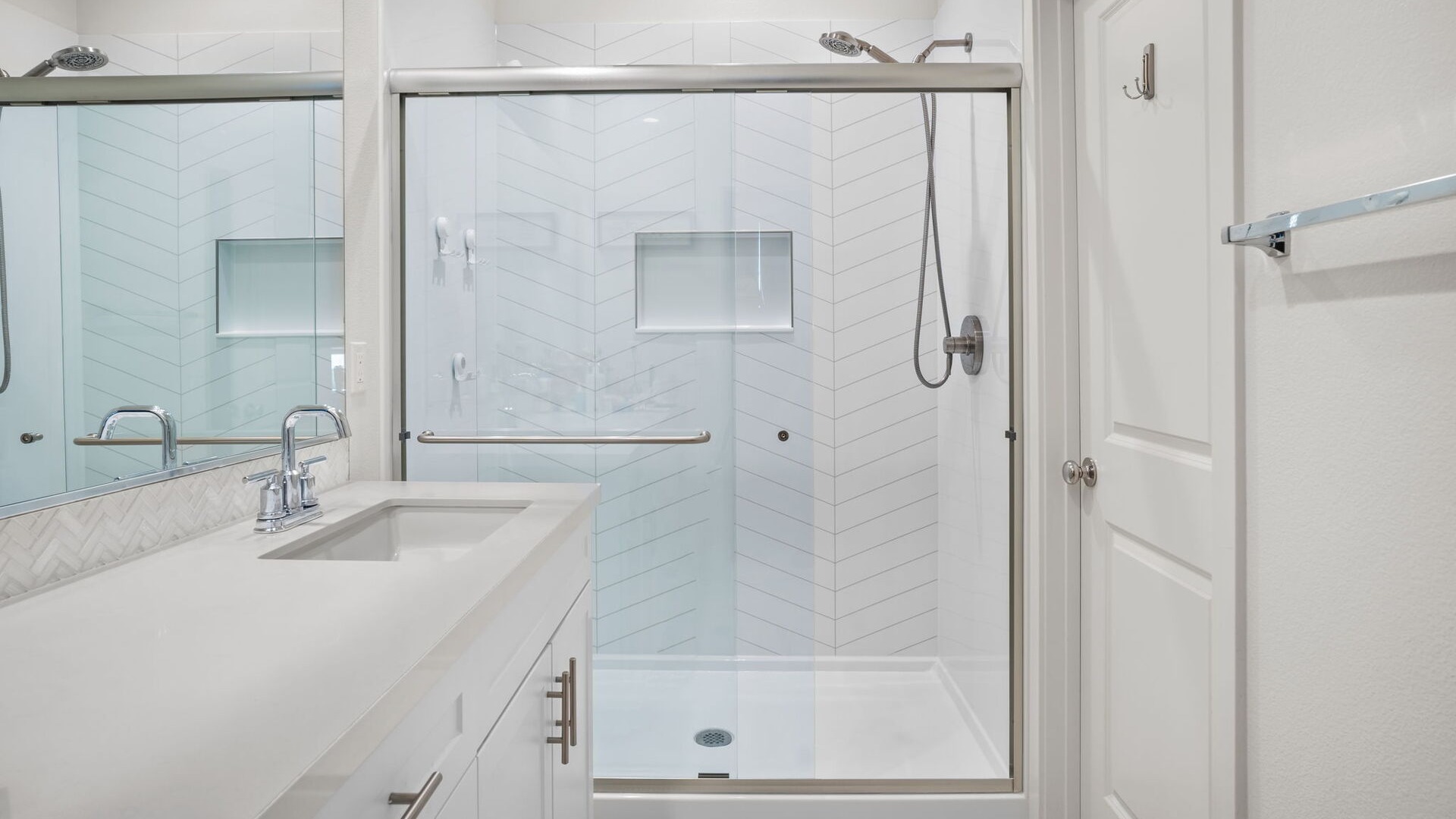
Yes, and the option you go with depends on your situation. A properly installed shower door leaves about 24 inches of clearance when open, which is a tight space if you or a loved one needs help from a caregiver while bathing.
A curtain can be the more practical choice if you or a loved one needs bathing assistance.
You don’t need to be locked into a choice. You can always start with a curtain now and install a door later, or vice versa.
What Aging-In-Place Options Should Be Considered for the Rest of the Bathroom?
Here are some options you can choose to design your bathroom for aging in place:
- A grab bar near the toilet to give you the support you need. A towel rack or toilet paper holder won’t support your weight.
- Get a comfort-height toilet. This type of toilet lets you sit 2 to 3 inches taller than standard. It can make sitting and standing easier if you have knee or back pain. If replacing your toilet isn’t a feasible option, there are raised toilet seats that lock securely in place. Some come with built-in grab bars.
- Place a non-slip mat outside the shower. That way, your feet have a safe landing spot when you step outside of your shower. If you’re replacing your flooring, there is tile rated for wet areas with slip resistance.
- Clearing clutter from the bathroom floor gets rid of tripping hazards. Keep everyday items within reach so you don’t trip or need to bend over.
Ready to Design Your Bathroom for Aging in Place?
Aging in place doesn’t mean you have to choose safety and style. Grab bars, seats, and other features can support you without making your bathroom look like something you would find in a hospital.
Now that you have a better understanding of how to design a bathroom for aging in place, read our guide on planning a full bathroom remodel.
Ready to design a bathroom that works for aging in place? Start with the part of your bathroom that matters most, the tub and shower area. Schedule a free design consultation with Shugarman's Bath. An expert will come to your home to help you design a space that's safe and still looks great.
The opinions expressed in the referenced materials are those of the authors only, not necessarily of Shugarman’s Bath. While these referenced materials are useful in answering generalized questions, each bathroom is unique. For a particular question about your tub or shower remodeling project, contact your Shugarman’s Bath consultant.
FAQs on Bathroom Remodeling:Q: What materials do you use for your tub and shower products?Our products are mainly composed of a material called BP-Cor2. It's a high-tech polymer made up of 15% acrylic and 85% ABS, the same material used to make football helmets. It's a step up from traditional tile and standard acrylic. We can laser-etch grout lines into the material to give it the look of tile without the cleaning and maintenance that comes with it. We call it Modern Tile. Q: How many design options does Shugarman's Bath offer?Shugarman's Bath offers 500-600 color and style options, so you can find a combination that fits your bathroom and your taste. Q: Do you remodel the whole bathroom or just the tub and shower area?We're specialists in the tub and shower area. That's where our focus stays. For other parts of your bathroom, we work with trusted contractors regularly and can refer you to the right people at no extra charge. |
Topics:
.jpg?width=1920&height=1080&name=VERSUS%20(4).jpg)
.png?width=1920&height=1080&name=VERSUS%20(2).png)
-1.jpeg?width=1920&height=1080&name=CherylJordan_Web7%20(1)-1.jpeg)
-1.jpg?width=1920&height=1280&name=AmandaCheyney_Print2%20(1)-1.jpg)