
What Matter Most
|
If you’re planning a bathroom remodel, you’ve probably been looking at photos of how you want your space to look. There are so many materials, finishes, and layout options available today that it can be difficult to know which design choices will have the biggest impact on your bathroom.
Some homeowners are drawn to modern designs with frameless glass doors and bold fixtures, while others prefer warmer styles with stone textures and earth-tone colors.
After completing around 5,500+ tub and shower remodels, the team at Shugarman’s Bath has seen firsthand which design elements homeowners gravitate toward and which ones make the biggest visual difference in a bathroom.
In this article, you’ll learn which shower design choices tend to make the biggest visual difference in a bathroom remodel. We’ll look at wall designs, modern and traditional styles, smaller design details that influence the overall look, and how lighting conditions can affect the appearance of your space.
Table of Contents:
- What Do Homeowners Mean When They Say They Want Their Bathtub or Shower to “Look Better”?
- What Simple Wall Design Choices Create the Biggest Visual Impact in a Bathroom Tub or Shower Area?
- What Bathroom Shower Design Styles Are Popular Today?
- Which Small Design Details Can Improve a Shower Remodel?
- How Can Bathroom Lighting Conditions Influence Shower Design Choices?
- How Shugarman’s Bath Helps You Design a Better Shower
- Bring Your Shower Design to Life With a Qualified Expert
What Do Homeowners Mean When They Say They Want Their Bathtub or Shower to “Look Better”?
A large portion of bathrooms are older, usually by multiple decades. Styles change, and materials wear out.
New designs kill two birds with one stone, giving the space a visual upgrade and making the bathtub or shower more functional.
Many aesthetic upgrades fall into one of three categories:
- Simple visual updates with neutral designs and cost-effective materials.
- Mid-level upgrades with improved shower doors, fixtures, or seating.
- Higher-end redesigns that may move walls, change layouts, or add structural features.
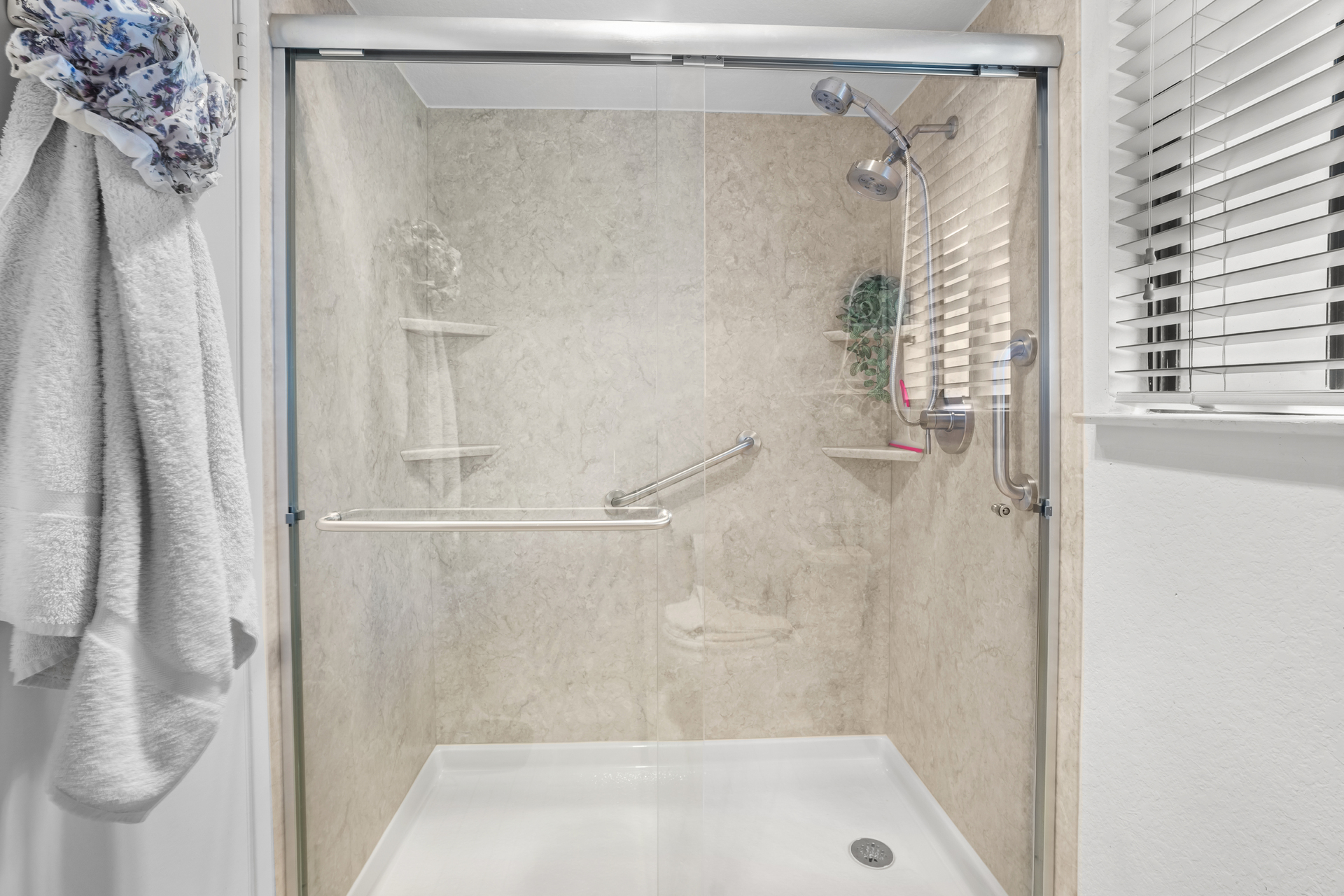
As you read, you can check out Shugarman’s Bath’s Project Gallery, look through completed projects, and see what design options are available to inspire you.
What Simple Wall Design Choices Create the Biggest Visual Impact In a Bathroom Tub or Shower Area?
One of the biggest visual changes in a shower comes from the wall design. The wall pattern, texture, and color can set the tone of your entire bathroom.
Shugarman’s Bath uses BP-Cor2 material for the surfaces. The appearance of this material can vary widely depending on the texture or pattern homeowners choose.
Simulated Tile Patterns
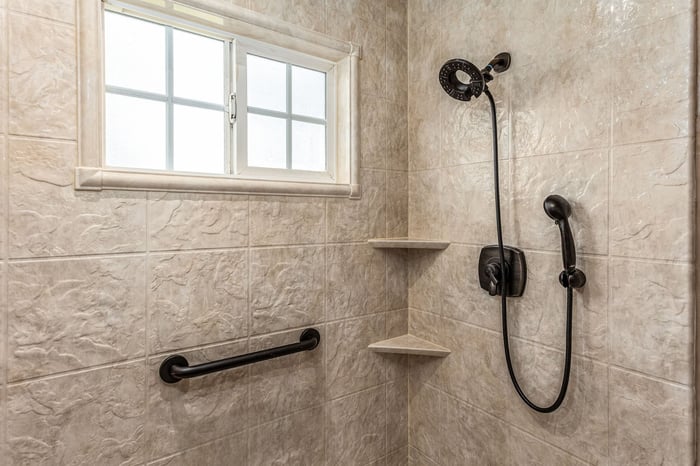
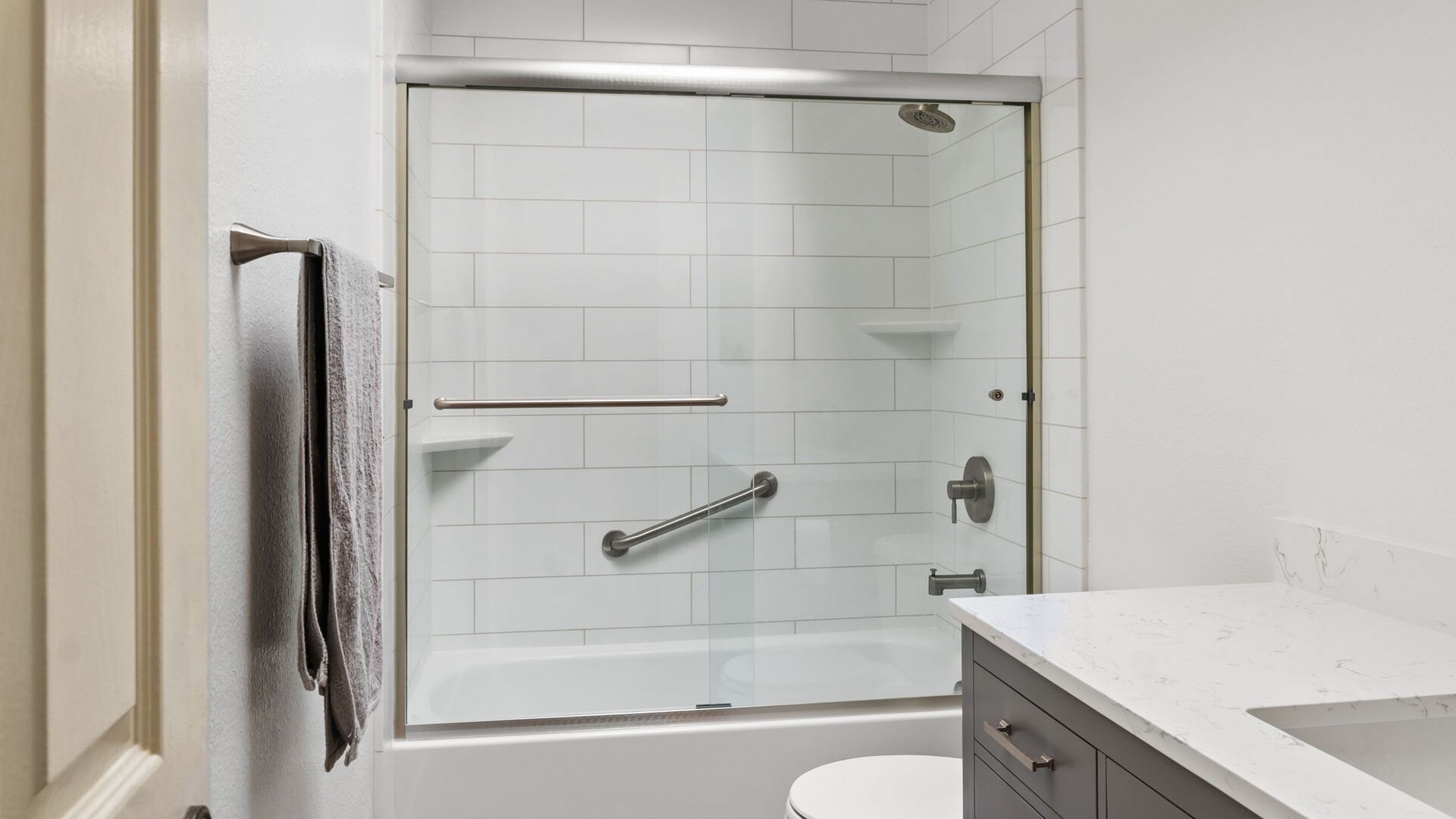
Some designs use pressed simulated tile patterns, such as 3-by-6, 4-by-12, 12-by-12, or other measured layouts that divide the wall into sections. These patterns create the appearance of traditional tile without grout lines or the maintenance that comes with them.
Reveal Series Pattern
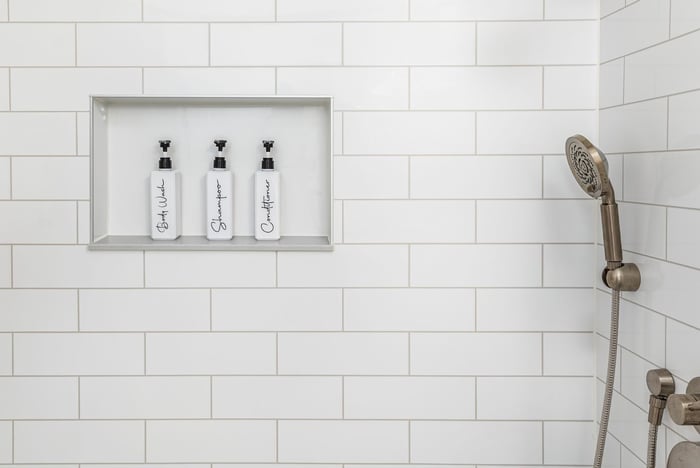
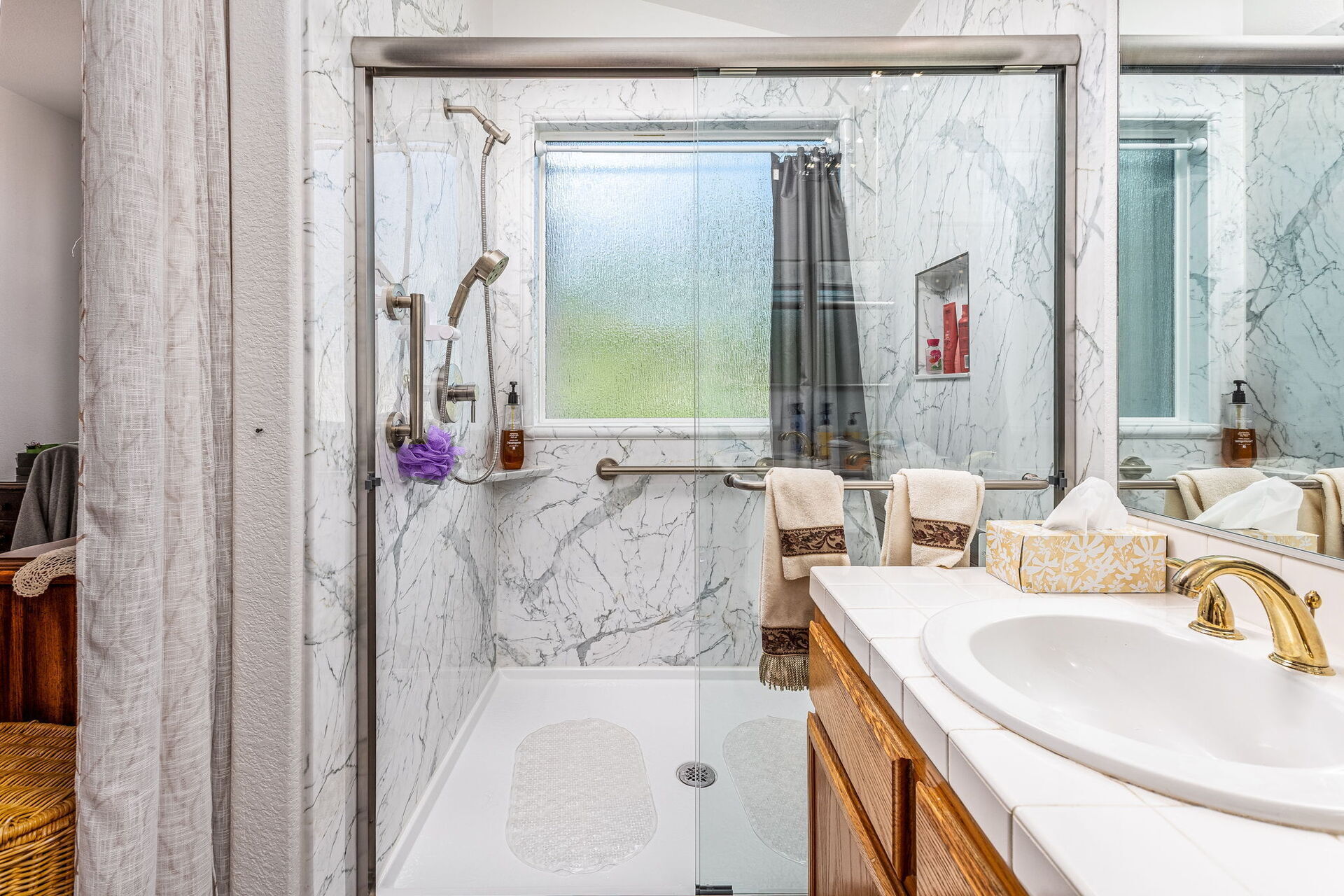
Reveal shower walls are laser-etched designs that have realistic-looking grout patterns. These walls are manufactured as solid panels, with the nonporous grout lines etched into the surface. It has the appearance of tile without the high-maintenance grout that it is known for.
There is no real grout involved, meaning you don’t need to worry about mold buildup and constant scrubbing. Upkeep is much easier than traditional tile.
Stone-inspired Textures
Other wall designs focus on natural-looking materials, which can add more character to the tub and shower space. Popular looks include:
- Brecchia
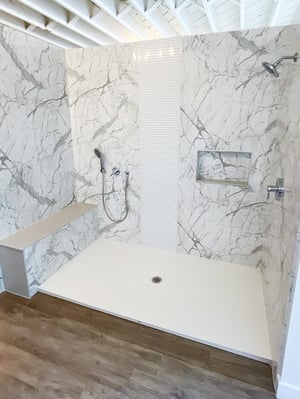
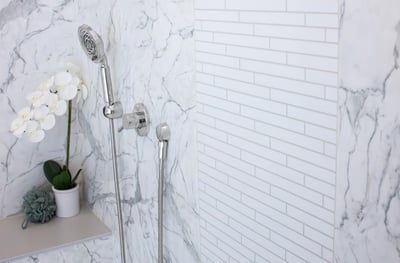
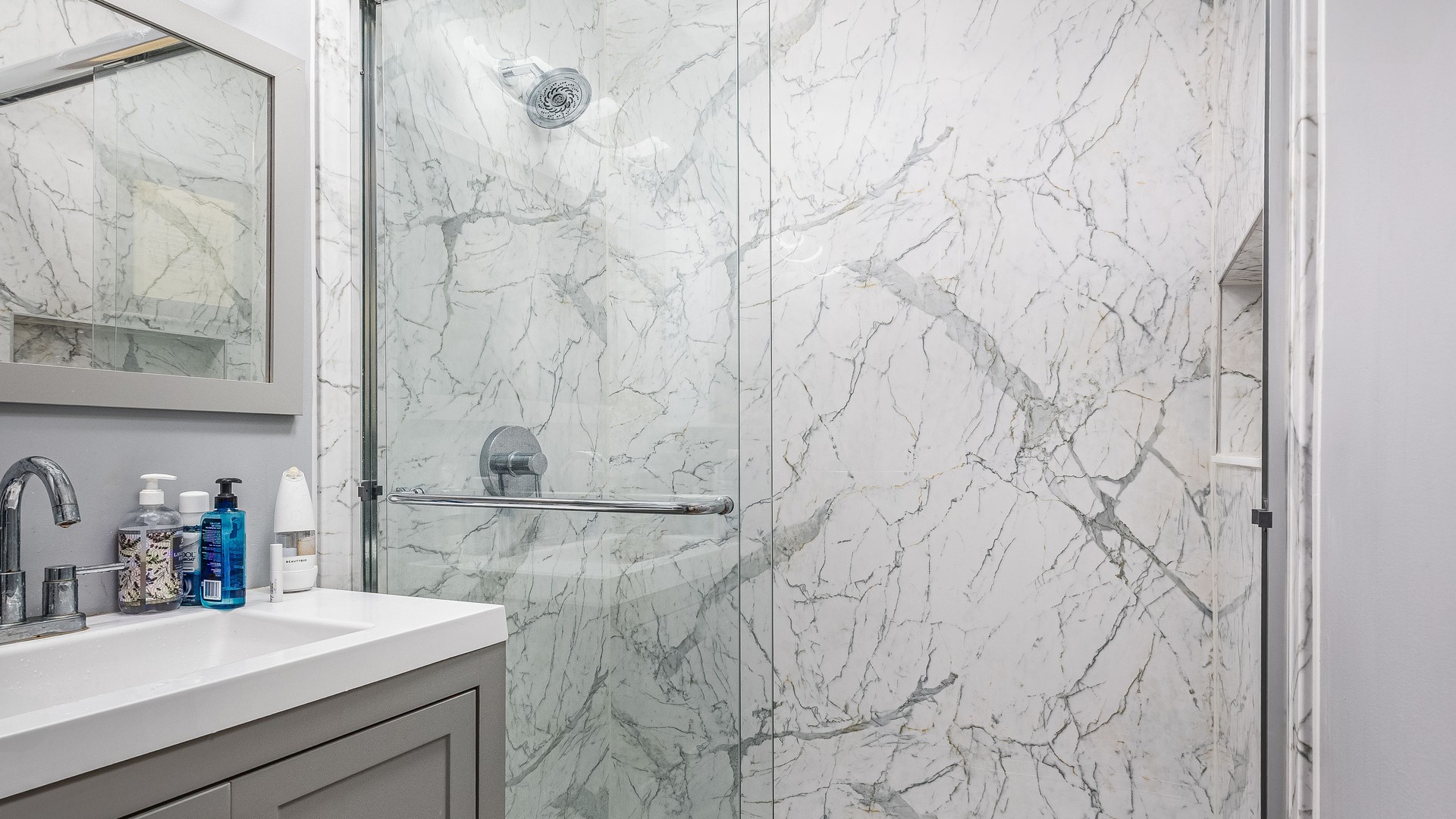
- Calcutta Marble
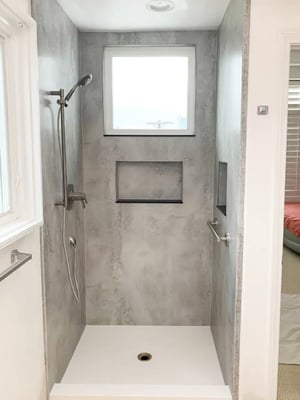
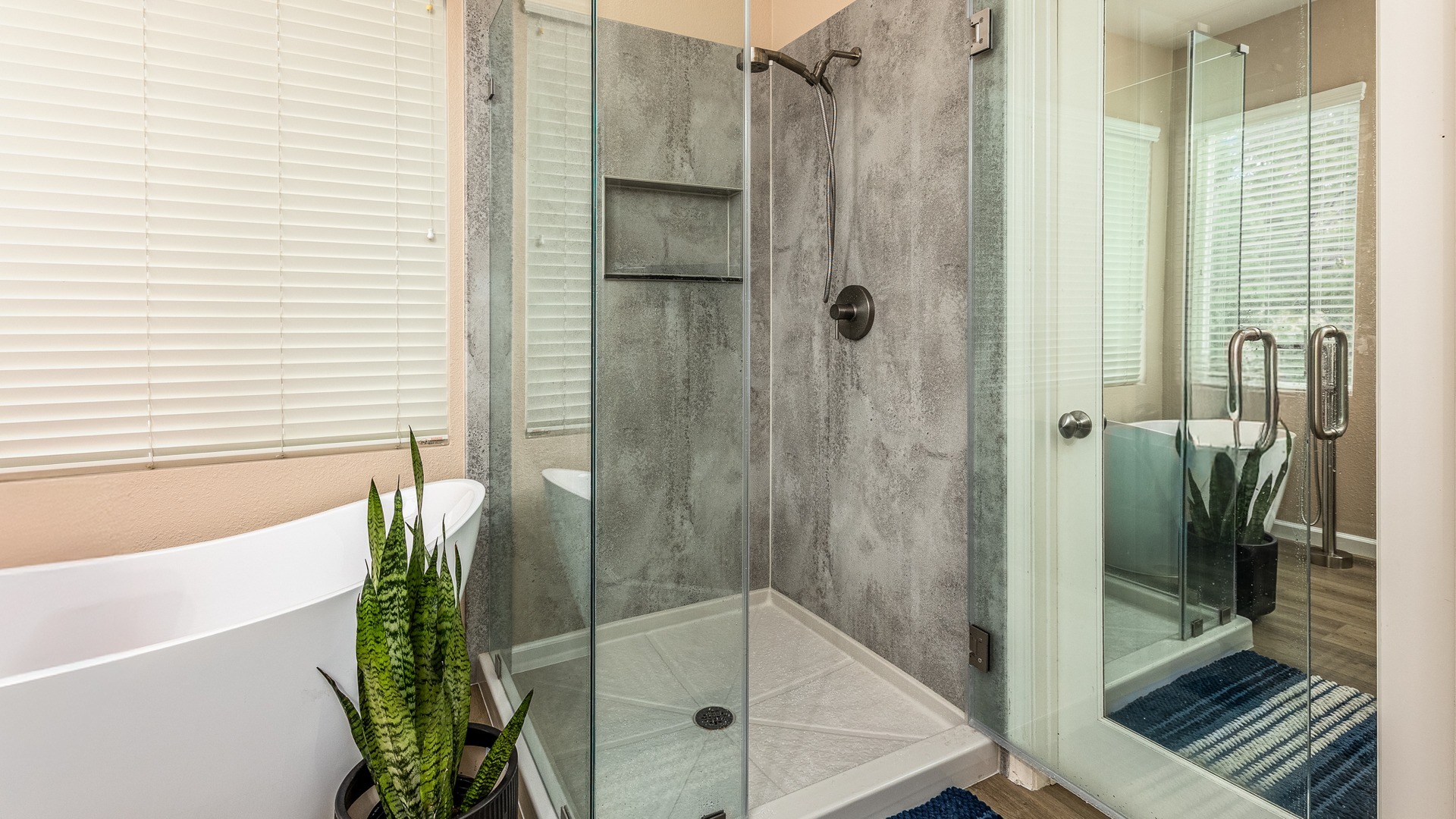
- Concrete
- River Rock
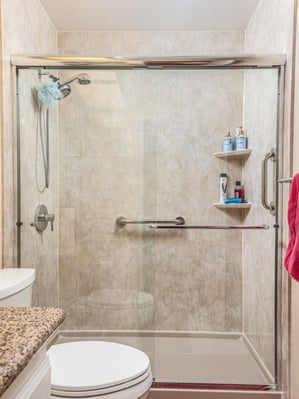
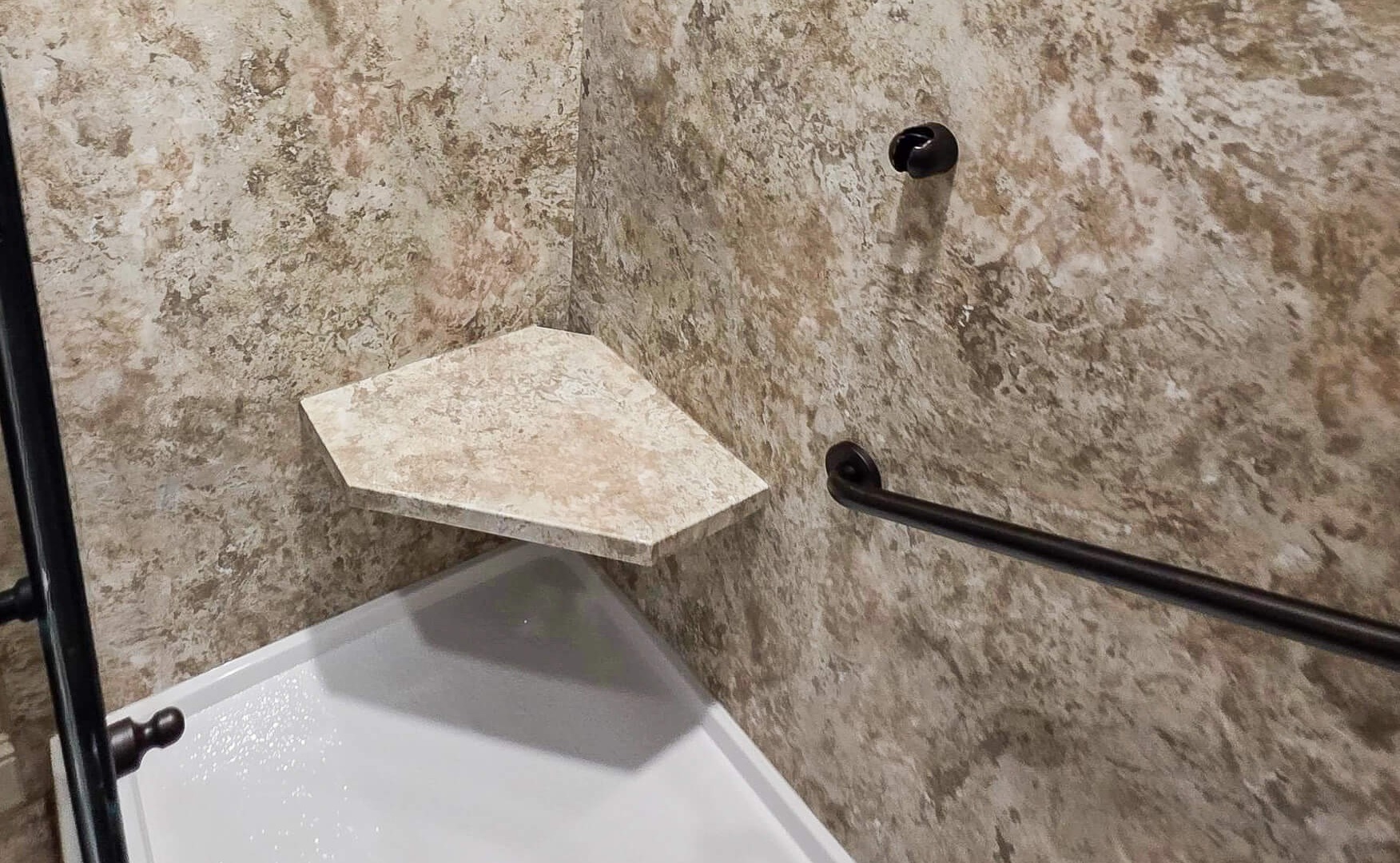
- Travertine
- Silver White Marble
- Stone-inspired surfaces
These textures add depth to the walls and make the shower feel more detailed and upscale.
|
Calcutta Marble Walls |
Small Shower With Concrete Walls |
Sandbar Shower Base with Travertine Walls |
|
|
|
|
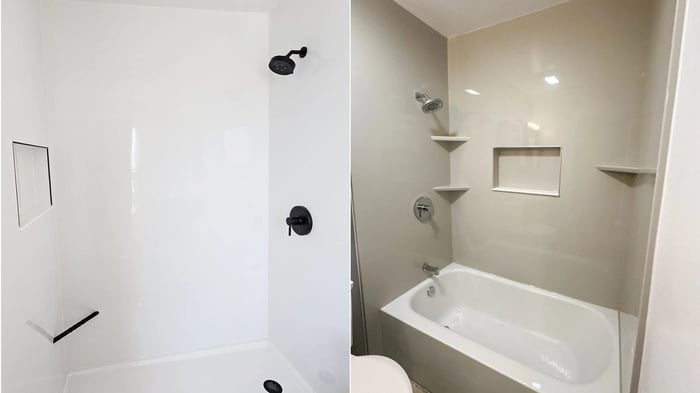
Neutral Color, Smooth Walls
At the same time, a solid white, gray, or brown wall can still look clean, simple, and attractive (and be easy to maintain).
Accent Walls
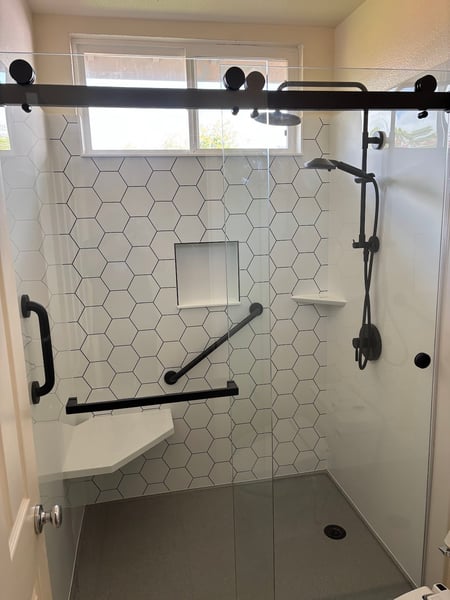
Another visual feature is an accent wall. An accent wall is often placed on the center wall of the shower, sometimes called the soap dish wall. This wall may use a bolder design or pattern, while the side walls use softer colors such as white, gray, or brown. Having an accent wall adds visual interest without overwhelming the space.
What Bathroom Shower Design Styles Are Popular Today?
Modern designs often focus on contrast and simplicity. Some homeowners prefer modern designs with bold contrast and minimal hardware, while others lean toward warmer styles that use natural colors and stone-inspired textures.
What Design Choices Make My Shower Look Modern?
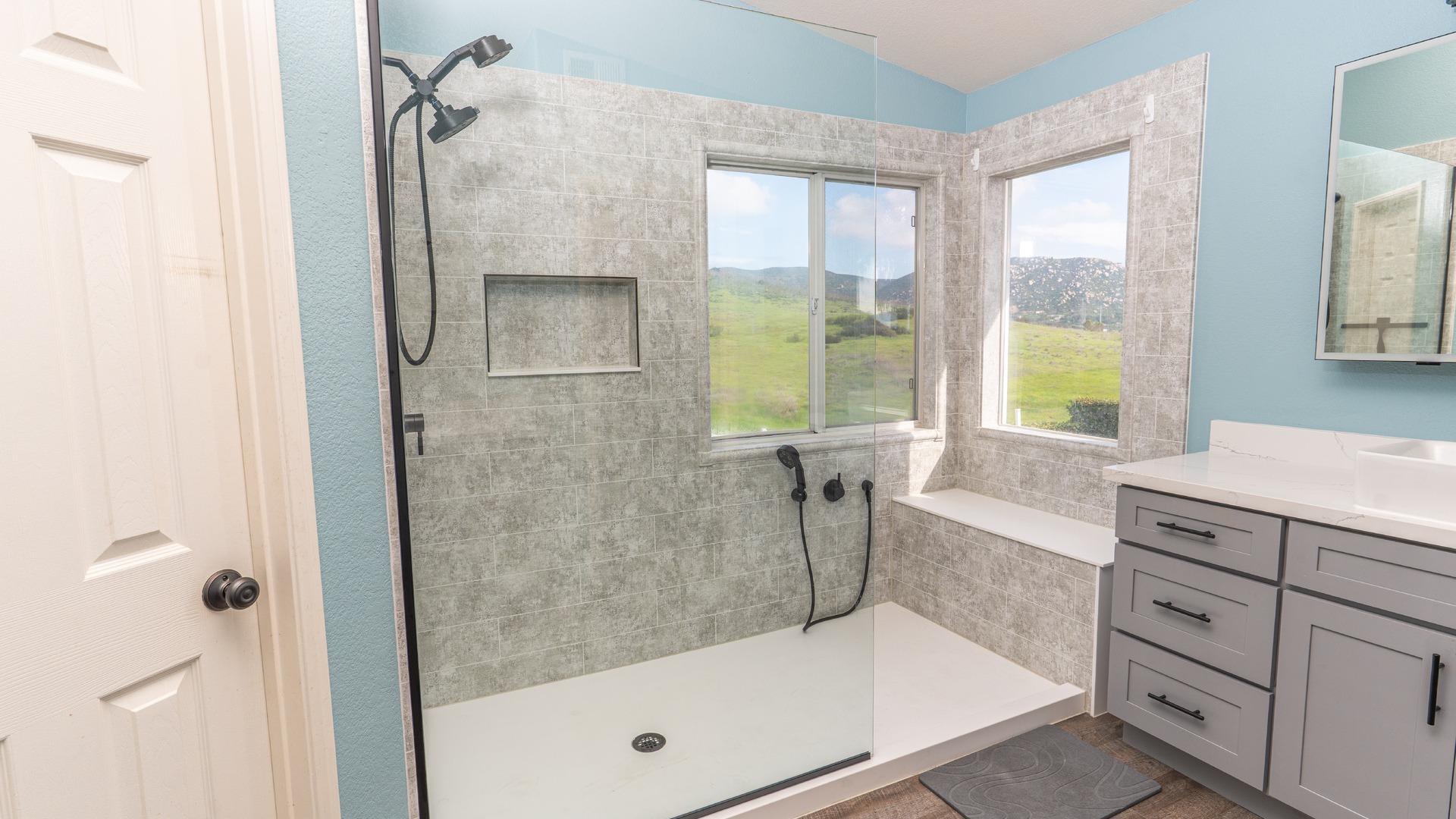
One common feature is a frameless shower door, hinged directly to the wall rather than to a metal frame. This design creates more visible glass and less hardware, which makes the shower feel more open.
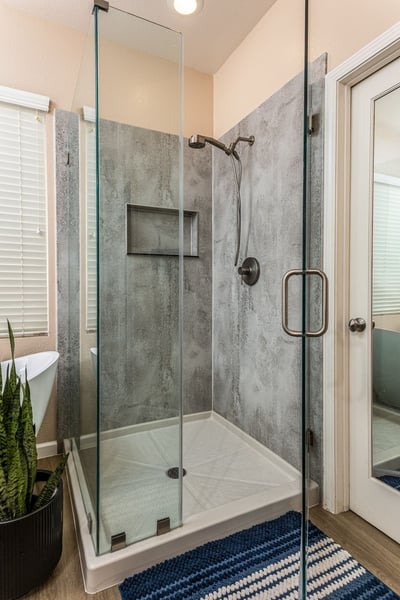
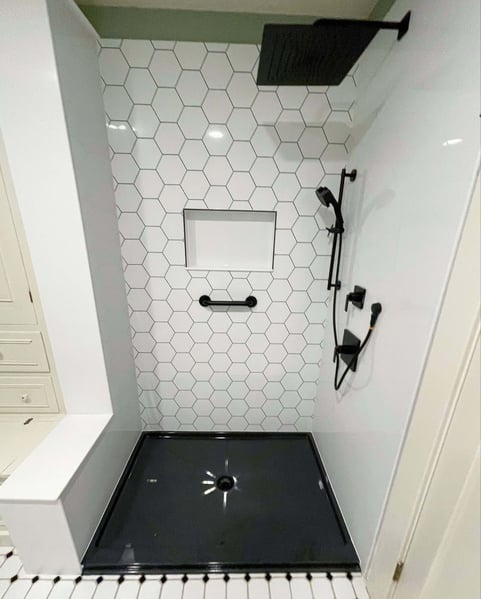
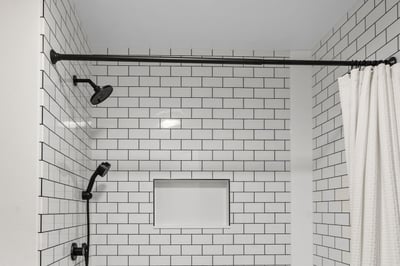
2026 design trends also include matte black fixtures, white walls with black accents, marble-style wall patterns, and black grout lines paired with white tile designs. The contrast between white walls and black fixtures or grout lines is one many homeowners associate with modern bathrooms.
What Bathroom Design Choices Create a Warmer, More Traditional Shower Look?
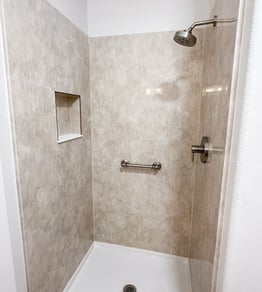
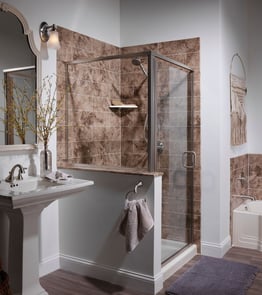
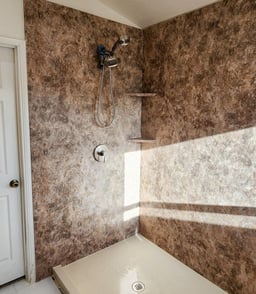
Warm designs often use earth tone colors, such as tan and brown. These tones create a softer and more natural appearance. Some of these designs include:
- Travertine
- Madeira
- River Rock
To keep the design consistent, the shower floor may also use warmer tones. Fixtures often use finishes like brushed nickel to complement color schemes.
|
Travertine |
Madeira |
River Rock |
|
|
|
|
Which Small Design Details Can Improve a Shower Remodel?
Elements like metal finishes, built-in storage, and accessories help tie the design together and influence both appearance and functionality.
Matching Metal Finishes
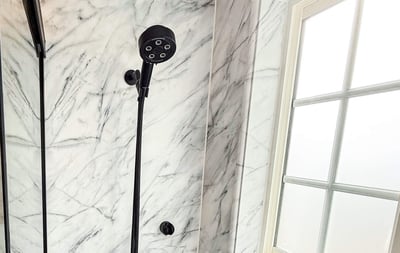
Finishes are the metal parts, such as faucets, showerheads, door hinges, grab bars for safety, and handles. When finishes match, the entire space looks cohesive.
Common finishes include:
- Chrome
- Brushed nickel
- Matte black
Some materials look fantastic, but require more upkeep. However, San Diego and Orange County are areas with hard water, meaning the water contains more minerals like calcium and magnesium. You’ll see this mineral buildup on these darker finishes, such as matte black. Many homeowners tend to choose brushed nickel instead since it’s better at hiding water spots.
|
Matte Black |
Brushed Nickel |
|
|
|
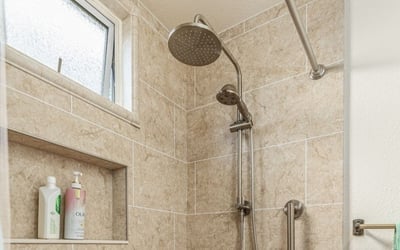
Built-In Storage Niches
A recessed shower niche is a built-in shelf in your wall that sits inside the wall and holds items like shampoo and soap.
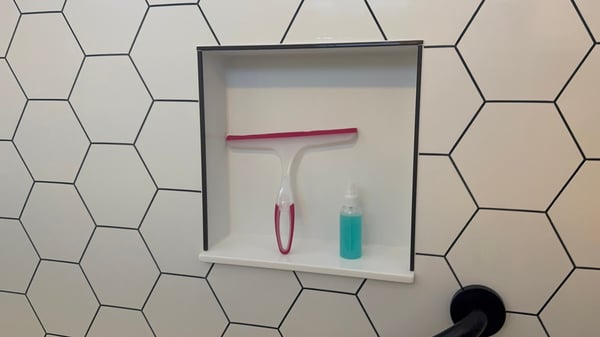
Adding metal trim around the niche can match the finish of the shower door hinges and fixtures. The shower feels more coordinated when these finishes match.
Trim can also be used as a decorative feature on your wall, such as a seam trim or a deco panel.
|
Seam Trim |
Deco Panel |
|
|
|
Seating and Other Accessories
These small features that can influence the appearance and usability of a shower, including:
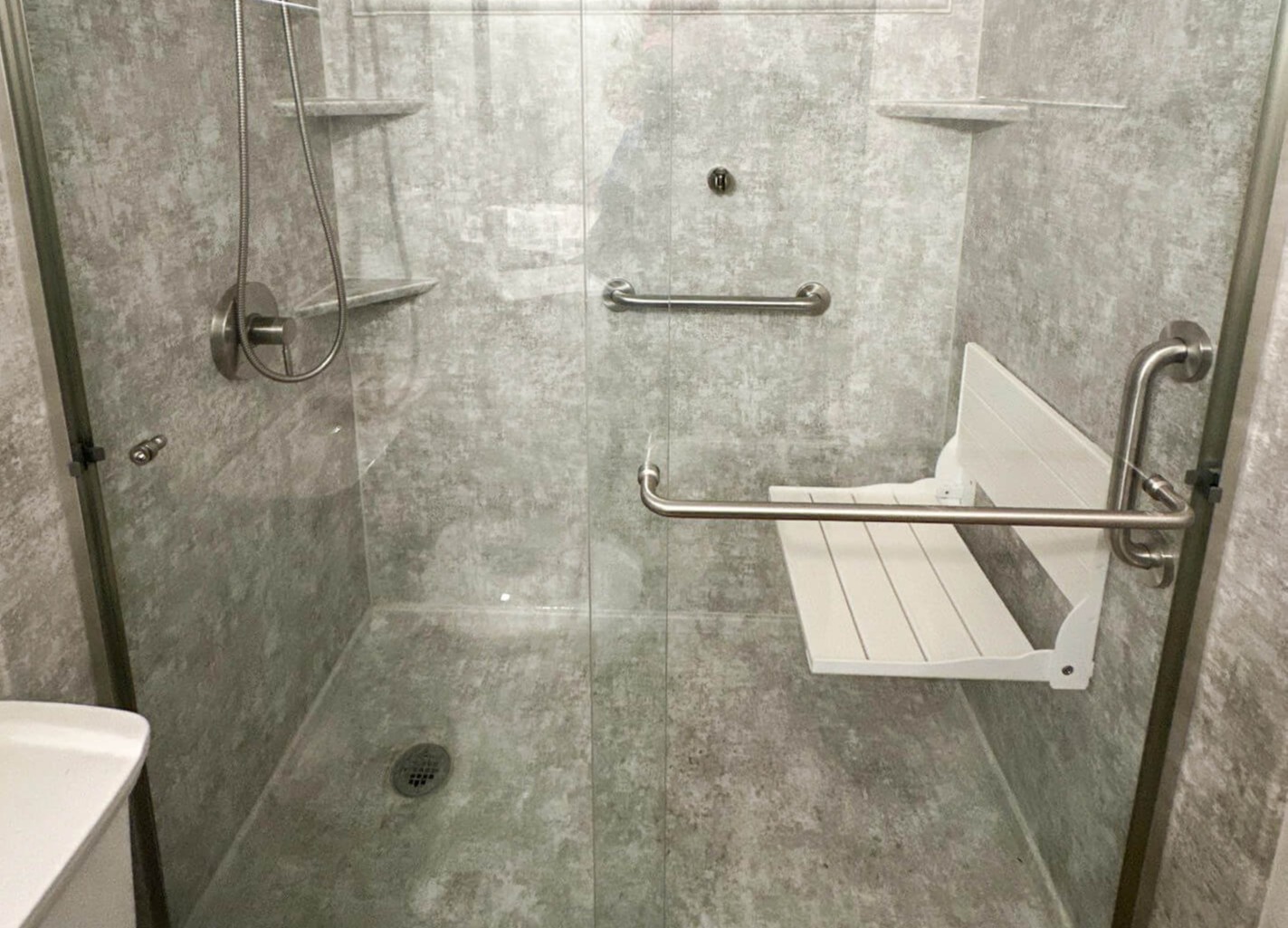
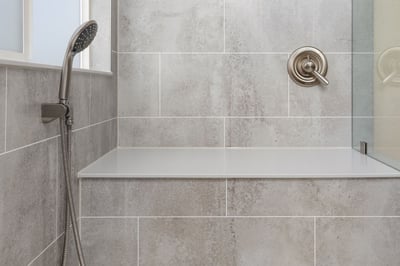
- Built-in shower benches
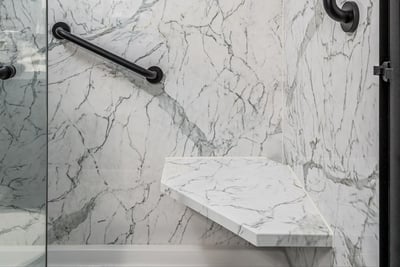
- Corner seating
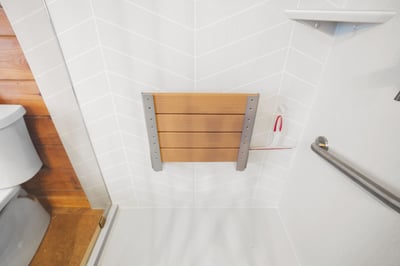
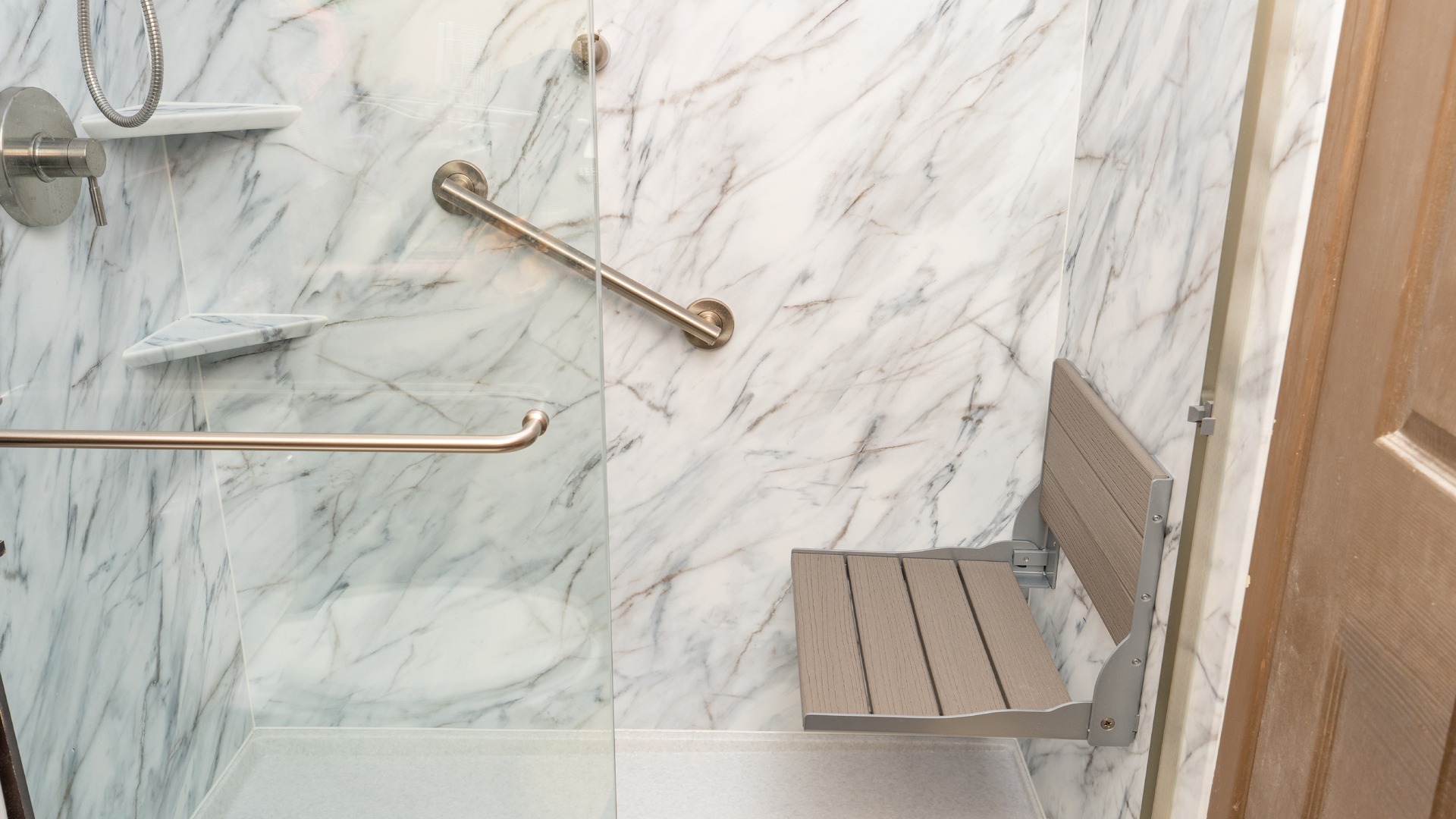
- Wall-mounted seating
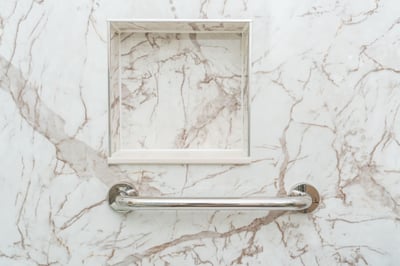
- Grab bars
While these features are typically added for comfort or accessibility, they can also influence the overall design when they match the surrounding finishes and materials.
|
Built-In Shower Bench |
Corner Seating |
|
|
|
|
Folding Shower Seats |
Grab Bar |
|
|
|
How Can Bathroom Lighting Conditions Influence Shower Design Choices?
If a bathroom lacks strong lighting or natural sunlight, darker colors can make the space feel smaller or dimmer.
In those cases, brighter designs often work better. White or lighter surfaces help reflect the available light and brighten the room. Lighter designs also make your shower space feel bigger without moving walls.
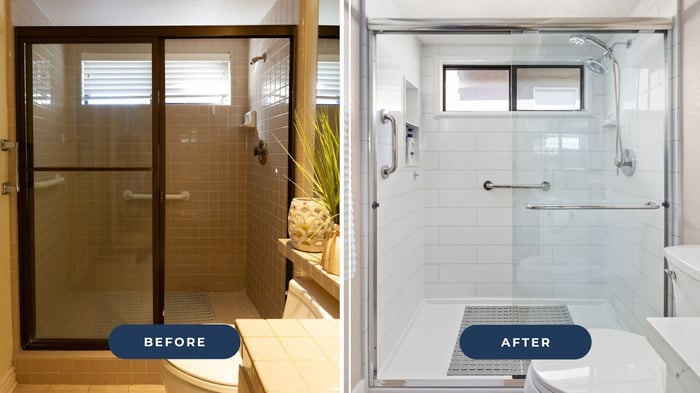
The material's finish also matters. Gloss finishes reflect light and can make a room feel brighter, while matte finishes absorb more light and create a softer look.
Also, fixtures can influence brightness. For example, chrome fixtures will reflect light better than matte black.
How Shugarman’s Bath Helps You Design a Better Shower
Shugarman’s Bath offers a detailed design consultation where a design consultant evaluates your tub and shower area and works directly with you to design your new space. This means selecting wall colors and patterns, choosing metal finishes, and reviewing layout options that best fit your space.
Consultations last roughly 90 minutes, but can vary depending on the questions and goals you have for your remodel. That amount of time lets you ask all your questions, make confident decisions on how you want the area to look, and gives you a to-the-penny quote so you get the right price the first time.
Bring Your Shower Design to Life With a Qualified Expert
Making your shower or bathtub “look better” comes down to thoughtful design choices. You have plenty of elements to consider, such as metal finishes, wall textures, lighting, and making them all work cohesively together. It can also help you to make practical considerations for lighting conditions, maintenance, and material durability.
Many homeowners start with a general idea of what they want their bathroom to look like, but aren’t always sure what elements would work best for their specific space. Seeing real examples and walking through the design process step by step makes decisions much easier.
Now that you know more about shower design, you should read our article on low-maintenance shower materials. That way, you can understand how to combine your design with materials that last.
Finally, if you have any questions about design or shower remodeling, talk to our team at Shugarman’s Bath!
FAQs About Shower Remodeling:
Q: How long does a typical shower remodel take?
A typical shower remodel takes 1-2 days. More complex projects in larger areas can take longer.
Q: What materials do you use for your tub and shower products?
Our products are mainly composed of a material called BP-Cor2. It's a high-tech polymer made up of 15% acrylic and 85% ABS, the same material used to make football helmets. It's a step up from traditional tile and standard acrylic.
We can laser-etch grout lines into the material to give it the look of tile without the cleaning and maintenance that comes with it. We call it New World Tile.
Q: Do you remodel the whole bathroom or just the tub and shower area?
We're specialists in the tub and shower area. That's where our focus stays. For other parts of your bathroom, we work with trusted contractors regularly and can refer you to the right people at no extra charge. That referral can save you 10-20% on a larger project.
The opinions expressed in the referenced materials are those of the authors only, not necessarily of Shugarman’s Bath. While these referenced materials are useful in answering generalized questions, each bathroom is unique. For a particular question about your tub or shower remodeling project, contact your Shugarman’s Bath consultant.
Topics:
-1.jpg?width=1920&height=1080&name=JoniCoci_Demo23%20(1)-1.jpg)
.png?width=1920&height=1080&name=VERSUS%20(1).png)



-1.jpeg?width=1920&height=1080&name=After%203%20(1)-1.jpeg)