
What Matters Most
|
You might be taking those showers and feeling claustrophobic daily, especially when it feels like you’re in a dark, damp cave. It feels like you have no space to get clean. It’s easy to assume you need to do a big demolition project to make your shower feel bigger. And you’re wondering how to make your bathroom shower feel bigger without burning a hole in your pocket.
Thankfully, there are plenty of ways to make your bathroom shower feel better without tearing down walls. Seven ways, to be exact. Crazy.
At Shugarman’s Bath, we’ve heard this complaint from many homeowners. They assume they need to push a wall out to solve a problem. When we explain that there are other (and less costly) alternatives, that “need” for demolition usually disappears. We’ve found that a “small” shower is an illusion created by darker colors and bulky features.
In this article, you’ll learn:
- Why Does My Shower Feel So Small?
- So, Do I Need to Move My Shower Walls?
- How Can I Make My Shower Feel Bigger? There are Seven Ways.
- When Does Moving Walls In The Tub and Shower Area Make Sense?
- What Does This Mean For Your Shower Remodel?
By the end, you’ll have a clearer idea of how to make your shower feel bigger, without needing to tear down walls.
Why Does My Shower Feel So Small?
Most of the time, it has nothing to do with the actual space. Much of it depends on how your eyes and brain perceive the room.
Dark colors make the walls feel closer than they really are. Add in heavy features and bulky fixtures that steal elbow room. Frosted glass blocks your view of the outside and can make you feel closed in.
Older designs will sometimes stack these problems together, creating a tight, cave-like feel. It feels claustrophobic, even when the space isn’t that small.
There are those outliers where you’re taller than the average Southern Californian, barely being able to turn around and having to duck under the shower head. In that case, your shower might actually be too small for you.
So, Do I Need to Move My Shower Walls?
Short answer: No, you probably don’t need to move your shower walls. But, of course, it depends on your specific shower layout.
A common issue we run into is homeowners assuming they need to push a wall to fix the problem. The thought tends to disappear when an expert says “you don’t need to do that,” and explains the design options.
This isn’t to say there aren’t exceptions. Because bathrooms vary, there are cases where wall changes are worth discussing. Is the shower unsafe, completely unusable, or built in a very enclosed way? Definitely discuss that with a professional.
Look at and discuss design solutions first. Consider wall changes if the design options can’t resolve the issue.
How Can I Make My Shower Feel Bigger? There are Seven Ways.
Here are seven effective solutions to open up your shower without changing the footprint.
1. Use Lighter Colors
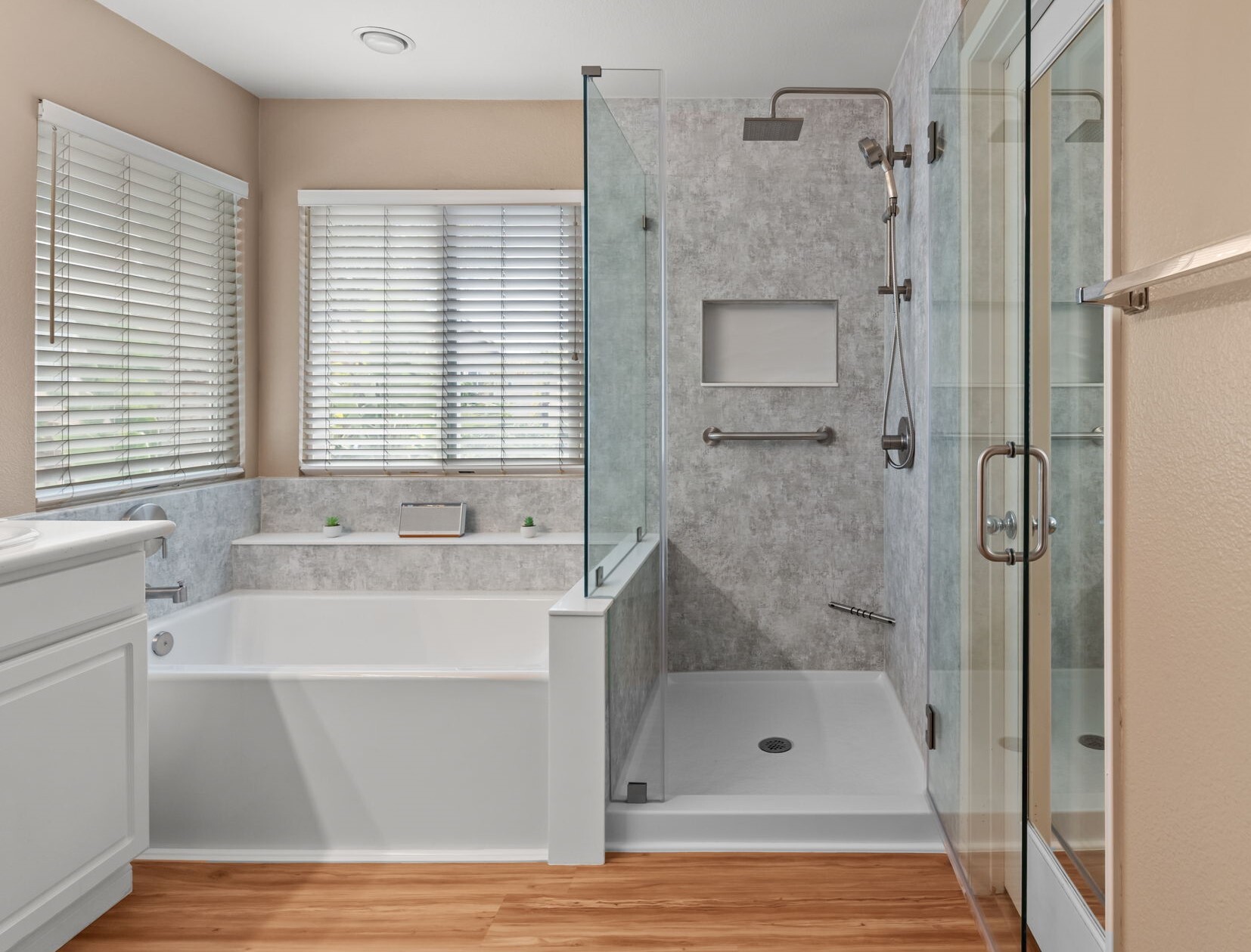
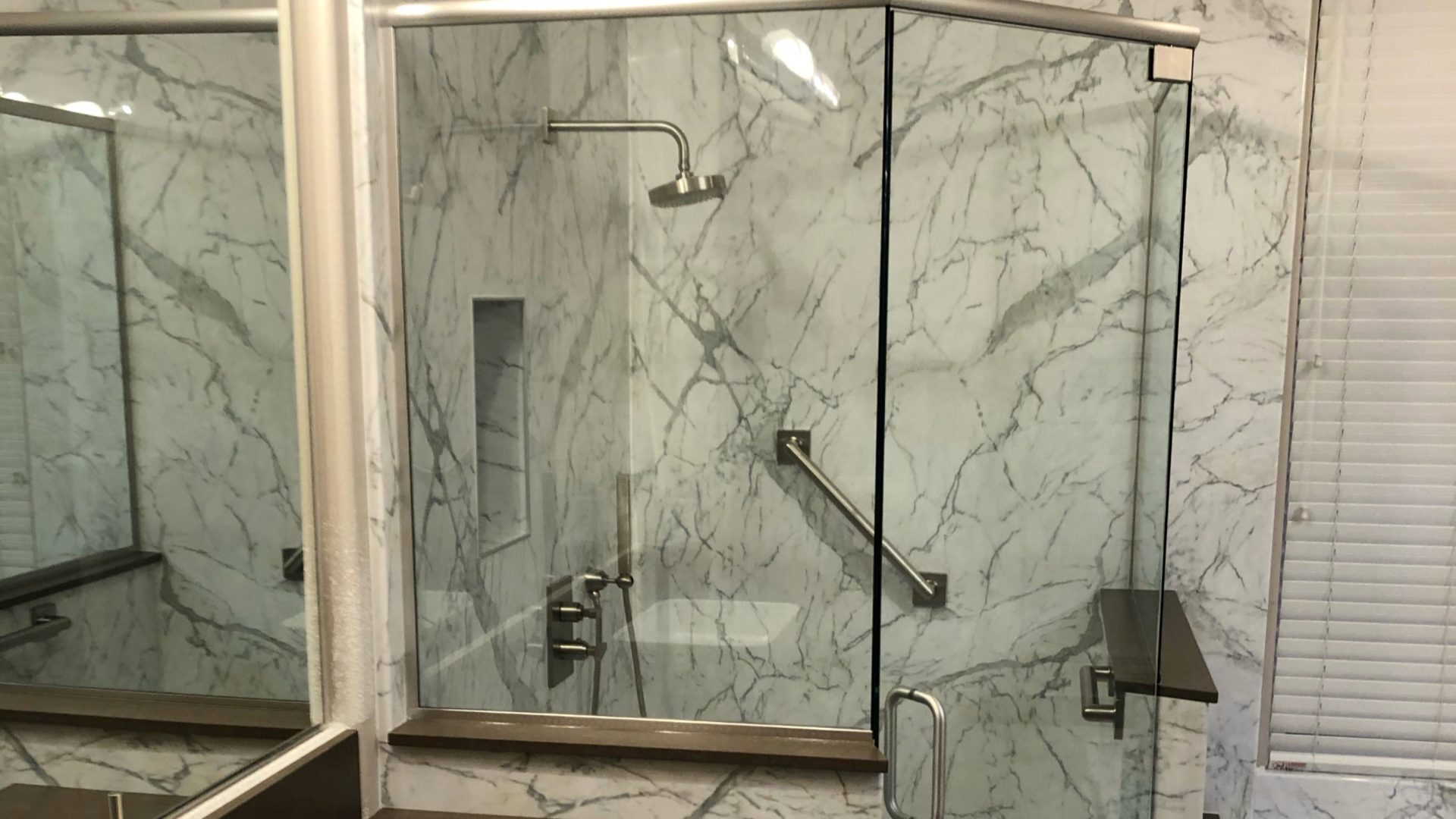
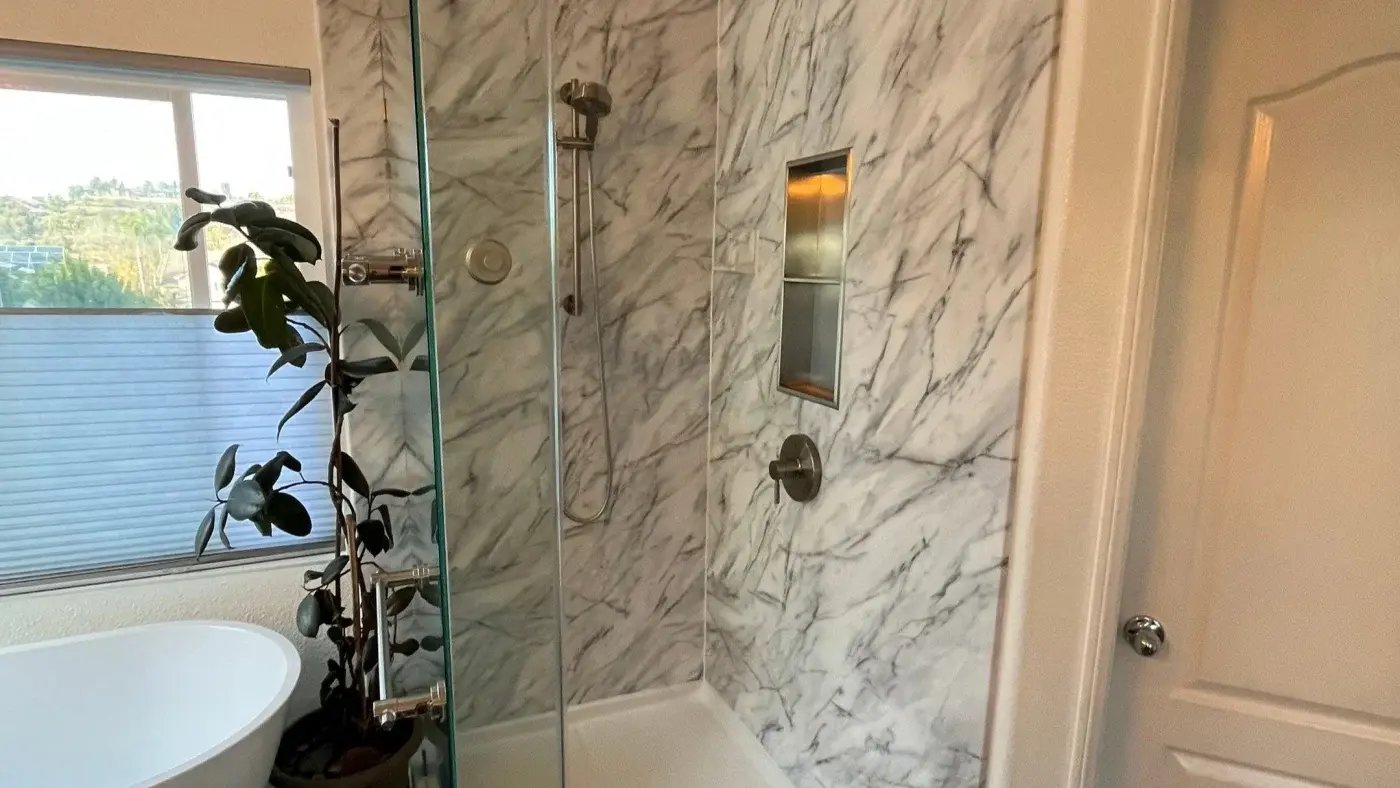
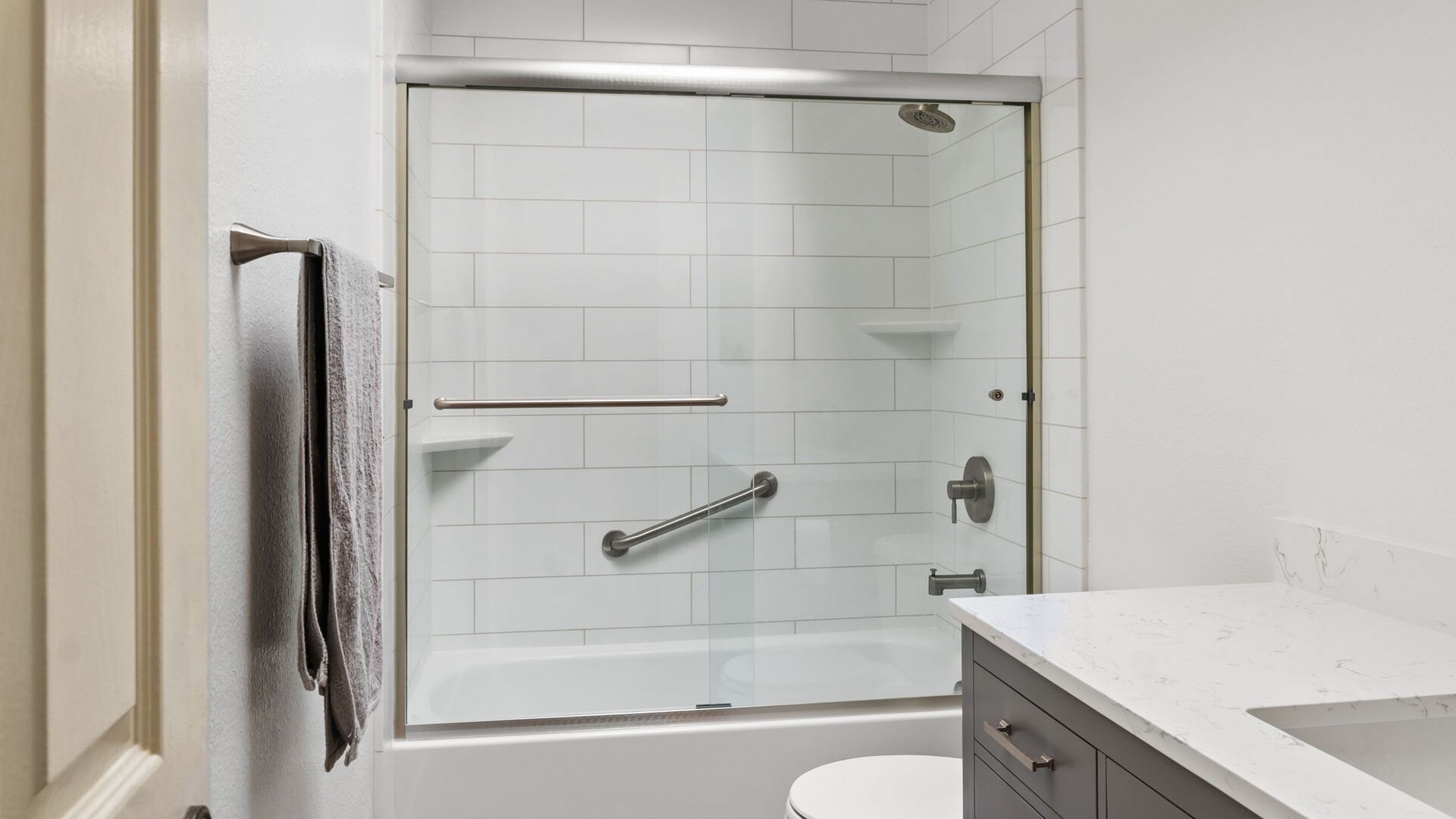
Lighter colors reflect more light and can make the space feel more open. Darker colors tend to make walls feel closer together. Going to brighter surfaces might be the way to go!
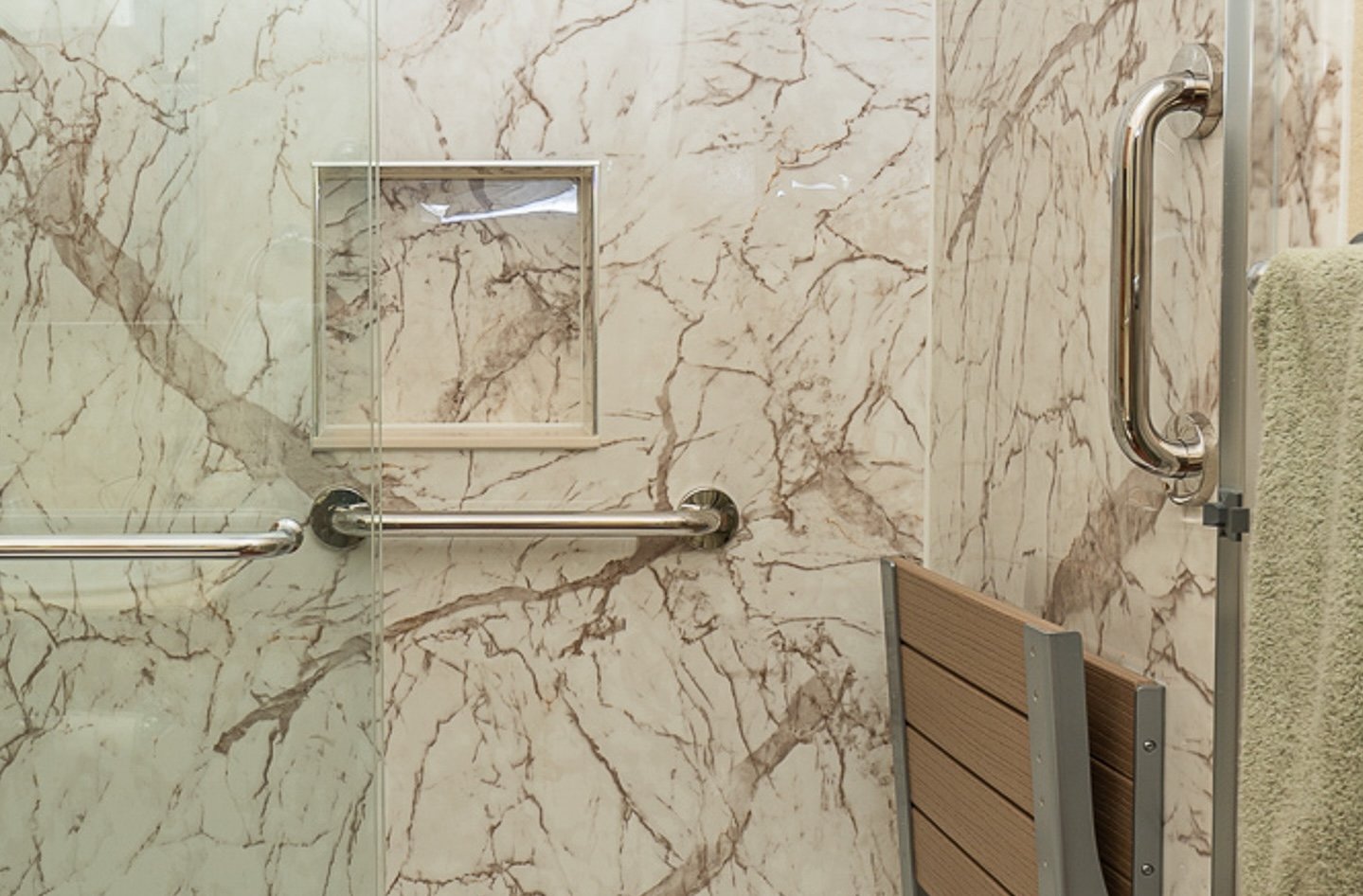
2. Switch to Clear Glass
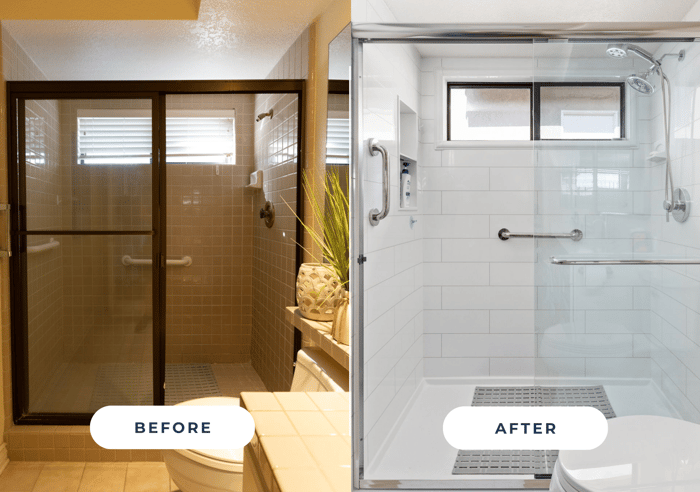
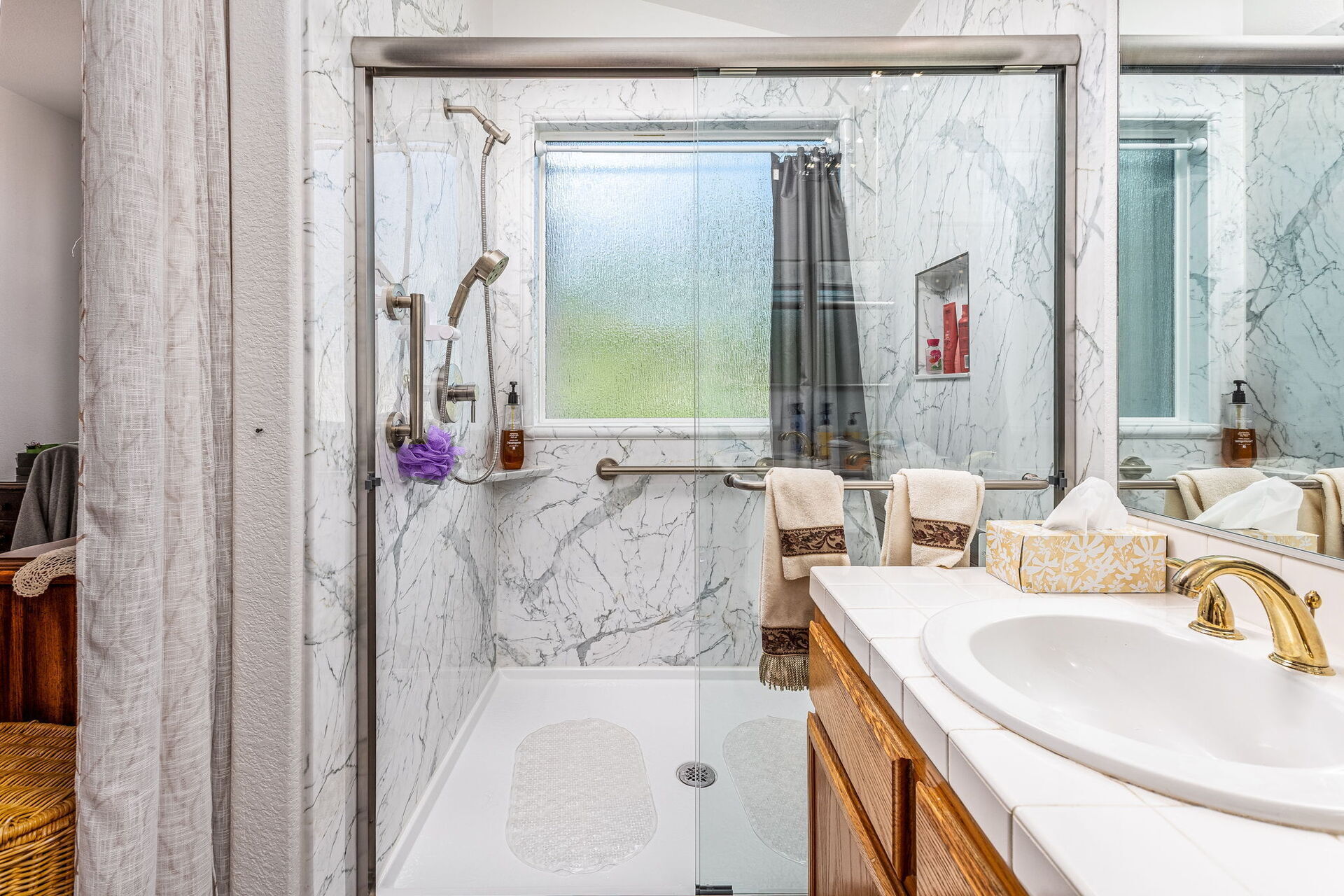
Clear glass lets you see the entire tub and shower area, whether you’re looking from outside or inside. Shower curtains, frosted glass, or rain glass block your view and make the area feel more closed in. Switching to clear glass can make the area feel larger.
3. Replace Corner Shelves With a Wall Niche
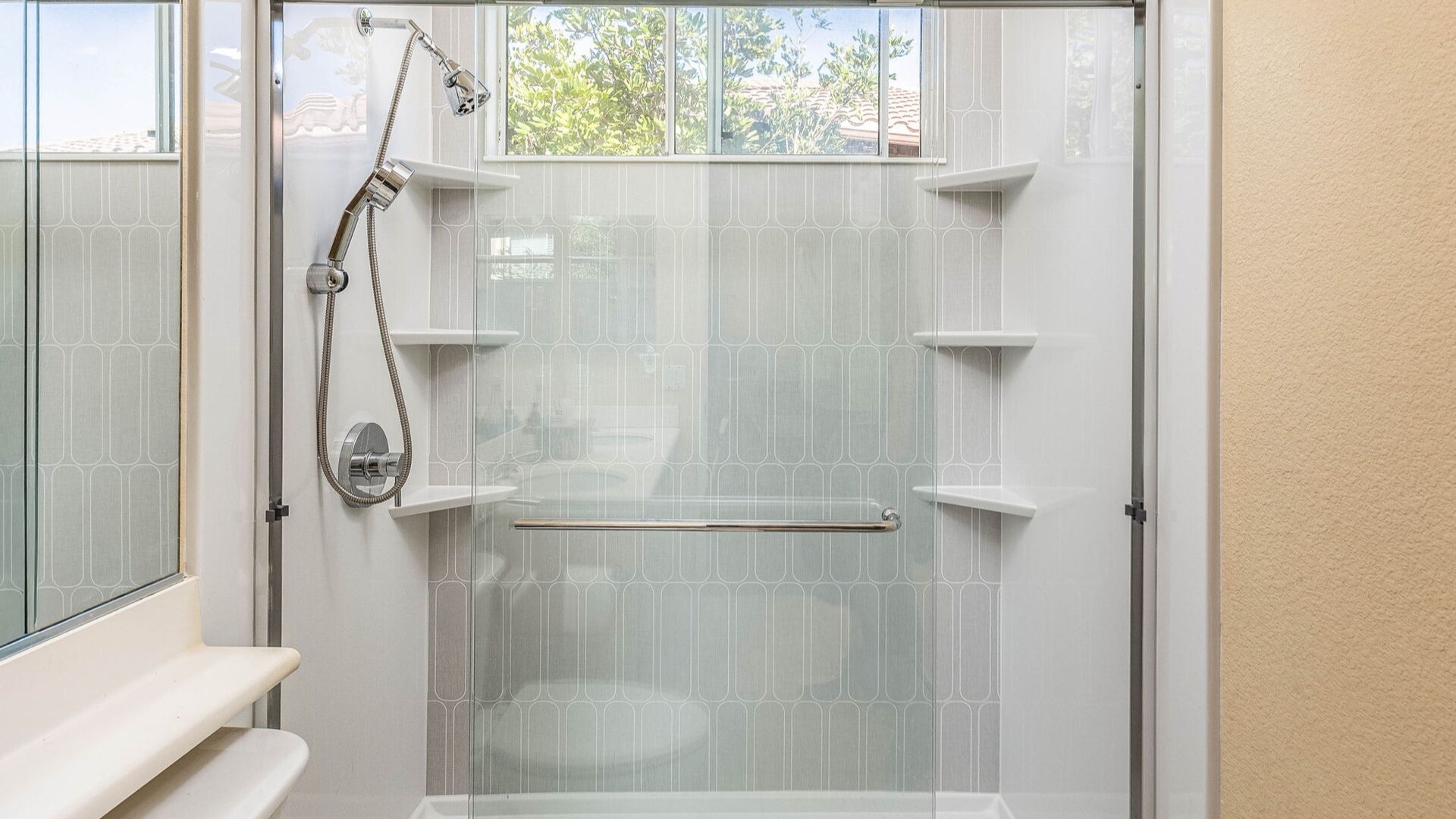
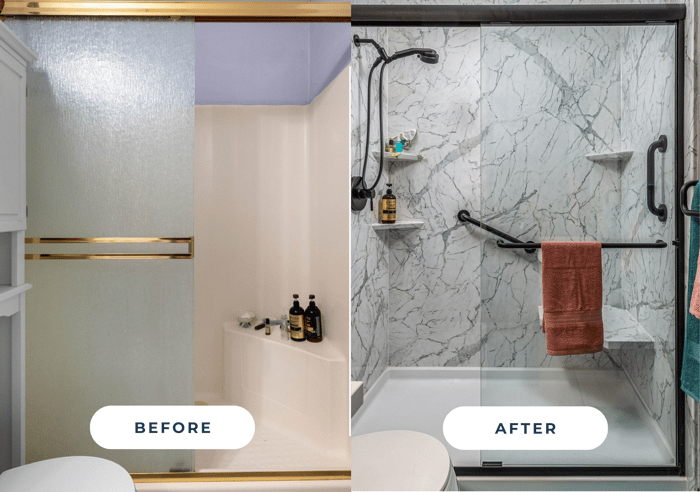
Corner shelves stick out into the shower and take up elbow room. Contrast this with a wall niche, which sits inside the wall. You’ll have more usable space and make the area less crowded.
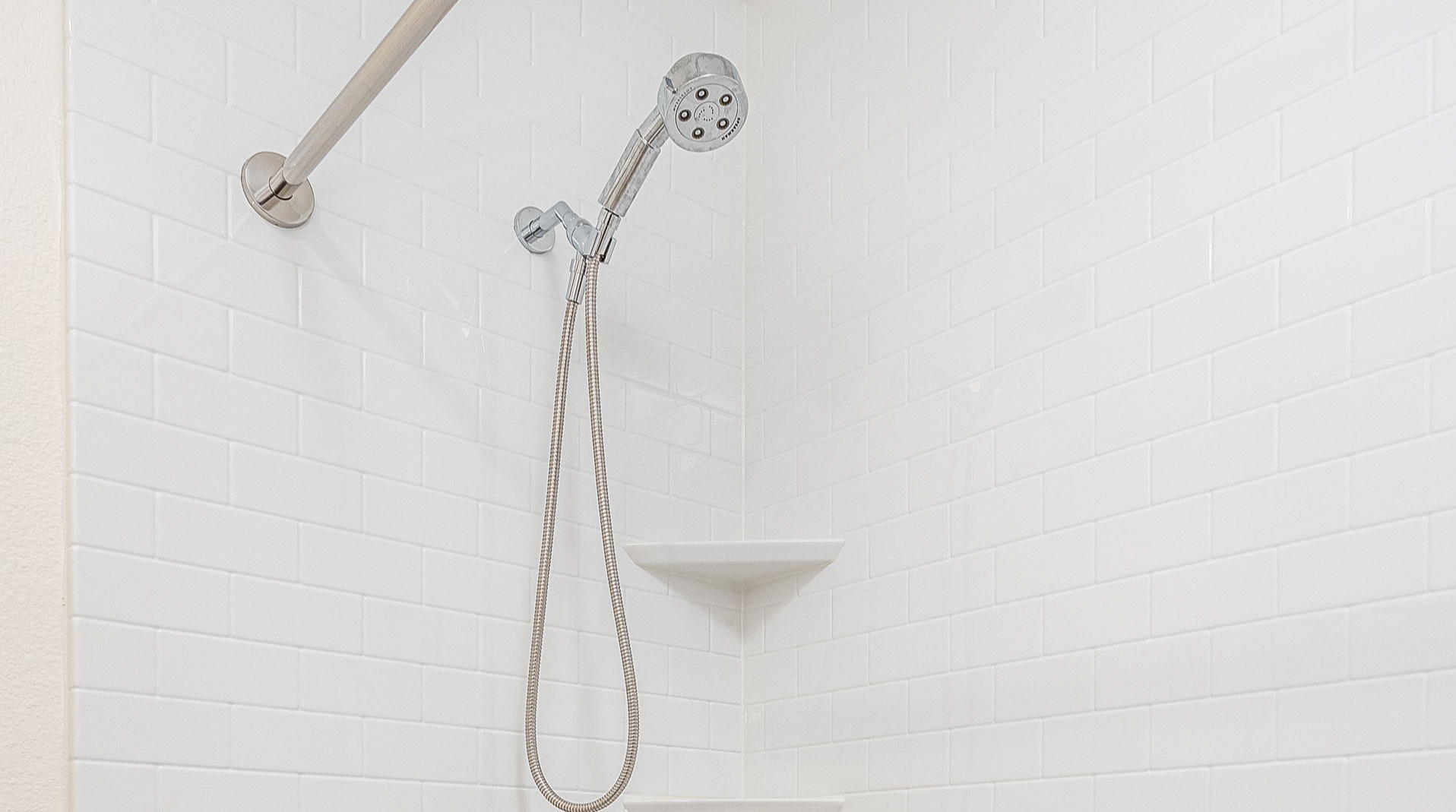
4. Keep The Fixtures Simple
Large, bulky fixtures can make a small shower feel even smaller. Simpler and cleaner fixtures can help make the space feel more comfortable and open.
5. Remove Soffits or Boxed-in Ceilings (When Possible)
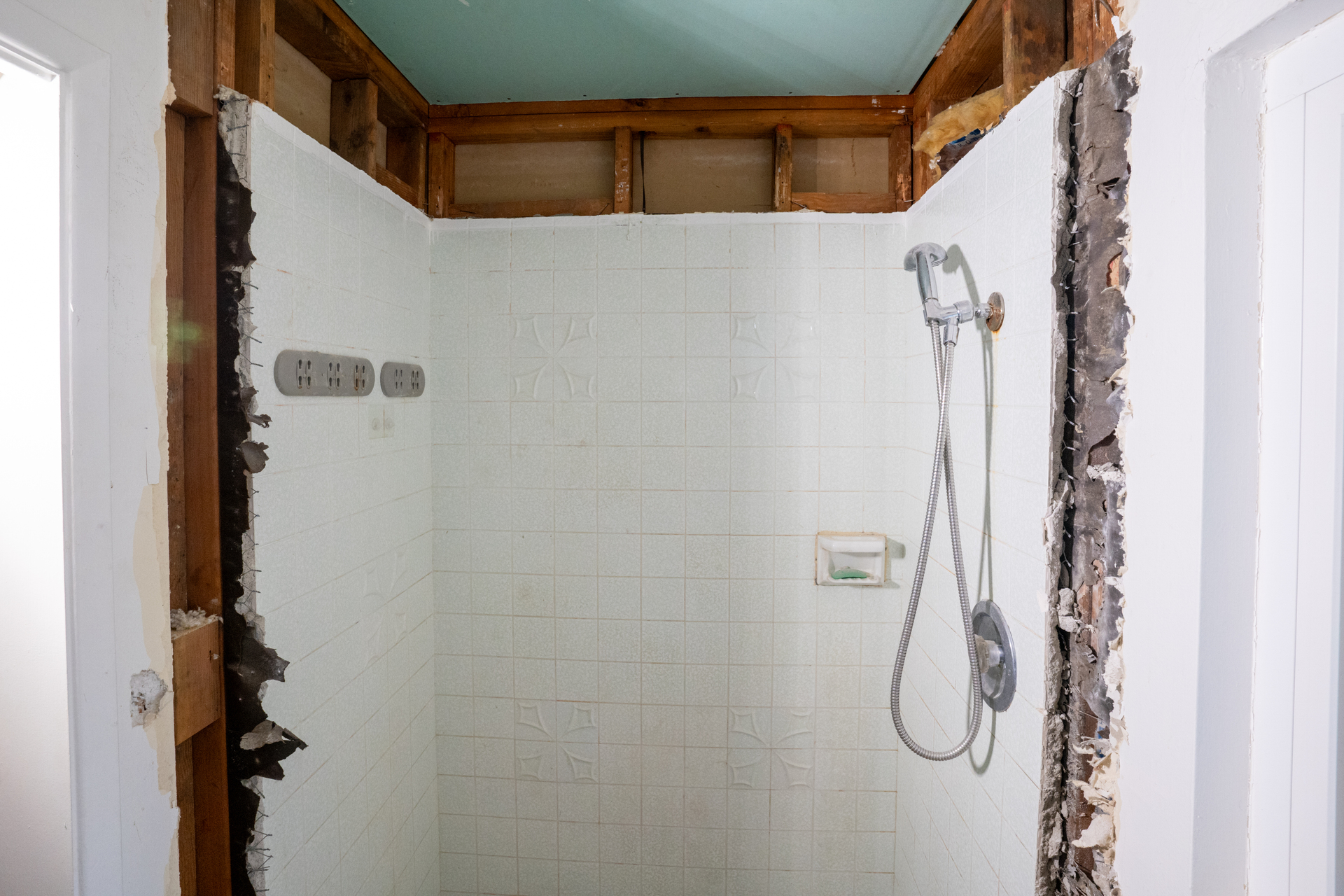
Many older showers have a soffit or boxed-in ceiling area. Removing it raises the visual ceiling and helps the shower feel taller.
6. Remove Permanent Seating
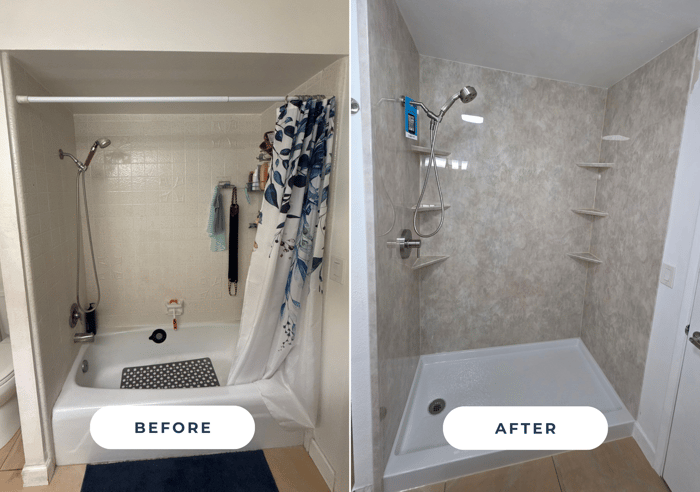
Some showers have seating that can get in the way of moving comfortably. It’s possible to remove the seating entirely, or instead go with a foldable chair. Either way, there’s an opportunity for the space to feel bigger.
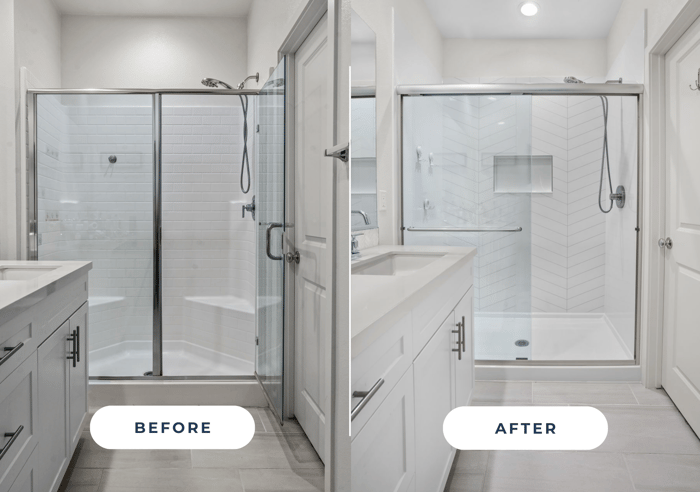
7. Widen the Shower Inside the Existing Bathroom
Sometimes the shower can be widened inside the bathroom without pushing into the walls or another room. Even a few extra inches of width can greatly improve comfort.
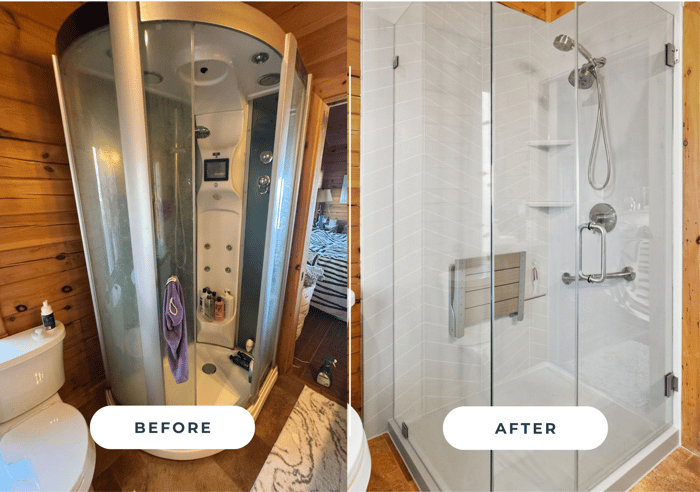
When Does Moving Walls in the Tub and Shower Area Make Sense?
Again, moving walls isn’t necessary most of the time. There are situations where it’s worth discussing.
If the shower is unsafe for someone with mobility concerns, the space may need to be modified to improve function.
For example, a shower that’s too narrow may not provide enough room for steady footing, safe transfers, or proper safety features. In those situations, expanding the shower area can make the space safer and more usable.
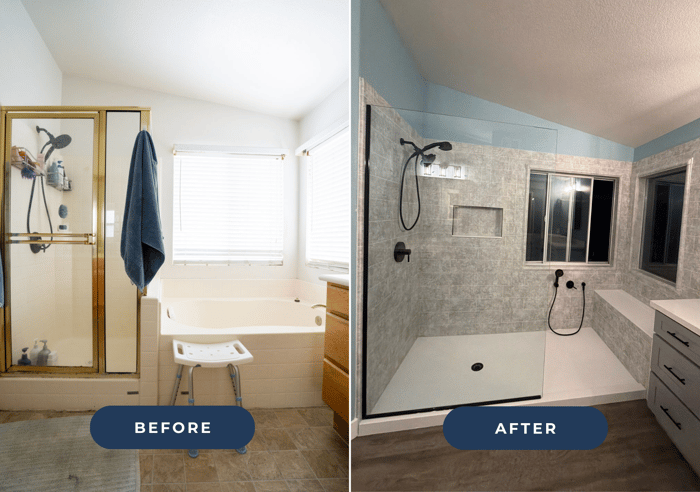
There are also extremely small, boxed-in “cave” showers in some older homes. These showers in particular feel dark, cramped, and claustrophobic. If switching to lighter materials doesn’t feel like enough, you might be able to open things up by removing a wall, depending on your space.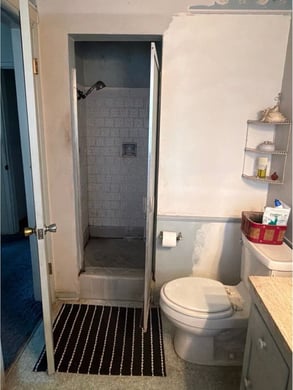
How Much Does It Cost to Enlarge a Shower?
Moving walls quickly increases a project's cost. We’ve seen projects that add $1,000 per inch. However, it varies depending on what needs to be done in the area. Sometimes you can enlarge a shower without affecting the cost of your project. Other times, it can double the cost.
Once walls move, plumbing often needs to move with them. This could mean cutting into concrete floors and working around structural systems that limit what can be safely modified. Each step adds time and money.
What Does This Mean For Your Shower Remodel?
It means you should start with the design before demolition. In plenty of cases, you can achieve a larger shower feel with better colors, glass, storage, fixtures, and layout adjustments. These changes are similar and more cost-effective than structural work.
Look at other options first. You’re more than welcome to bring up moving walls during your consultation, but it isn’t likely you’ll have to go with that option.
Want Experts to Take a Look at Your Tub and Shower Area?
Chances are, it isn’t the walls making your shower too small. Adjusting the design can affect how open the space feels. Something as small as lighter colors can give you a more open feel. And those simple changes can often deliver the comfort you’re looking for.
You aren’t the only homeowner who thinks a major overhaul is needed to create more room in the tub and shower area. Sometimes, a “small shower” is nothing but an illusion. The good news is that you can make that space feel larger without making any structural changes.
Next, read our article about how to find the right contractor for your bathtub and shower remodel.
Want to see what’s possible with your existing space? Schedule a free consultation with Shugarman’s Bath today! Talk to an expert who can help with solutions that make your shower feel larger and brand new!
The opinions expressed in the referenced materials are those of the authors only, not necessarily of Shugarman’s Bath. While these referenced materials are useful in answering generalized questions, each bathroom is unique. For a particular question about your tub or shower remodeling project, contact your Shugarman’s Bath consultant.
FAQs About Tub and Shower Remodeling:Q: Do you remodel the whole bathroom or just the tub and shower area?We're specialists in the tub and shower area. That's where our focus stays. For other parts of your bathroom, we work with trusted contractors regularly and can refer you to the right people at no extra charge. That referral can save you 10-20% on a larger project. Q: How long does a typical shower remodel take?A typical shower remodel takes 1-2 days. More complex projects in larger areas can take longer. Q: What materials do you use for your tub and shower products?Our products are mainly composed of a material called BP-Cor2. It's a high-tech polymer made up of 15% acrylic and 85% ABS, the same material used to make football helmets. It's a step up from traditional tile and standard acrylic. We can laser-etch grout lines into the material to give it the look of tile without the cleaning and maintenance that comes with it. We call it New World Tile. |
Topics:
.png?width=1920&height=1080&name=VERSUS%20(1).png)



.jpg?width=1920&height=1080&name=VERSUS%20(5).jpg)
.png?width=1916&height=1075&name=Screenshot%20(173).png)
-1.png?width=1697&height=985&name=Screenshot%20(170)-1.png)

.jpg?width=1920&height=1080&name=VERSUS%20(2).jpg)