
What Matters Most
|
You're either planning a shower remodel or you're seeing signs that something is already wrong. If the waterproofing was skipped or done haphazardly, you won't know until mold shows up in the corners, paint starts peeling, or a smell keeps coming back after cleaning. By then, the damage behind the walls has already been building for a while.
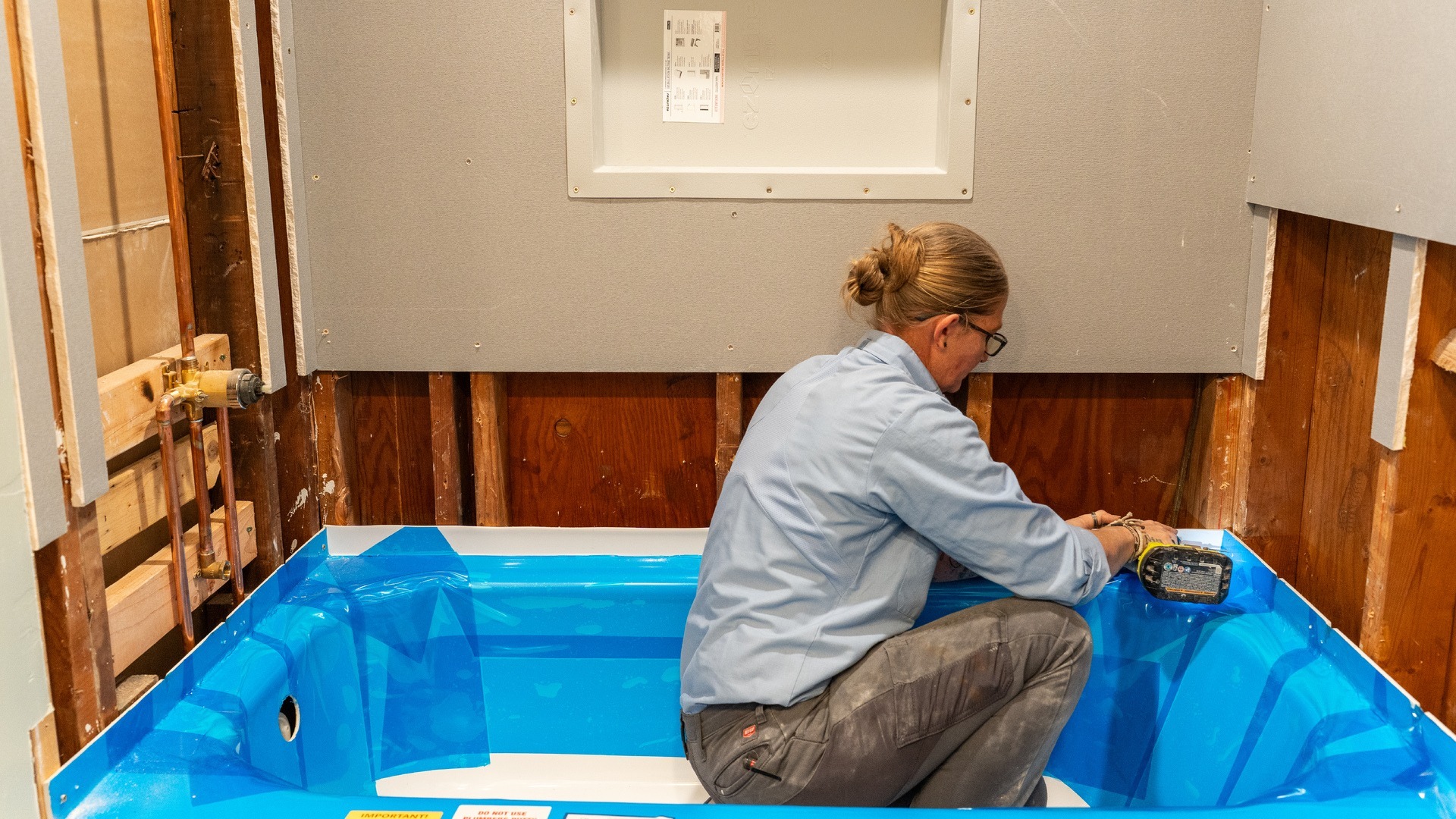
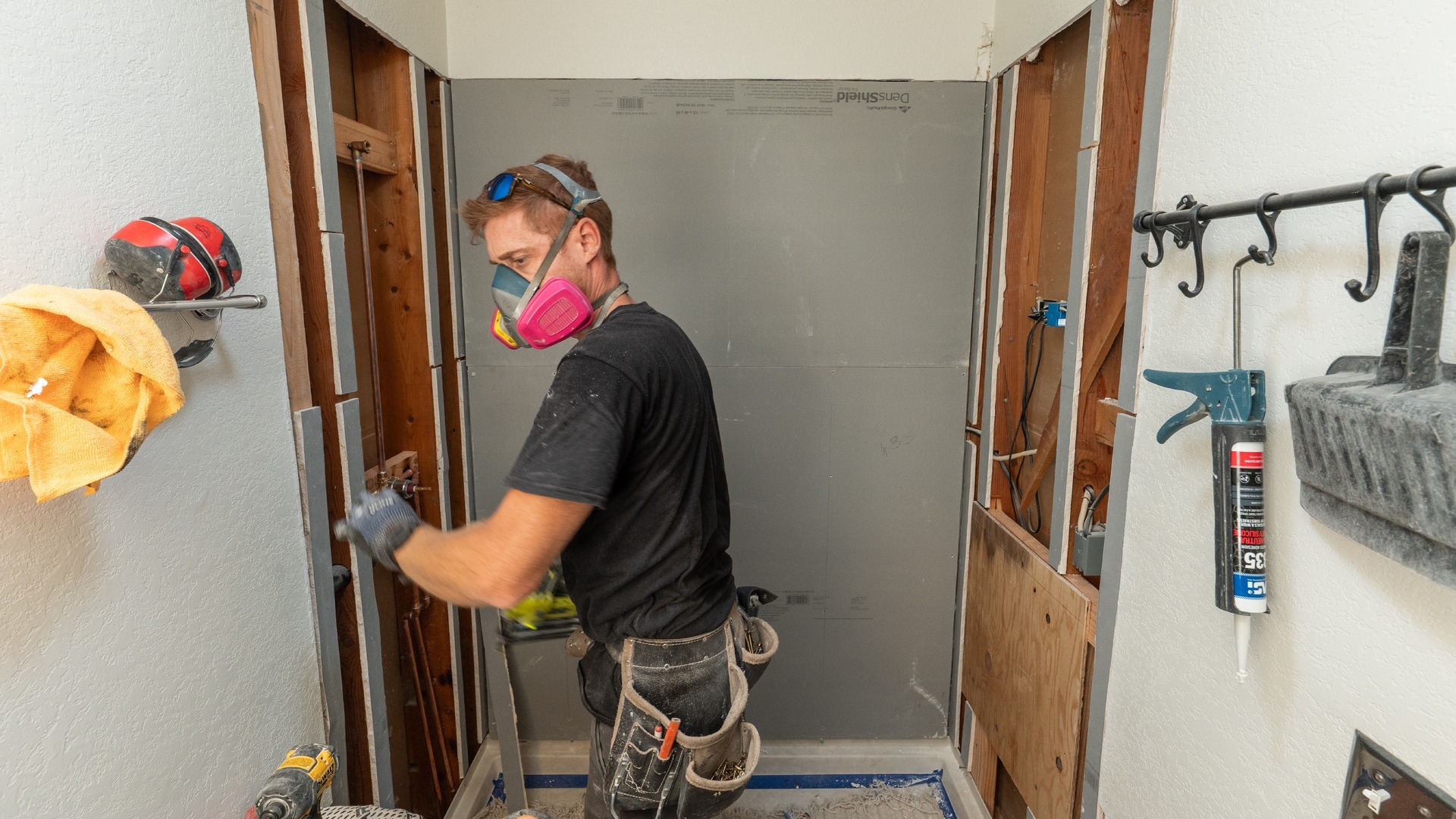
Shugarman's Bath has completed more than 6,500 tub and shower remodels across San Diego and Orange County. We've opened up enough walls during the demolition phase to see firsthand what happens when waterproofing fails. It’s exactly why we treat it as the most important part of every installation we do.
This article covers why waterproofing matters more than any other part of a shower remodel, where it goes wrong, and what to do if you think it's already failing in your home.
Table of Contents:
- Why Does Waterproofing Matter So Much for a Shower Remodel?
- What Happens When Waterproofing Fails?
- Why Do So Many Shower Remodels Get Waterproofing Wrong?
- What Should You Do If You Think Waterproofing Is Failing?
Why Does Waterproofing Matter So Much for a Shower Remodel?
Waterproofing is the most important part of any shower remodel because thousands of gallons of water hit the tub and shower walls each year. You can put the best shower wall material money can buy on the surface, but that money will be wasted if the waterproofing isn’t done correctly.
Every ten-minute shower uses up to 17.2 gallons of water. When water gets behind your walls, it will do damage to the wood framing. Water saturates the framing and can create conditions where mold grows.
Your waterproofing system is what keeps water contained in the tub and shower area. If there are gaps in the system, water will find a way through.
What Happens When Waterproofing Fails?
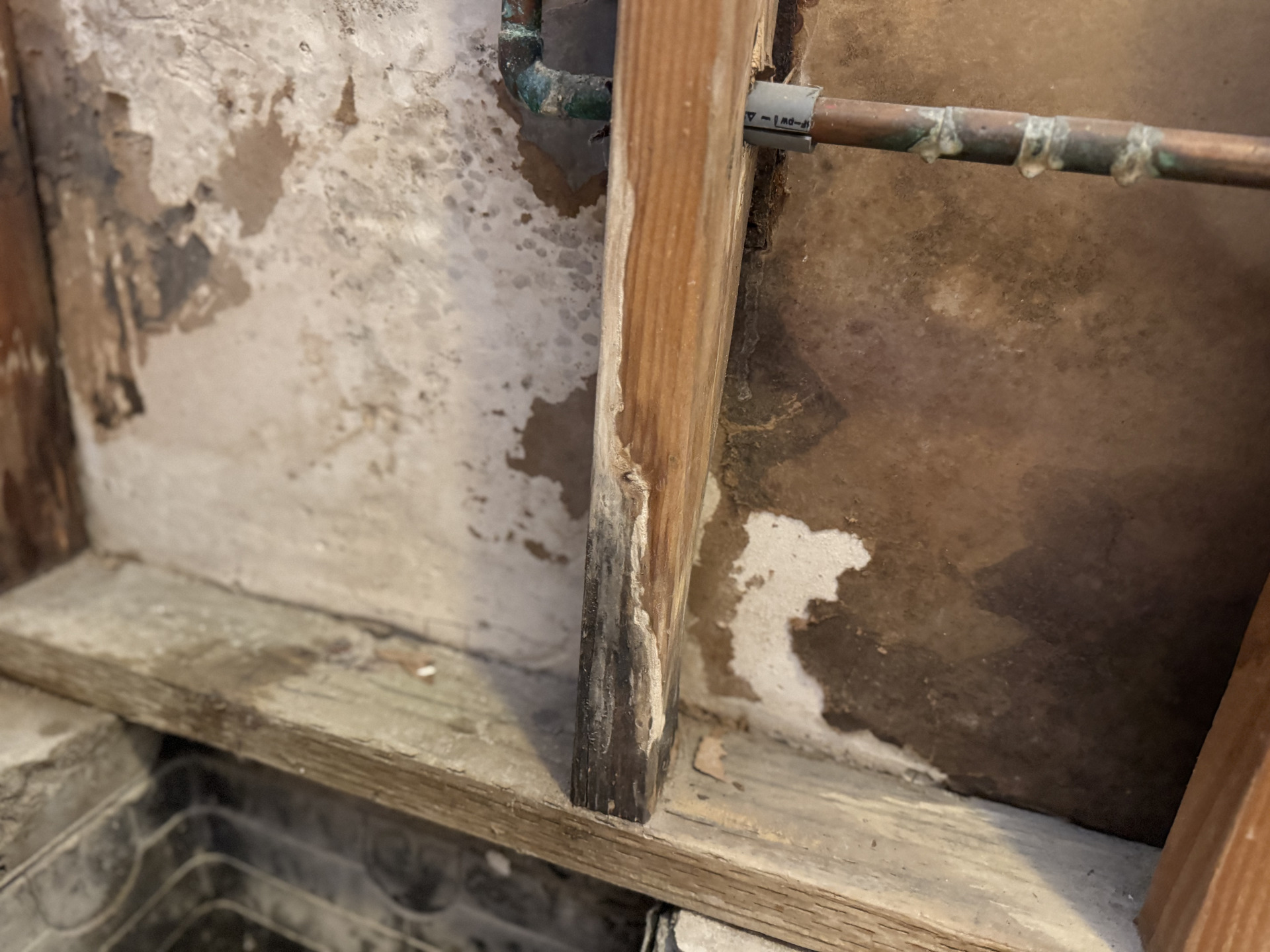
Water seeps behind the walls and under the floor. The damage builds up slowly over time. You might not notice problems for months or years.
Here are some signs of water damage you’ll notice in the tub and shower area:
- Mold growing in the corners or along the silicone lines, even after cleaning
- Silicone or caulk pulling away from the wall or the shower pan
- Paint bubbling or peeling on the wall adjacent to or on the ceiling inside the tub and shower area.
- A musty smell that comes back after cleaning
- Dark spots on the ceiling of the room below a second-floor bathroom.
When you notice any of these signs, it means damage behind the walls has been building up. Water damage does not fix itself. You’ll need a professional to fix the issue.
Read our article on the problems that could be behind your shower walls to see how water can damage your home.
Why Do So Many Shower Remodels Get Waterproofing Wrong?
While you do get waterproofing failures from subpar work or cutting corners, some issues come from material choices. Sometimes, even contractors make these waterproofing mistakes.
Many shower remodels will rely on silicone or grout as the primary waterproofing barrier. Silicone will dry up, crack, and pull away from the wall. Grout is porous, absorbs water, and cracks under the expansion and contraction the tub and shower area experiences daily. Cracks or gaps will develop, allowing water to get through.
Some contractors and DIYers will use organic, paper-faced backer boards, such as greenboard or purple board. They break down when repeatedly exposed to moisture, and mold eats the organic material. In 2006, the International Residential Code removed paper-faced gypsum products from the approved list of backer materials for tub and shower areas.
Corners and seams are where failures most often occur, as they are stress points where two surfaces meet. They’re susceptible to movement from temperature changes and settling. They need to be addressed correctly.
What Should You Do If You Think Waterproofing Is Failing?
If you notice any of the signs mentioned above, have a professional inspect the space before the damage spreads further.
When waterproofing fails, the walls have to come out. That means demoing the tub and shower area, replacing damaged materials, potentially remediating mold, maybe replacing plumbing, installing new backer boards, properly sealing seams and corners, and applying new surface materials.
You’ll be paying for another remodel. The most expensive remodel is one you have to do twice. It's one of the main reasons cheap shower remodels end up costing more later.
Is Your Shower Built to Last?
When you’re doing a shower remodel, what’s as important as the surface walls is what’s behind them. If your waterproofing isn’t done correctly the first time, you’ll experience damage to your home’s structure and need another remodel.
For a closer look at what good waterproofing involves, learn about what proper waterproofing should look like in a tub and shower area.
Have questions about waterproofing or shower remodeling? Contact Shugarman’s Bath today to talk to an expert.
FAQs on Tub and Shower Remodeling:Q: What materials do you use for your tub and shower products?Our products are mainly composed of a material called BP-Cor2. It's a high-tech polymer made up of 15% acrylic and 85% ABS, the same material used to make football helmets. It's a step up from traditional tile and standard acrylic. We can laser-etch grout lines into the material to give it the look of tile without the cleaning and maintenance that comes with it. We call it New World Tile. Q: Does Shugarman's Bath Do Repair Work?No, Shugarman's Bath does not do general repair work. The reason is that repairs are temporary fixes that buy time but do not solve the underlying problem. Most homeowners end up paying for the same repair more than once or eventually replacing the materials anyway after spending money trying to maintain them. Q: Do you remodel the whole bathroom or just the tub and shower area?We're specialists in the tub and shower area. That's where our focus stays. For other parts of your bathroom, we work with trusted contractors regularly and can refer you to the right people at no extra charge. That referral can save you 10-20% on a larger project. |
.png?width=1920&height=1080&name=VERSUS%20(1).png)
.png?width=1920&height=1080&name=VERSUS%20(2).png)