
What Matters Most
|
It’s good that you’re concerned about whether a contractor does their waterproofing correctly. You don’t want to pay a hefty sum for a remodel, only for problems to come behind your walls later.
You shouldn’t have to worry about waterproofing after you get a newly remodeled tub or shower.
Shugarman’s Bath specializes in the tub and shower area. We perform hundreds of remodel and conversion projects monthly, making sure all the remodels we do are waterproof so homeowners never have to worry about their tub or shower again.
In this article, you’ll learn why waterproofing matters so much in a tub or shower remodel, what causes most leaks, and how a general contractor should waterproof during installation.
Table of Contents:
- Why Is Waterproofing So Important for a Tub or Shower Remodel?
- What Are Common Causes of Bathroom Leaks?
- How Should General Contractors Waterproof a Tub and Shower Area?
- Peace of Mind Starts with Proper Waterproofing
Why Is Waterproofing So Important for a Tub or Shower Remodel?
Water is the single most destructive force in your bathroom. The reason waterproofing is so important is that most homes are built with organic materials, such as wood framing. When water is on the run, it leaves its marks by damaging your materials.
Shower failures start slowly behind the walls. Moisture builds up, materials break down, and mold can form before you ever notice. By the time these issues are visible, the damage is usually more extensive (and expensive) to fix.
So What Does Waterproofing a Tub or Shower Area Actually Mean?
Waterproofing a shower means protecting the structure of your home from water before any finished surfaces go on.
Proper waterproofing doesn’t rely solely on decorative wall panels, grout, or silicone to stop water. Proper waterproofing happens below the surface. A properly done waterproofing job will seal seams, corners, and transitions, where water is likely to escape. Water should never have the chance to reach the materials that can rot, swell, or grow mold.
What Are Common Causes of Bathroom Leaks?
The most common cause of leaks will be from improper waterproofing in the tub and shower area. Think about it: That area is hit with at least 17.2 gallons of water daily, which can cause your tub or shower to fail over time. If water has a place to escape and cause damage, it will take the opportunity. Over time, small amounts of moisture can soak into backing materials and framing.
Many materials, like greenboard, are built to slow moisture down, but don’t truly stop it, which is why it’s important to instead have a higher quality moisture-resistant backer board. Once moisture reaches drywall or wood-based products, it can be absorbed and trapped.
There is also a similar misunderstanding about grout. Grout isn’t waterproof. Grout is porous, meaning it absorbs water. It also cracks. With cracking comes an opening for water.
How Should a General Contractor Waterproof a Tub and Shower Area?
Broadly speaking, general contractors should approach waterproofing by properly installing the system behind the finished walls. A common misunderstanding is assuming the surface material, like tile, wall panels, or acrylic surrounds, is the primary means of keeping water out of the walls. There are still a good number of contractors who rely on silicone or grout to stop water.
First, the tub or shower area should be fully opened and inspected so the contractor can identify existing water damage, rot, or mold and address it before new materials are installed.
Next, a high-quality waterproof backing, such as DensShield, should be installed around the area. It should do more than slow moisture down. Some lesser quality moisture-resistant materials can still absorb water over time, which is why they require additional steps to function properly in the tub and shower area.
After that, all seams, corners, and transitions should be sealed as part of the waterproofing system itself. They must be treated as crucial points because failures often occur there.
Only after the tub and shower area is fully waterproofed should the surface materials be installed. This said, they should still not be relied on as the primary barrier to keep water out of the wall cavity. So, even if the surface materials fail or wear over time, the structure behind the wall remains protected, reducing the risk of hidden damage and premature failure.
How Does Shugarman’s Bath Waterproof the Tub and Shower Area?
Shugarman’s Bath uses a four-layer system that waterproofs the shower area. This is all done before your finished walls are installed. The purpose is to stop water at the structural level rather than relying on surface materials to do all the work.
And don’t worry. What we find behind the walls in the tub and shower area may be covered under our Never Any Extras Guarantee (read the guarantee to see what is and isn’t covered).
All installations are completed by installers who have undergone extensive in-house training before working in your home. Your installer will walk you through the completed work and review everything with you before you sign a Certificate of Completion.
Here’s how the system works:
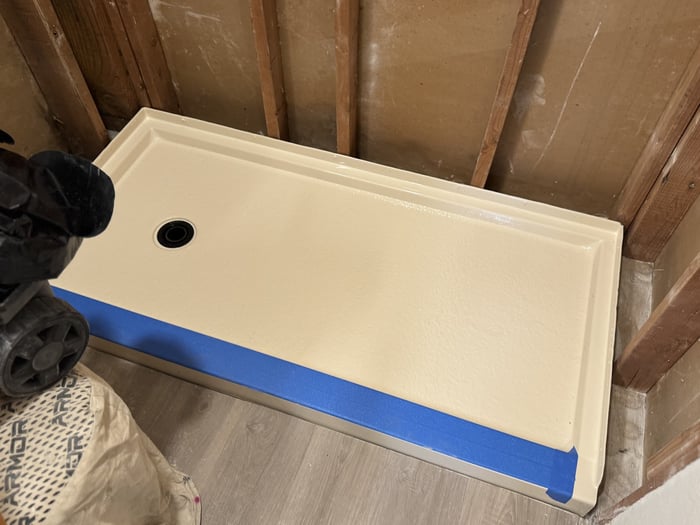
1. A solid shower or tub base
The process starts with a high-density spray-foam supported BP-Cor2 tub or shower base that makes full contact with the surface. These bases are designed to stay flat and stable, which helps prevent movement at seams and joints.
2. Waterproof backing behind the walls
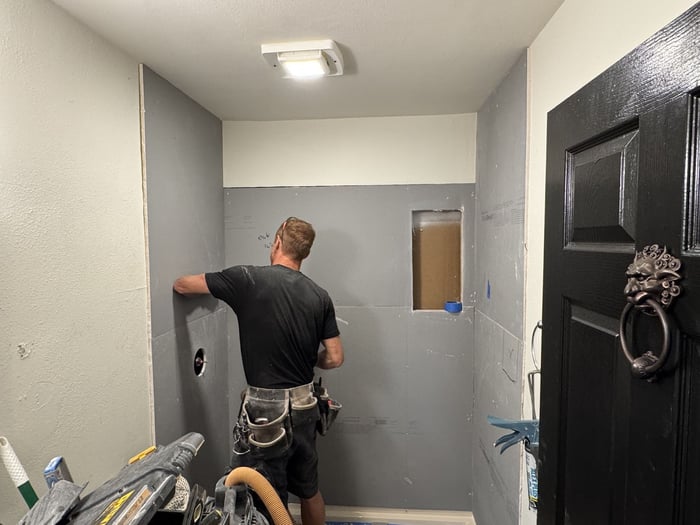
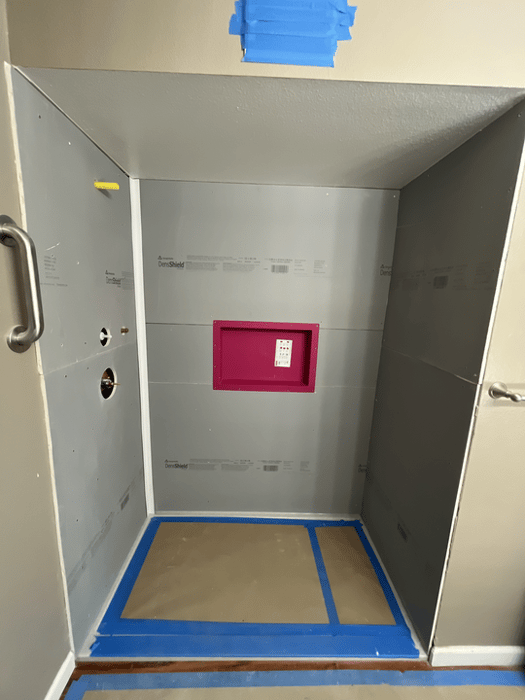
We install DensShield, a moisture-resistant barrier, behind the shower walls. This board has a built-in moisture barrier that prevents water from reaching the wall cavity and framing behind it.
3. Sealed seams and corners
All vertical seams and transitions are bonded with a very strong glue and a flashing strip. Think of this like putting waterproof tape over the seams of a raincoat. The tub and shower area is waterproofed before the surface walls are installed.
4. Durable finished wall panels
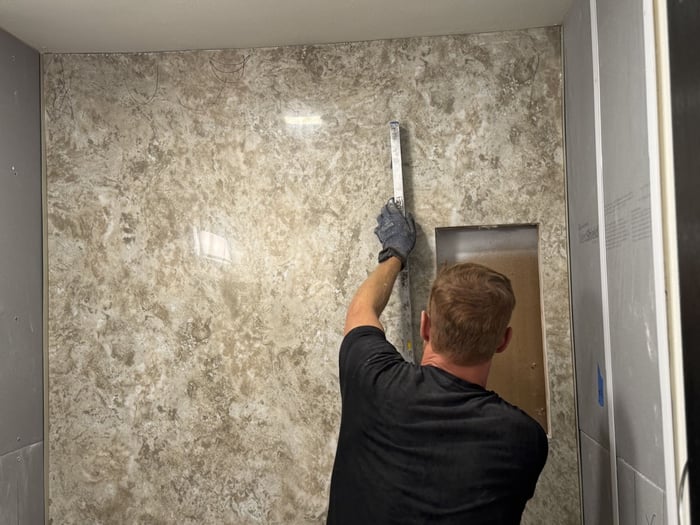
The final layer is applied to the waterproof backing. Shugarman’s Bath has a finished BP-Cor2 Shower wall system. These panels have the strength and durability of NFL football helmets and car bumpers, but are not relied on as the primary waterproofing layers.
Final sealing is done with a high-grade silicone sealant. This is primarily used for aesthetic purposes to make the walls look pleasing and professional. It is not the primary defense against leaks.
Peace of Mind Starts With Proper Waterproofing
Waterproofing is the most essential part of any tub or shower remodel or conversion. Water damage doesn’t announce itself right away. Failures usually happen slowly, long before you’d notice a problem. Improper waterproofing can be frustrating and expensive.
When waterproofing is done correctly, your tub and shower area remains dependable for decades. Your shower should work just as well years from now as it does on day one. You shouldn’t have to worry about hidden damage behind the walls.
Next, learn about our complete step-by-step installation process for your tub or shower remodel. That way, you’ll understand the full scope of your remodel or conversion with Shugarman’s Bath.
Don’t leave waterproofing to chance. Schedule a free consultation with Shugarman’s Bath to learn how your new tub or shower can be waterproofed before walls go on.
The opinions expressed in the referenced materials are those of the authors only, not necessarily of Shugarman’s Bath. While these referenced materials are useful in answering generalized questions, each bathroom is unique. For a particular question about your tub or shower remodeling project, contact your Shugarman’s Bath consultant.
FAQs Related to Waterproofing:Q: What materials do you use for your tub and shower products?Our products are mainly composed of a material called BP-Cor2. It's a high-tech polymer made up of 15% acrylic and 85% ABS, the same material used to make football helmets. It's a step up from traditional tile and standard acrylic. We can laser-etch grout lines into the material to give it the look of tile without the cleaning and maintenance that comes with it. We call it New World Tile. Q: Does Shugarman's Bath Do Repair Work?No, Shugarman's Bath does not do general repair work. The reason is that repairs are temporary fixes that buy time but do not solve the underlying problem. Most homeowners end up paying for the same repair more than once, or eventually replacing the materials anyway after spending money trying to maintain them. Q: Do you remodel the whole bathroom or just the tub and shower area?We're specialists in the tub and shower area. That's where our focus stays. For other parts of your bathroom, we work with trusted contractors regularly and can refer you to the right people at no extra charge. That referral can save you 10-20% on a larger project. |
Topics:
.jpg?width=2047&height=1365&name=SiddarthaDonthula_Project2_Web4%20(2).jpg)