
What Matters Most
|
When your tub and shower show signs of wear, it’s normal to worry about damage behind the walls. After all, those damages could become an expensive problem to fix. Signs such as cracked grout, soft walls, separated or cracked silicone, or a musty smell can indicate damage beneath your shower walls.
Shugarman’s Bath is a tub and shower remodeling specialist that has completed more than 5,500 remodels. We’ve directly seen what kinds of damage can hide behind your shower walls after demoing the area. We understand the warning signs at the surface that typically point to larger issues.
In this article, you’ll learn what is usually behind shower walls, what problems can be hiding there, what signs to watch for, and how newer shower wall systems help prevent moisture-related issues.
Table of Contents:
- What Materials Are Usually Behind Shower Walls?
- What Problems Can Be Hiding Behind Shower Walls?
- What Are Signs That Moisture Is Getting Behind Shower Walls?
- How Do Newer Shower Wall Systems Help Prevent Moisture Problems?
- Concerned About Damage Behind Your Shower Walls?
What Materials Are Usually Behind Shower Walls?
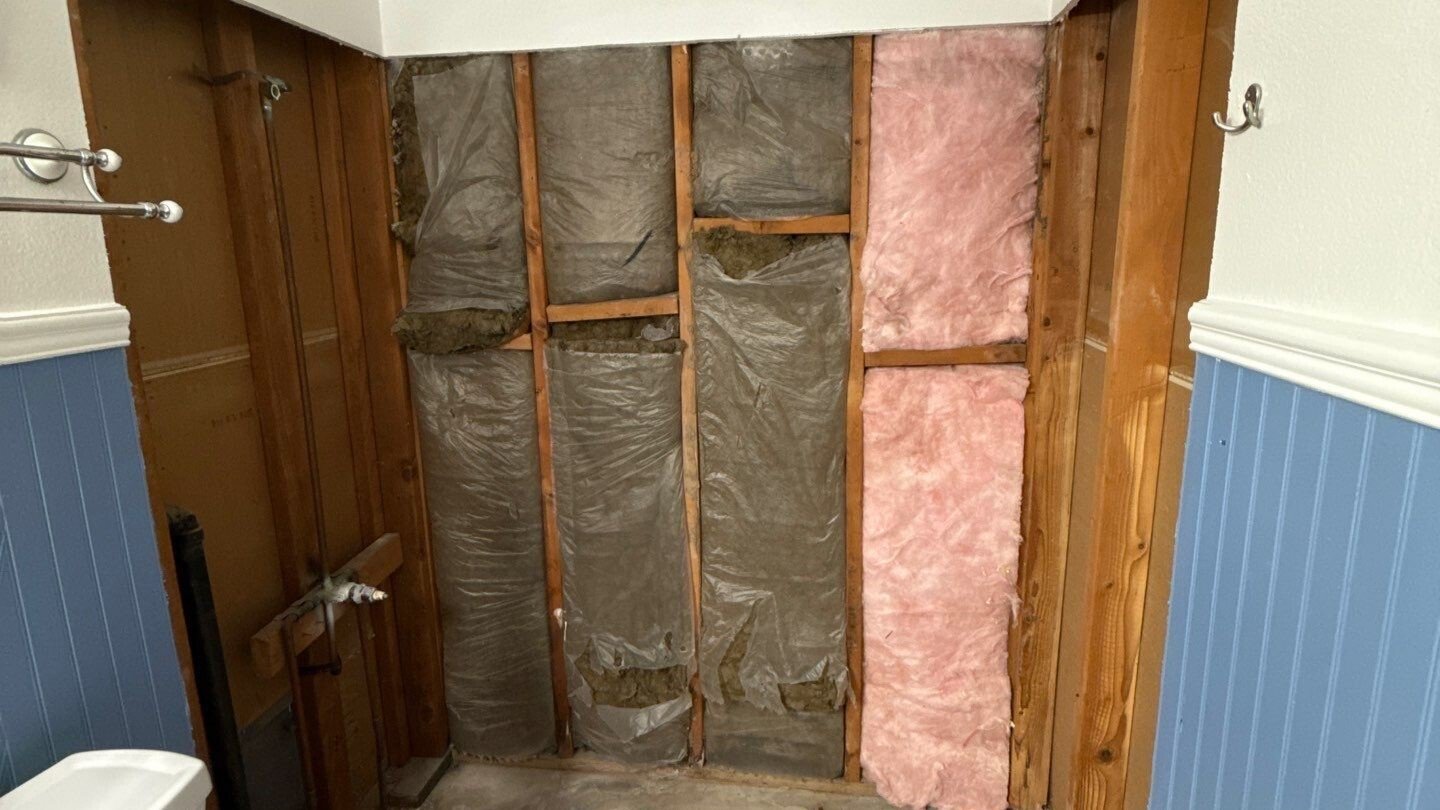
The visible layer of your tub or shower area may be materials like tile, fiberglass, acrylic, or another shower wall material. Behind that, there is usually some type of backer board, such as greenboard, DensShield, or something else. These are used to prevent moisture from reaching your home’s structural materials. Behind the backer boards, you will have the wood studs, insulation, and plumbing.
If there are problems behind your walls, you likely won’t notice them right away. A leak might start at the surface, but the damage can spread as you go deeper into the wall.
What Problems Can Be Hiding Behind Shower Walls?
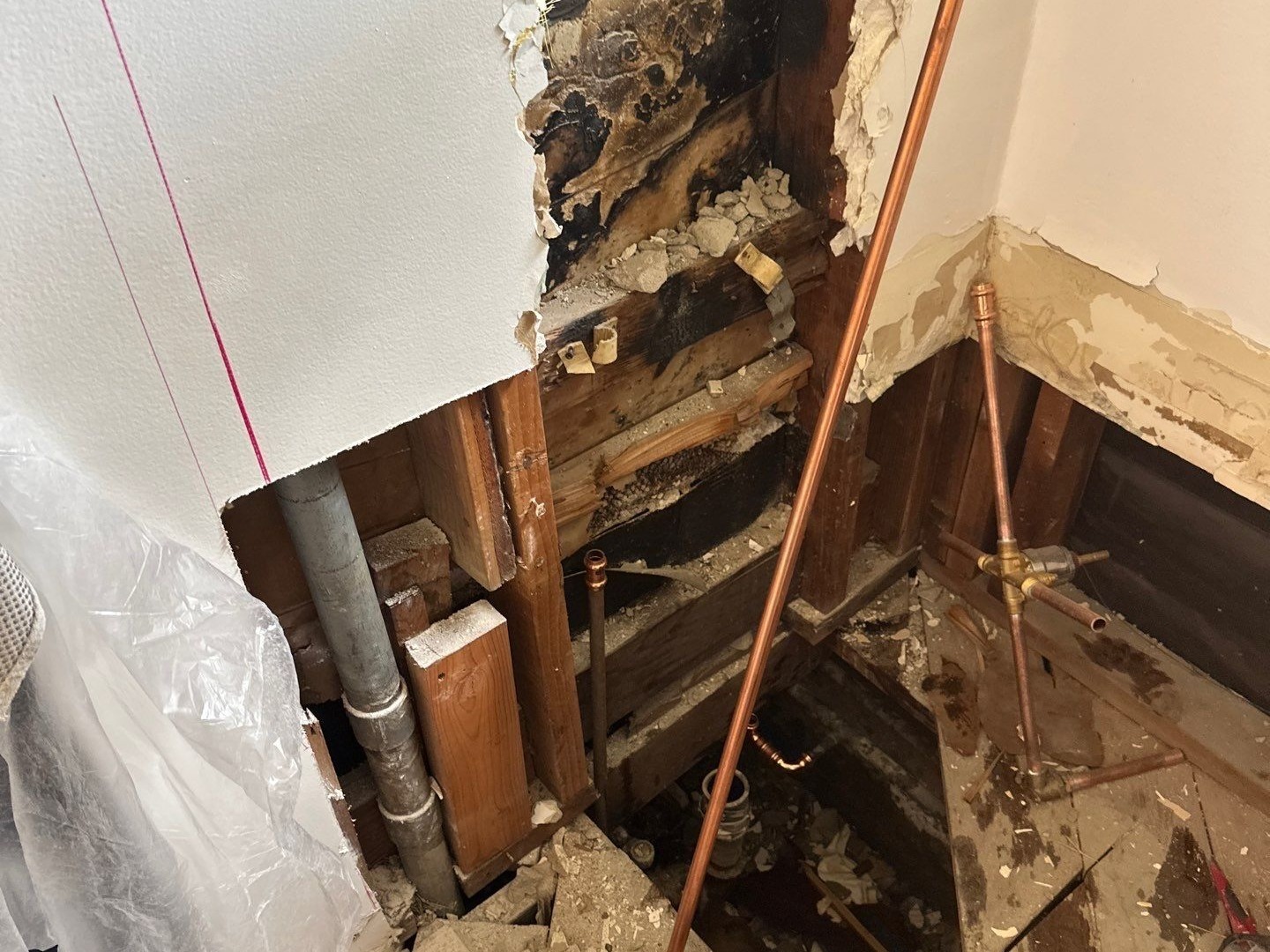
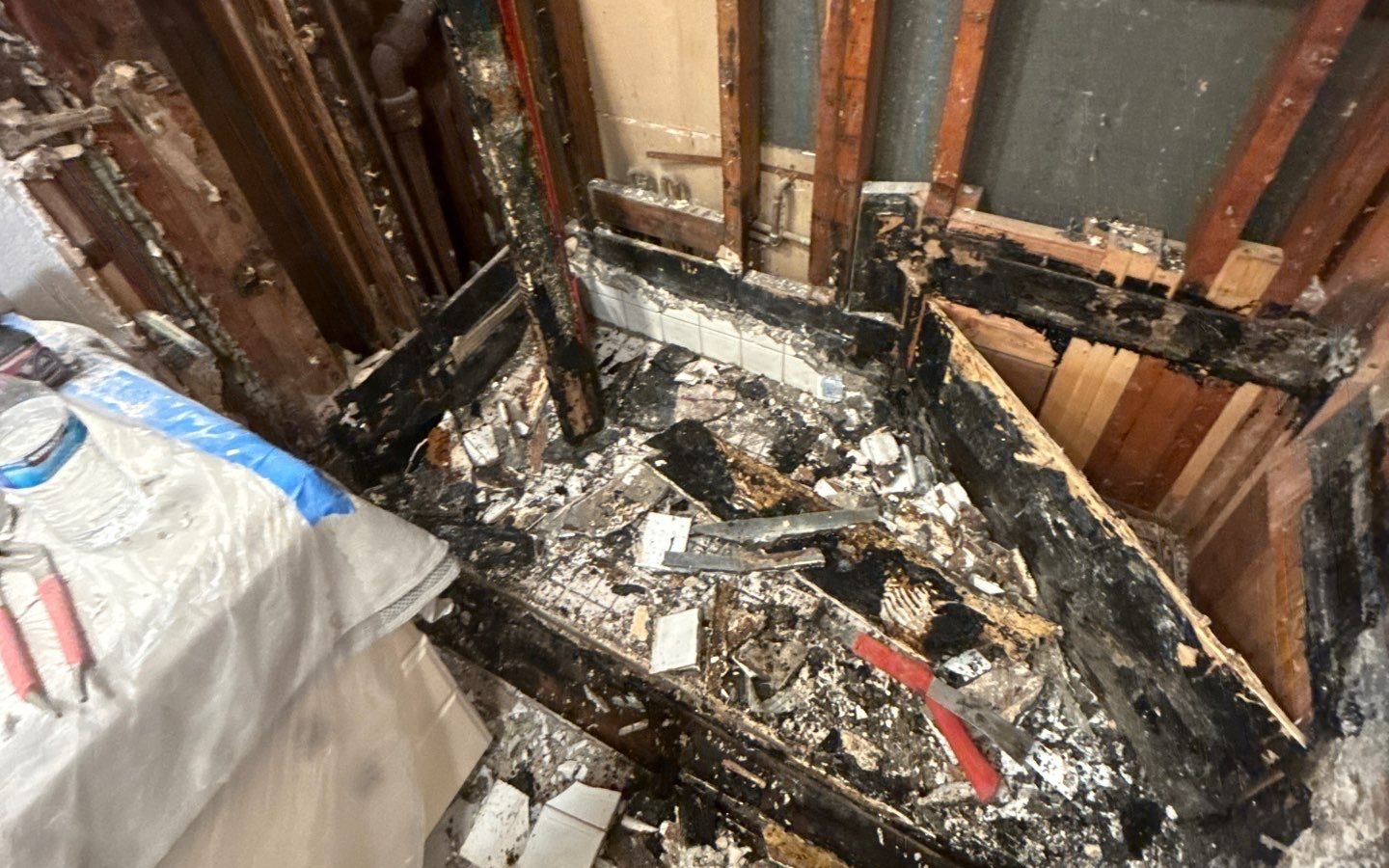
The hope is that your shower walls will be opened up, only to find that nothing needs fixing. However, there will likely be some type of failure found in the shower area. There can be a mix of moisture damage, plumbing problems, and structural damage.
Problems you can find are:
- Rotted wood
- Damp or moldy insulation
- Leaking supply lines or valves
- Older drain pipes that are starting to fail
- Damage around windows
- Damage to the wall structure, such as weakened studs or subfloors
- Termite damage
You won’t be aware of the exact issues until the front-facing shower wall materials are removed, typically during the demolition phase of a shower remodel.
|
Rotted Wood |
Wet Floor From a Leaking Pipe |
|
|
|
|
Corroded Plumbing |
Corroded Plumbing and Peeling Drywall |
|
|
|


What Are Signs That Moisture Is Getting Behind Shower Walls?
You won’t know the extent of the damage without opening the walls. But here are some methods you can use to check.
Use your senses. If the tub and shower area smells musty or mildewy, you can expect moisture to have reached behind the walls. And while you don’t have X-ray vision to see inside, you can still look for visible warning signs like cracked grout, swelling tile, dried or failing silicone, gaps in the area, or worn-out fiberglass (assuming you have fiberglass shower materials).
Some common warning signs to look for include:
- A mildewy smell
- Cracked grout
- Swelling near the bottom of a tile wall
- Grout lines that are starting to separate
- A wall that feels soft or spongy
- Fiberglass that looks dull, worn, or less shiny than before
- Small gaps where plumbing comes through the walls
- Cracked or missing silicone
- Mold forming around seams
These signs won’t show you the extent of the damage behind the shower walls. However, they are indicators that moisture is likely getting to places it shouldn’t.
|
|
|


One item that can help you immensely is a moisture meter. A moisture meter will show whether moisture is building up behind the wall. While it can show the amount of moisture buildup, moisture meters won’t show whether the problem is mold, rot, leaking plumbing, or a bigger issue.
Moisture readings above 20% indicate risk of rot or mold.

How Do Newer Shower Wall Systems Help Prevent Moisture Problems?
Shower wall systems have changed as homeowners and installers move away from porous materials. They want systems that require less maintenance. Newer systems use solid surface panels, acrylic, fiberglass, manufactured stone products, or BP-Cor2 materials. Some of these materials are easier to maintain than others.
Older tile showers often relied on outdated waterproofing methods under the shower floor. Traditional tile looks great, but it has porous grout lines, seams, and joints that tend to become problematic over time.

Newer surface materials can reduce the number of seams, make cleaning easier, and make moisture less of a problem for your shower walls.
There have also been improvements in backer boards and waterproofing systems. Older systems would use paper-faced backers such as greenboard or purple board, which don’t perform well in areas that receive too much direct water. With those materials being paper-faced, mold can feed on the organic material. They’re better than standard drywall, but not as good as modern backer boards.
Newer systems use non-organic backer materials. For example, some showers use DensShield, which is a non-organic fiberglass gypsum backer board. Others will use a proper sealant over cement board.

Concerned About Damage Behind Your Shower Walls?
Warning signs won’t always indicate how much damage is underneath your shower walls. If there’s a musty smell, cracked grout, soft or spongy walls, or failing silicone, these are signs that there’s moisture in the tub and shower area. Moisture can affect insulation, framing, plumbing, and other materials behind the surface.
Don’t let these problems go unchecked. Not doing anything can make your tub or shower repair more expensive.
Now that you understand the damage that can be behind your shower walls, learn more about what causes tub and shower failures.
The damage you see doesn't always tell the full story. Contact Shugarman’s Bath today so we can help you better understand what might be going on behind your walls.
The opinions expressed in the referenced materials are those of the authors only, not necessarily of Shugarman’s Bath. While these referenced materials are useful in answering generalized questions, each bathroom is unique. For a particular question about your tub or shower remodeling project, contact your Shugarman’s Bath consultant.
.jpg?width=1920&height=1080&name=VERSUS%20(1).jpg)