
-1.png?width=1920&height=1080&name=VERSUS%20(1)-1.png)
What Matters Most
|
Tile offers a near-unlimited number of design choices, but that comes at the cost of high maintenance. You might have heard of composite shower wall materials, but you’re not sure what differentiates them compared to tile.
Shugarman's Bath has completed more than 6,500 tub and shower remodels. We've heard from plenty of homeowners about the frustrations they’ve had with various shower wall materials. After so many projects, we can effectively compare each material and how they operate in the tub and shower area.
While Shugarman's Bath doesn't install tile or stone resin composite, we want to be candid about all the materials and give you the information you need to decide what is best for your bathroom. We can accept that there may be a solution for you that we don’t offer.
This article breaks down how tile, acrylic copolymers, and stone resin composites compare on cost, durability, maintenance, and waterproofing.
Table of Contents:
- What Are the Main Differences Between Tile and Composite Shower Walls?
- How Much Do Tile and Composite Shower Walls Cost in 2026?
- What Composite Materials Are Best for Shower Walls?
- How Do Tile and Composite Shower Walls Compare for Cracking and Durability?
- How Do Tile and Composite Shower Walls Compare for Maintenance?
- How is Waterproofing Different Between Tile and Composite Shower Walls?
- A Comparison Table of Tile vs Composite Shower Walls
What Are the Main Differences Between Tile and Composite Shower Walls?
Traditional tile is made from individual pieces of ceramic, porcelain, marble, or stone. Each piece is set in place and separated by grout lines. Because grout is packed sand, it is porous. The grout needs to be sealed every six months. Traditional tile still offers the widest range of colors, patterns, and layouts.
Composite shower walls are made from two or more materials bonded together into one panel. There are various types of composite shower walls, such as acrylic copolymers and stone resin.
How Much Do Tile and Composite Shower Walls Cost in 2026?
These price ranges reflect a whole shower remodel project, including demolition, backerboards, waterproofing, plumbing updates, and labor.
The cost of a traditional tile shower remodel is typically around $9,000 to $14,000.
Acrylic copolymer wall systems can range from $12,500 to $22,000, sometimes more depending on the size of your tub and shower area.
Stone resin composites have a similar cost range to acrylic copolymers, ranging from $16,000-$22,000, sometimes more.
What Composite Materials Are Best for Shower Walls?
Acrylic copolymers and stone resin composites are two of the best composite materials for shower walls. Both are non-porous and hold up well against daily heat and moisture.
Acrylic copolymer panels, like BP-Cor2, combine a strong core material with a co-extruded acrylic outer layer. The core gives the panel its flexibility. The outer layer protects the color and finish.
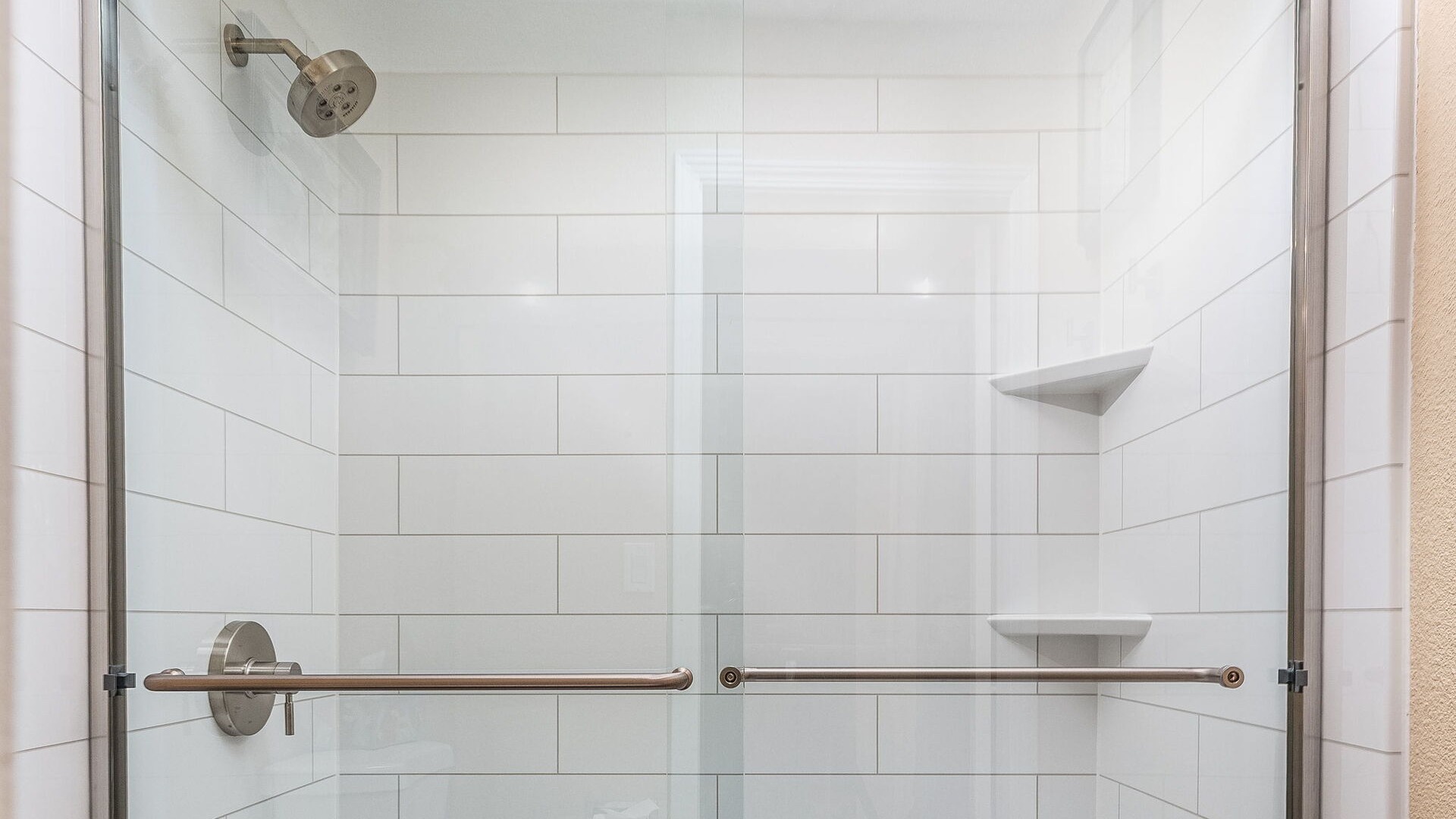
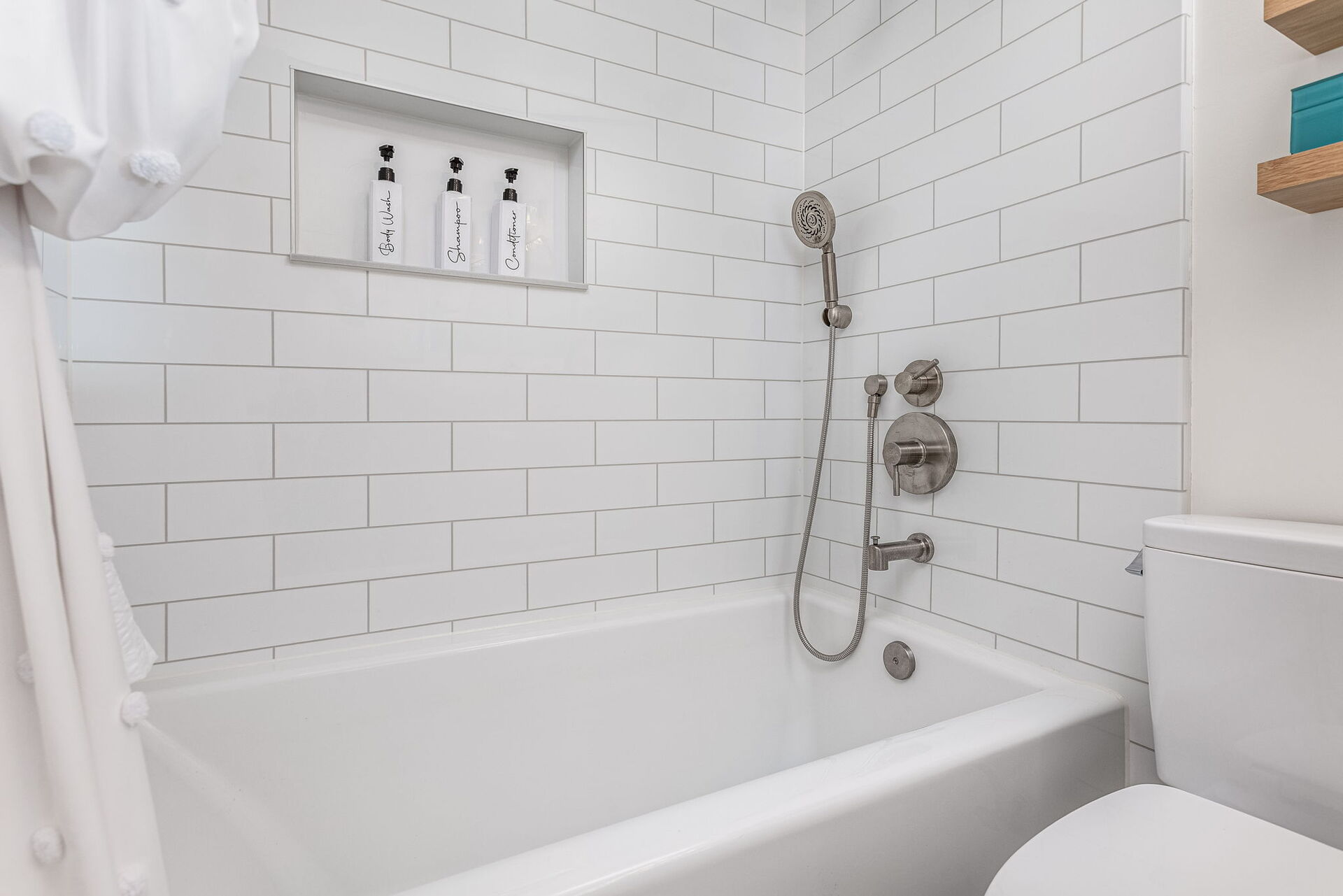
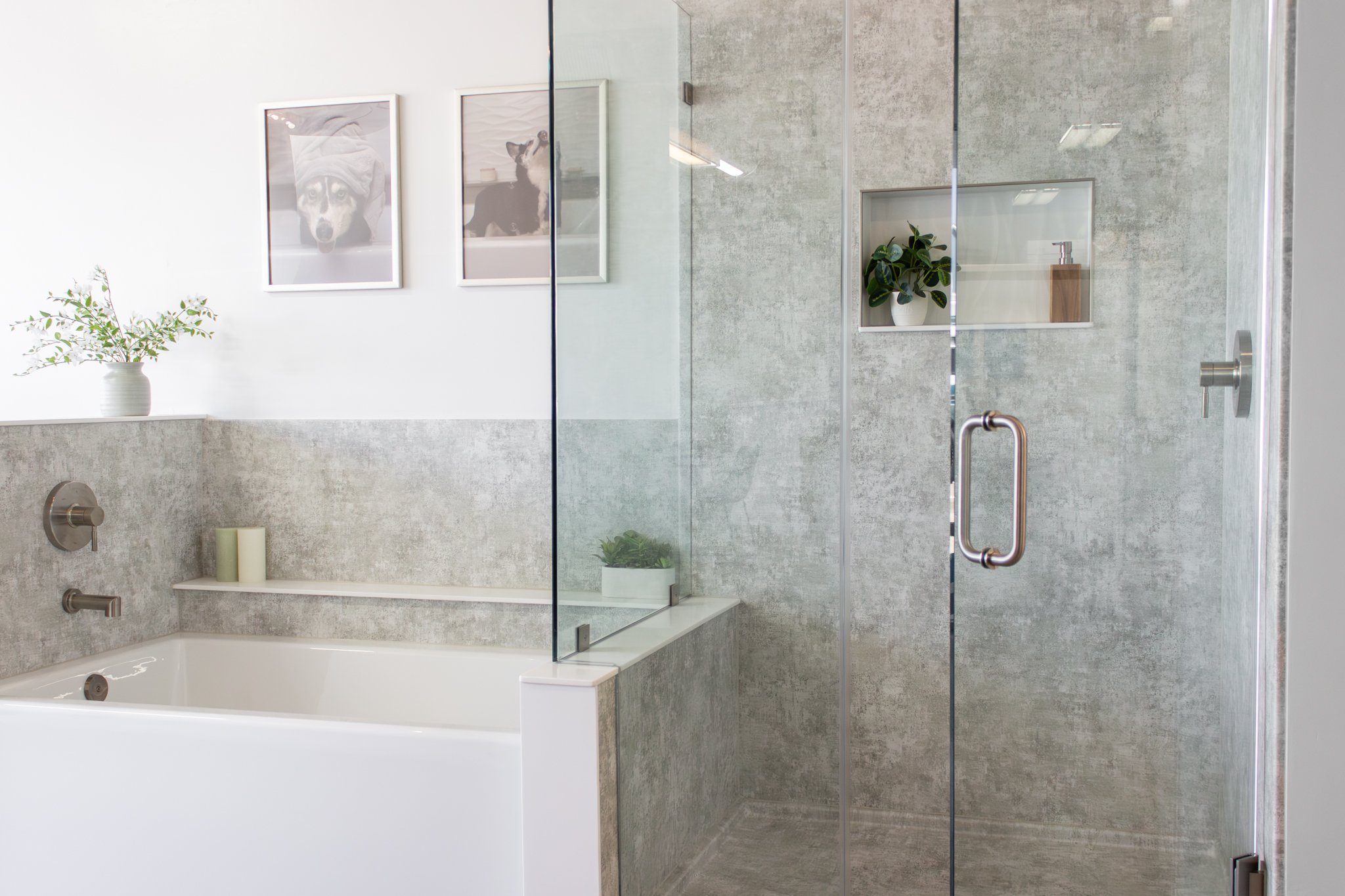
Installers can bend the panel around corners so the shower won’t have more seams. They also support laser-etched designs that mimic the look of grout lines, without the maintenance grout needs. Design options for acrylic copolymers vary by brand. BP-Cor2 alone offers 500 to 600 color and design combinations, including laser-etched tile looks.
Stone resin composites mix crushed stone with resin. Brands like Corian and Swanstone fall into this category. This makes the surface hard and dense, resisting scratching. Stone resin is hard to install because it’s rigid and heavy. As a result, it increases the number of seams needed to fit panels into a shower space.
Because stone resin is made similarly to quartz countertops, design options tend to lean toward solid colors and veined patterns rather than the wider mix of shapes and layouts tile offers. Exact options vary by brand.
While Shugarman’s Bath doesn’t install stone resin composites, it is an effective composite shower wall material.

How Do Tile and Composite Shower Walls Compare for Cracking and Durability?
Tile is rigid. It does not flex when a house settles, shifts, or when hot water causes temperature swings. Tile is prone to cracking, chipping, or popping. If the tile doesn’t crack, grout will, especially in corners.
Acrylic copolymers can flex with the space. They flex with temperature changes and rarely crack.
Acrylic copolymers like BP-Cor2 have nearly twice the resistance to cracking compared to standard acrylic.
Stone resin composites are hard and scratch-resistant on the surface. Surface damage doesn't expose a different layer underneath. Because it’s rigid and heavy, it’s more demanding to install than acrylic copolymers.
How Do Tile and Composite Shower Walls Compare for Maintenance?
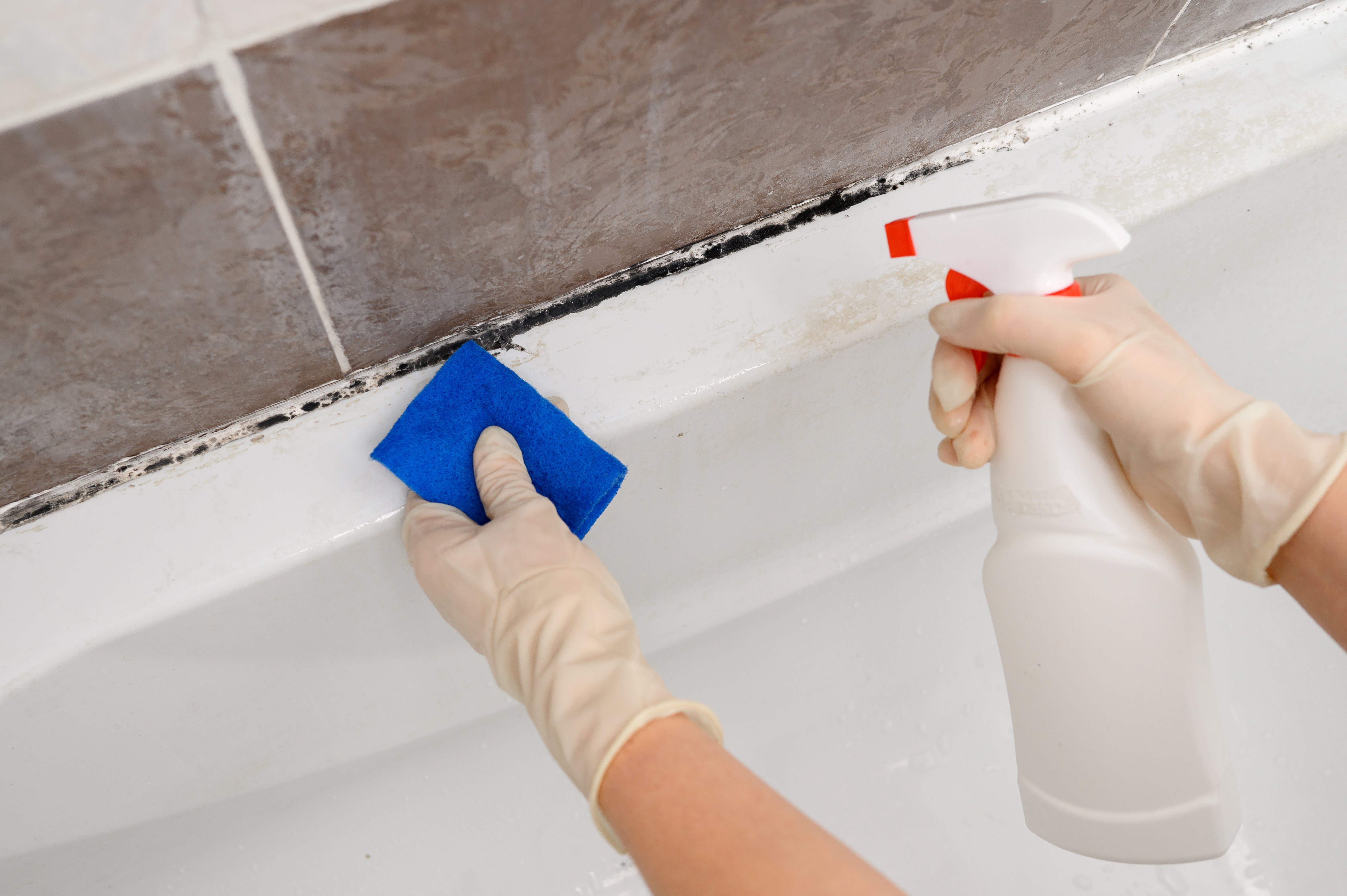
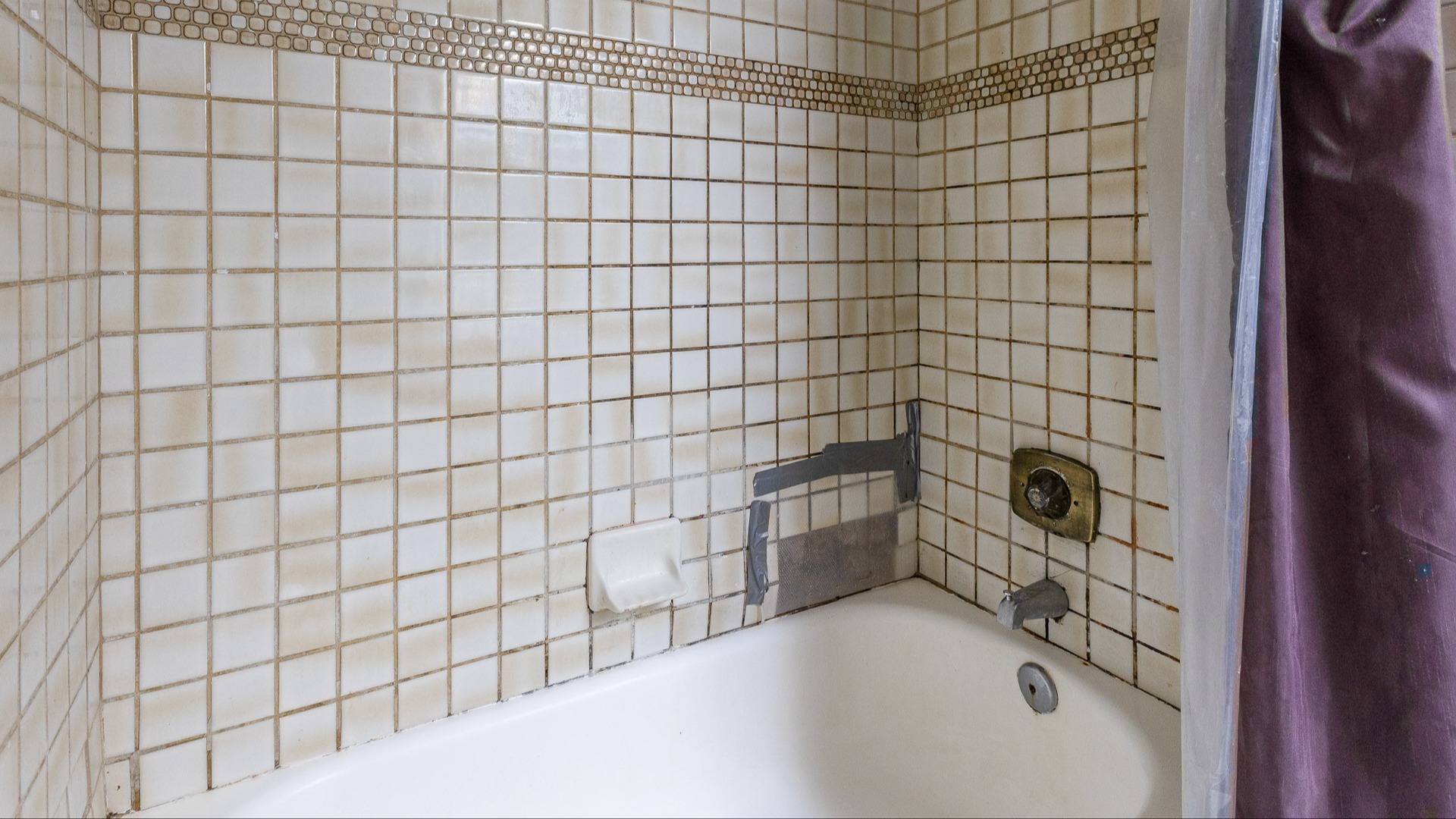
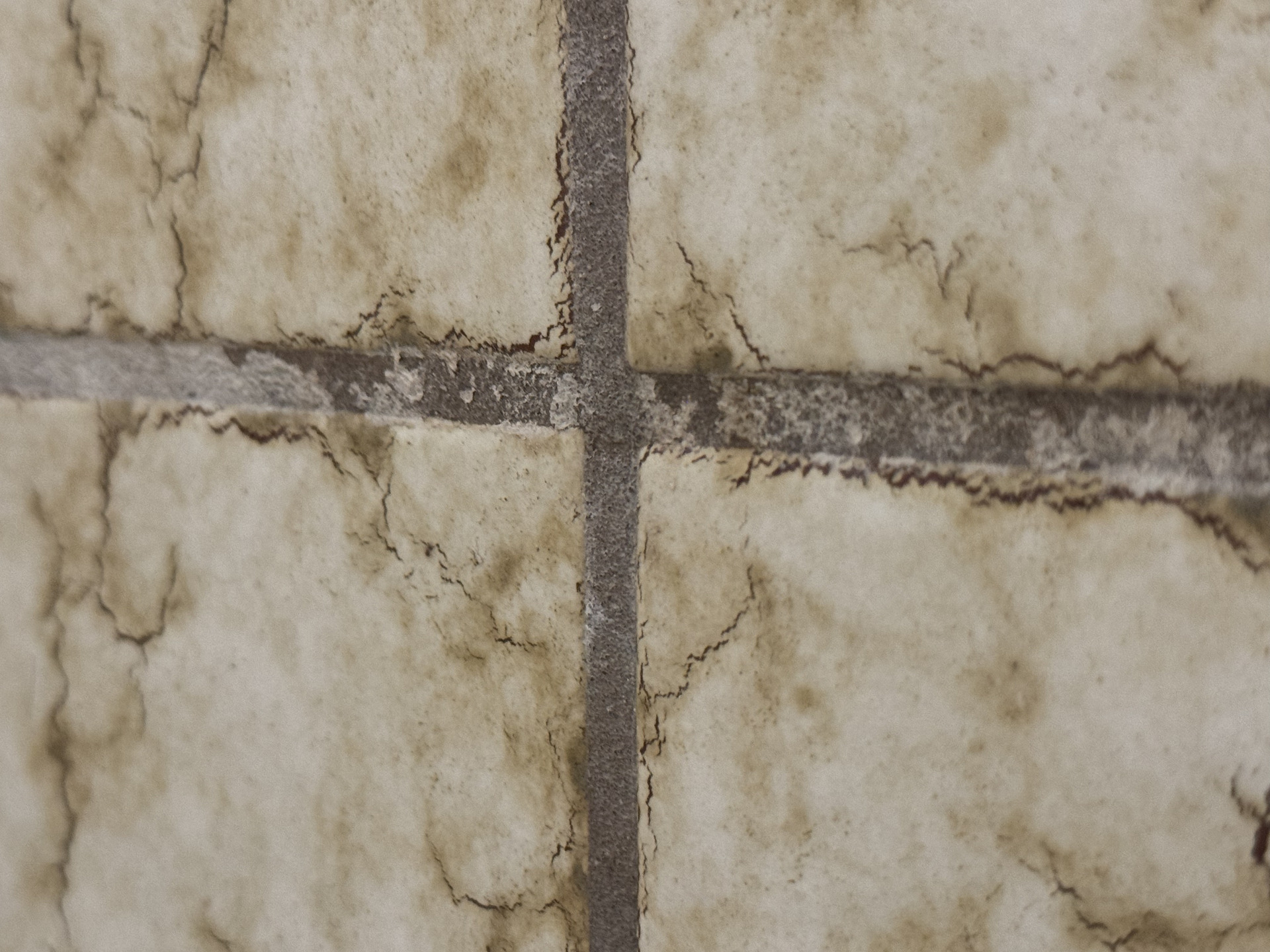
Tile is high maintenance because of grout. Grout is porous, absorbing water, soap, and bacteria. It often requires scrubbing between cleanings when materials are trapped. Because of the porosity, tile showers need to be resealed every six months to a year to keep moisture out.
Acrylic copolymers and stone resin composites are both nonporous. They don’t absorb water or soap scum the same way grout does. You can clean these composite shower walls with a simple wipe-down and mild cleaner.
Light scratches on acrylic copolymers can be buffed out. Stone resin has more seams that should be checked and have the silicone reapplied periodically.
How is Waterproofing Different Between Tile and Composite Shower Walls?
Regardless of the materials you choose, waterproofing needs to be done correctly by whoever does your tub or shower installation. Tile and composite panels both only perform as well as the waterproofing installed behind them. Without a proper backer board and correctly sealed seams, water can still work its way behind the materials.
Traditional tile typically uses cement board, which needs a liquid waterproofing membrane before the tile goes up. Cement board typically needs up to two coats with 48 hours of drying time each. If an installer rushes the waterproofing process, water can get behind the tile and into the walls. Corners should be sealed using silicone, but some contractors will use caulking or grout. Grout is rigid and will likely crack when sealing corners.
When tile is installed correctly with no rushed steps, the waterproofing is fine. However, you still need to reseal grout regularly.
Composite panels are installed as part of a layered system. The backing needs to go up before the surface panels. Shugarman's Bath installs composite panels over DensShield backer boards, which are a fiberglass mat gypsum board that resists water better than paper-faced options.
Even with composite materials, some contractors will put up greenboard or purple board. Paper-faced gypsum is not an approved backer board for the tub and shower area.
Acrylic copolymer's flexibility means fewer seams overall. That means there are fewer places for water to try to get into the walls. Stone resin composites typically have more seams, meaning there are more areas for water to get into the walls.
Learn about what proper waterproofing looks like in the tub and shower area.
A Comparison Table of Tile vs Composite Shower Walls
|
Traditional Tile |
Acrylic Copolymers (e.g. BP-Cor2) |
Stone Resin Composite |
|
|
Average Cost |
$9,000-$14,000+ |
$12,500-$22,000+ |
$16,000-$22,000+ |
|
Durability |
Rigid, prone to cracking from movement. |
Flexible, resists cracking under daily stress. |
Hard to scratch, but rigid and heavy. |
|
Maintenance |
High maintenance. Grout needs resealing every 6-12 months. |
Low Maintenance. Nonporous and easy to wipe clean. Scratches can be buffed out. |
Low maintenance. Nonporous and easy to wipe clean. Seams need periodic resealing. |
|
Waterproofing |
Relies on membrane, grout, and silicone that can shrink or crack over time. |
Waterproofed as a layered system before the panel is installed; fewer seams. |
Waterproofed as a layered system; more seams due to rigidity. |
|
Design Options |
Nearly unlimited colors, patterns, and layouts |
Varies by brand. BP-Cor2 offers 500-600 color and design combinations. |
Varies by brand; typically solid colors or veined patterns, similar to quartz countertops |
|
Installation |
Individual pieces of tile set by hand over backer board. |
Large flexible panels bend around corners, reducing seams. |
Rigid, heavy panels; precise cuts and more seams needed to fit the space |
Which Shower Wall Material Is Right for You?
Whether you go with tile or composite shower walls, the right material comes down to what matters most to you and your lifestyle. You have the information you need to seriously consider what you want for your tub and shower area.
If you want to go deeper on how modern acrylic copolymer panels like BP-Cor2 stack up against traditional tile, read our breakdown of traditional versus modern shower systems.
Want to see if our acrylic copolymer material (BP-Cor2) is a good choice for your bathroom? Schedule a free consultation with Shugarman’s Bath to have one of our experts at your door.

The opinions expressed in the referenced materials are those of the authors only, not necessarily of Shugarman’s Bath. While these referenced materials are useful in answering generalized questions, each bathroom is unique. For a particular question about your tub or shower remodeling project, contact your Shugarman’s Bath consultant.
FAQs on Tub and Shower Remodeling:Q: How long does a typical shower remodel take?A typical shower remodel takes 1-2 days. More complex projects in larger areas can take longer. Q: Does Shugarman’s Bath use tile?Shugarman’s Bath doesn’t use conventional tile with grout. We use BP-Cor2 walls that are nonporous and antimicrobial. Grout lines can be laser-etched into the walls to look like tile without the extra labor and costs. Q: Does Shugarman's Bath Do Repair Work?No, Shugarman's Bath does not do general repair work. Repairs are temporary fixes that buy time but do not solve the underlying problem. Most homeowners end up paying for the same repair more than once, or eventually replacing the materials anyway after spending money trying to maintain them. |
.jpg?width=1440&height=1080&name=IMG_4896%20(1).jpg)