
.jpg?width=1920&height=1080&name=VERSUS%20(1).jpg)
What Matters Most
|
Choosing the wrong backer board is a costly mistake for your tub or shower remodel. There’s the risk of hidden mold, deteriorating walls, and the need to pay for another remodel sooner than expected. It’s scary to think you can spend thousands of dollars on a new remodel, only to deal with even more costly failures later.
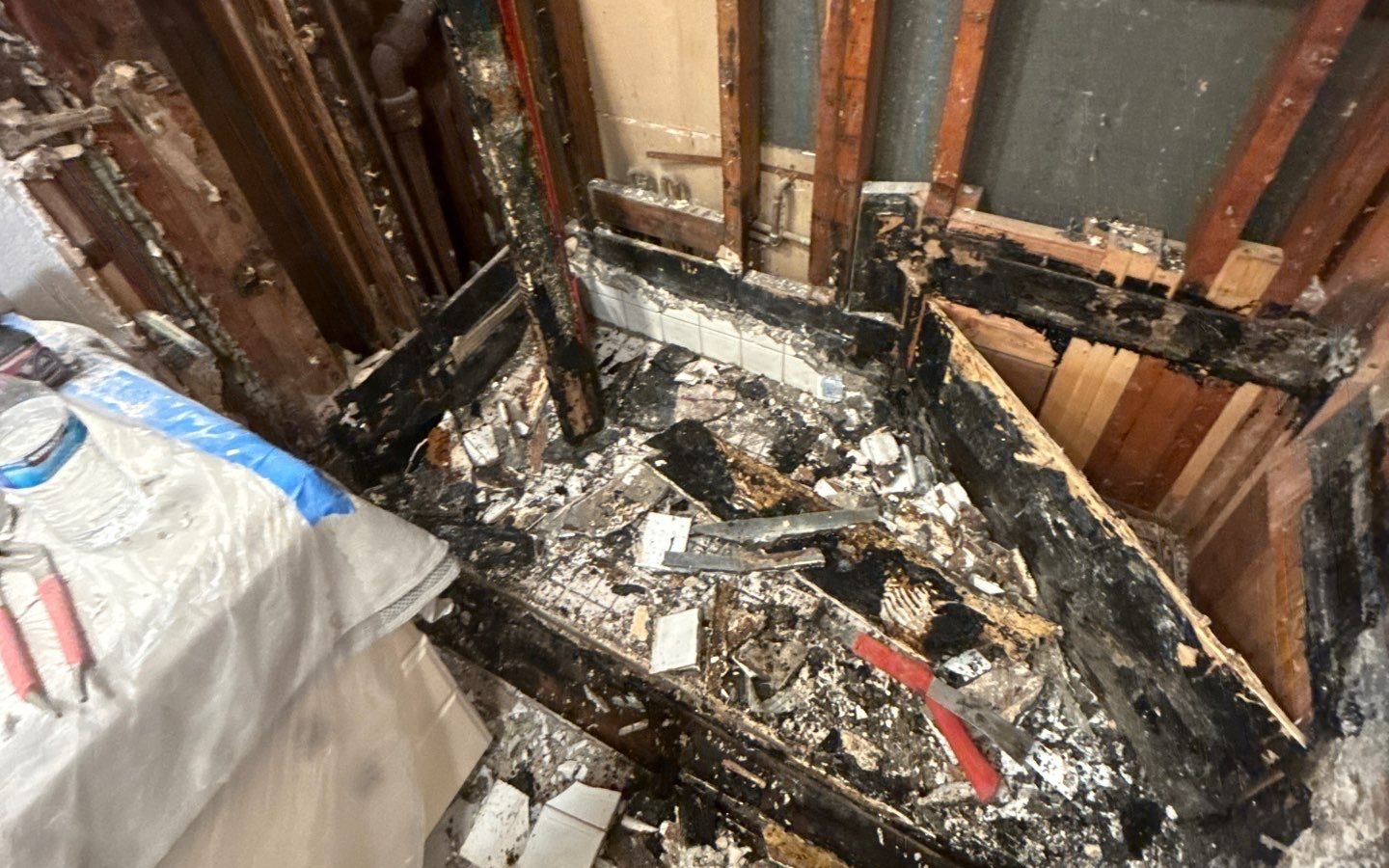
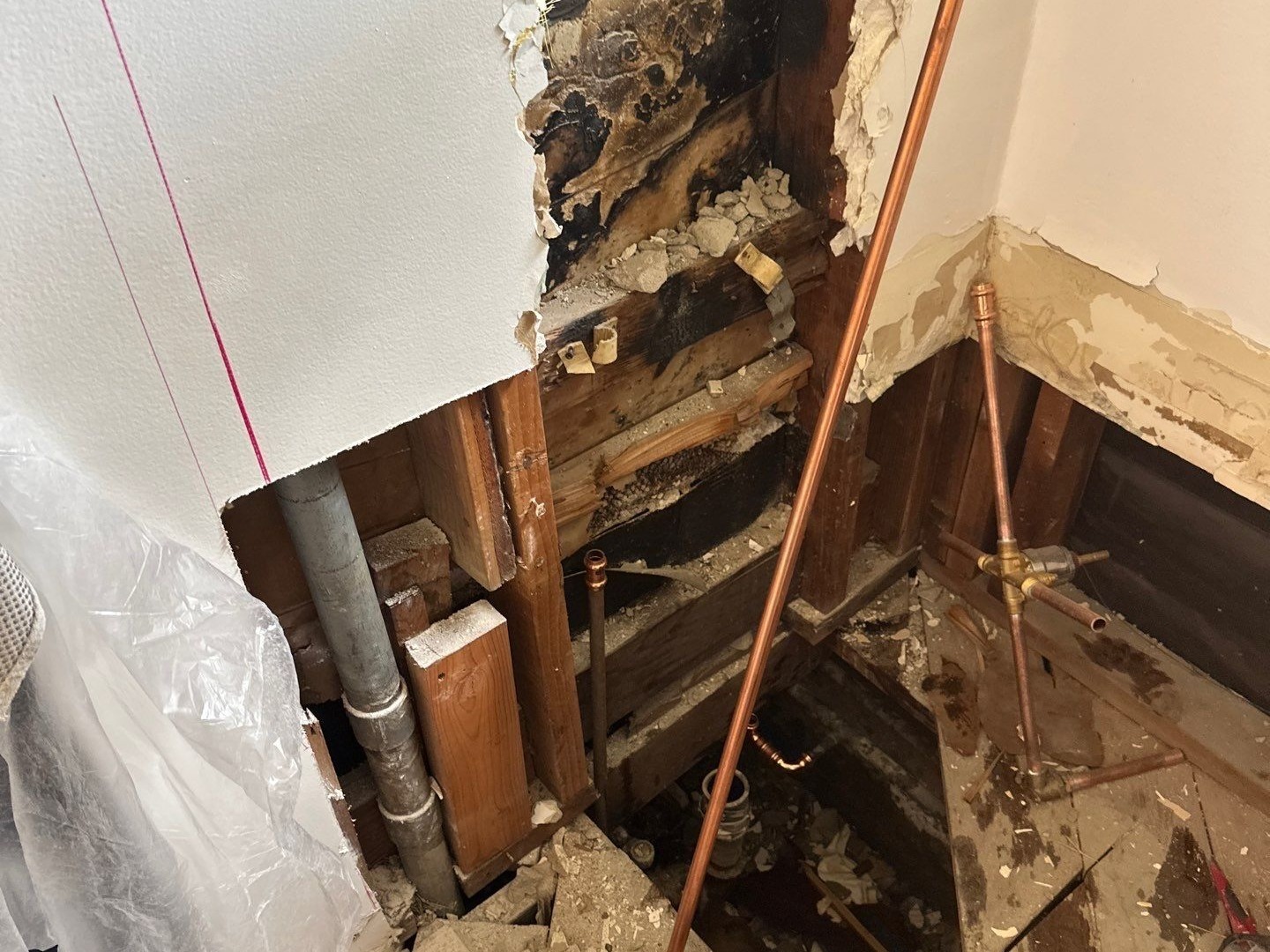
At Shugarman’s Bath, we are a tub-and-shower remodel specialist, completing over 150 installations per month. In some of those projects, we’ve replaced failing greenboard. We’ve seen firsthand how different backer boards perform when water seeps through the surface material.
In this article, you’ll learn how greenboard and DensShield compare, how they perform in wet conditions, and what that means for your tub and shower remodel. By the end of this, you’ll understand which material makes sense for your shower.
Table of Contents:
- What is Greenboard Drywall?
- What is DensShield Backer Board?
- How Do the Moisture Protection Levels From Each Backer Board Differ?
- A Side-by-Side Comparison of Greenboard vs DensShield
- What Happens If Moisture Gets Behind the Shower Walls?
- Have the Right Backer Board For Your Tub and Shower Area
What is Greenboard Drywall?
Greenboard is a type of moisture-resistant drywall, made from gypsum (a soft sulfate mineral) with a paper-facing layer. The paper is treated to resist moisture better than regular drywall.
Greenboard was commonly used in bathrooms for many years. It is seen as an upgrade over standard drywall because it can better handle humidity.
However, greenboard is designed to resist damp air, not repeated water exposure inside a tub and shower area.
What is DensShield Backer Board?
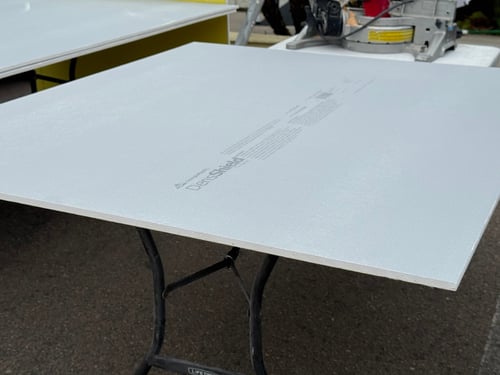
DensShield is a high-performing fiberglass mat gypsum backer board. It features a fiberglass surface that resists water better than paper-faced products, making it suitable for tub and shower areas.
DensShield is also designed to resist mold growth, receiving a 10 out of 10 rating under the ASTM D3273 test method. It’s a fancy way of saying it’s been tested for mold growth and performed at the highest rating in a controlled environment.
How Do The Moisture Protection Levels From Each Backer Board Differ?
Both products are described as moisture-resistant. Greenboard is designed to resist humidity and can handle damp air. It struggles more with repeated water exposure. Plus, the paper-facing layer can absorb moisture over time. The organic material eventually breaks down.
DensShield has a fiberglass surface that resists direct water exposure better than paper. The surface helps block water from soaking into the board itself.
These differences in moisture protection are one reason building codes have changed over time. In 2006, the International Residential Code (IRC) removed paper-faced gypsum, such as greenboard, from the list of approved backer materials for tub and shower areas.
Instead, the updated code requires cement-based or non-paper-faced backer boards. In California, the California Residential Code (CRC) reflects similar requirements and does not list paper-faced greenboard as an approved backer for tub and shower areas. However, there are still instances in San Diego and Orange County where contractors use greenboard for the tub and shower areas.
Much of this is due to old habits, cost considerations, or misunderstandings about moisture protection requirements. While building codes restrict the use of paper-faced water-resistant gypsum board in areas exposed to direct water, material selection in practice can vary depending on interpretation, enforcement, and installation method.
Not all homeowners are aware of these code changes. That’s why you want to ask what materials are being used and if they’re code-compliant.
Download our buyer’s guide to know what to ask contractors, including questions about greenboard, and what to look for in their answers.

A Side-by-Side Comparison of Greenboard vs DensShield
Here is a comparison table showing the features of Greenboard and DensShield:
|
Feature |
Greenboard |
DensShield |
|
Facing Material |
Paper-faced |
Fiberglass-faced |
|
Designed for Direct Water Exposure |
No (per IRC 2006) |
Yes |
|
Mold Resistance |
Limited |
10 out of 10 mold resistance rating |
|
Handles Humidity |
Limited |
Designed for water exposure |
|
Organic Surface |
Yes |
No |
|
Intended Use |
Humidity-prone areas |
Tub and shower areas |
|
Typical Material Cost |
Generally lower |
More expensive than Greenboard |
What Happens If Moisture Gets Behind the Shower Walls?
The tub and shower area is one of the most stressed areas of your home, and it is difficult to repair when problems arise. If water gets behind the walls, you won't see the damage.
Moisture can cause deterioration inside the wall. Organic materials can break down, mold can develop, and/or structural damage may continue. That’s why it’s important to make sure the contractor you hire knows how to properly waterproof your tub and shower area.
Even basic repairs typically require you to tear out the finished wall system. Essentially, you’re paying for another remodel.
Have the Right Backer Board for Your Tub and Shower Area
Greenboard has been commonly used in bathrooms since it performs better than drywall in humid conditions. Sure, it was an upgrade and had been widely accepted.
Today, we understand more about how materials perform under repeated water exposure. Building codes have reflected that understanding. Products like DensShield have been developed to handle direct water exposure.
Of course, you want a shower that works well for your needs. What’s installed behind the surface walls is incredibly important. After all, the material behind the walls can determine how long your remodel lasts.
Next, read our article on the best low-maintenance shower wall materials.
Want to see your material options for a tub or shower remodel? Schedule a consultation with Shugarman’s Bath to understand how your wall system can be built from the studs out.
The opinions expressed in the referenced materials are those of the authors only, not necessarily of Shugarman’s Bath. While these referenced materials are useful in answering generalized questions, each bathroom is unique. For a particular question about your tub or shower remodeling project, contact your Shugarman’s Bath consultant.
FAQs About Materials:Q: What materials do you use for your tub and shower products?Our products are mainly composed of a material called BP-Cor2. It's a high-tech polymer made up of 15% acrylic and 85% ABS, the same material used to make football helmets. It's a step up from traditional tile and standard acrylic. We can laser-etch grout lines into the material to give it the look of tile without the cleaning and maintenance that comes with it. We call it New World Tile. Q: Does Shugarman’s Bath use tile?Shugarman’s Bath doesn’t use conventional tile with grout. We use BP-Cor2 walls that are nonporous and antimicrobial. Grout lines can be laser-etched into the walls to give the look of tile without the extra labor and costs. Q: Does Shugarman's Bath Install Alternatives to Tile?Yes. Instead of conventional tile, Shugarman's Bath installs a modern shower wall system with a non-porous, antimicrobial surface. The grout lines are laser-etched, giving you the look of tile without the upkeep that comes with it. If you want to learn more, read our full breakdown of traditional tile vs. modern shower wall systems. |
Topics: