
What Matters Most
|
You may not have thought about your tub or shower before, but you might be seeing some signs that something is off. The grout in your shower is cracking. Maybe the silicone is pulling apart. Perhaps the area never seems as clean as it should. You might be seeing water damage, but are unaware as to why it’s happening.
It might be easy to assume it’s just normal wear and tear. At Shugarman’s Bath, we see these problems every day in homes all across Southern California. We’ve learned that the tub and shower area experiences more stress than any other area inside your home.
In this article, you’ll learn:
- The tub and shower area experiences the most stress in your home
- What are the best materials to use for my shower?
- How do I know if my tub and shower area is failing?
-
Installation Matters as Much as (If Not More Than) Materials
- What is the long-term cost of my shower failing?
Let’s get started.
The Tub and Shower Area Experiences the Most Stress in Your Home
It’s strange to think about at first. You would think it’s your kitchen or living room. Truly, nothing experiences the same level of daily stress as the tub and shower area.
Think about it. Every day, sometimes multiple times a day, your shower is hit with extremely hot water. Water that’s often between 125 and 140 degrees Fahrenheit (and if you are a cold-shower type of person, you’re braver than I am). This hot-to-cold (and vice versa) cycle happens over and over. The materials in the area expand and contract in response to temperature changes. This stress is greater than that experienced by any other part of your home on a regular basis.
Additionally, your tub and shower area is exposed to heavy moisture. The average shower for one person uses around 17.2 gallons of water. After 365 days, your tub and shower area is hit with 6,278 gallons of water. Add in high water pressure, steam, and long-term movement from settling, seasonal changes, and even small earthquakes if you’re here in Southern California.
Combine all of that with the daily temperature shock, and you have a tub-and-shower area stressed as if it’s working overtime.
What Types of Stress Hurt Tub and Shower Areas?
There are three major types of stress working against your tub and shower area every day.
The first is thermal stress. When materials heat up, they expand. When they cool, they shrink. When this happens over and over, it weakens the structure of the materials. This is the number one cause of failure in most showers.
The second is movement stress. Homes shift slightly over time. You have foundations settling, your home reacting to temperature fluctuations, and framing movement, among other issues. While this movement happens slowly, it also adds strain to your tub and shower area.
The third is moisture stress. Water and steam constantly push against every surface and seam. If there is any small opening, water will enter it like it’s a cave explorer.
How Do I Know If My Tub and Shower Area Is Failing?
Failure in the tub and shower area typically happens quietly and slowly. It’s rare for it to happen all at once. Here are signs your system is under stress and is starting to fail:
- Silicone in the corners is pulling apart
- Hairline cracks in the walls or surface
- Grout lines are widening or cracking
- Corners opening slightly
While these problems may seem cosmetic, they are early warning signs of much larger issues. If left alone, tiny openings allow water to penetrate behind walls. Over time, moisture can weaken framing, rot wood, cause mold growth, and even damage nearby rooms. 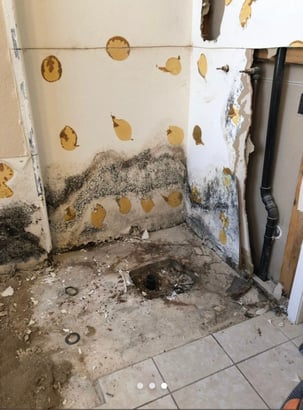
Eventually, this can lead to a major repair that requires removing the entire system in the tub and shower area. As a result, you’re forkin’ over a lot of money for the repairs.
What are the Best Materials to Use for My Shower?
Some materials are not built to survive the tub and shower environment for a long time, yet they’re always recommended. They’ve been used in the industry for decades, and it’s what many people are familiar with.
However, materials, like tile, grout, and fiberglass, are fairly rigid. Acrylic can also be rigid, depending on its quality. These items generally don’t flex well under constant expansion and contraction. When rigid materials are repeatedly forced to move, they’ll eventually crack.
Tile systems try to work around this problem by using grout lines. The idea is that the grout acts as a weak point where the movement will happen. However, this means the grout will crack instead of the tile. The grout lines require more maintenance and repair.
Plus, grout is porous, meaning it absorbs water and dirt. So, with maintenance issues, it can be a hassle to clean.
Lower quality acrylic attempts to manage movement by leaving small gaps between panels. Gaps give the materials room to expand and contract. However, this workaround doesn’t fix the core issue. The material itself still struggles to handle the stress.
As for the best materials, they will be non-porous and engineered to flex rather than crack. For example, Shugarman’s Bath uses a material called BP-Cor2 (pronounced Bee-Pee Core two), which is flexible, non-porous, and antimicrobial. So it adapts to temperature, movement change, and is easy to clean!
Installation Matters as Much as (If Not More Than) Materials
Poor installation causes any materials to fail.
Many tubs and showers rely on basic silicone sealants for waterproofing. However, silicone can harden over time, cracking and separating as materials move. So waterproofing is effectively gone.
Some contractors use inexpensive adhesives that aren’t designed for tub-and-shower environments or for constant movement. The glues might hold at first, but they eventually struggle to stretch with the system.
A properly built tub or shower should be virtually waterproofed before the final and front-facing layer is installed. So even if the silicone were damaged or removed, the system beneath it would still be protected.
What is the Long-Term Cost of My Tub or Shower Failing?
Building a tub or shower area with incorrect materials or installation makes failure a matter of when. Cracks spread. Silicone breaks down. Grout stains and pulls in water. That’s when moisture becomes a problem behind the walls.
Moisture can be a terror on houses, destroying walls or rooms next to the bathroom. And if you live in a place with multiple stories, water + gravity = destruction to rooms below. Can you imagine having to pay for repairs and remodels in multiple areas? Sheesh! All because of a bad installation. And imagine if that moisture damaged personal belongings.
Eventually, the only real solution is to tear out the failing tub or shower and rebuild.
A “budget-friendly” remodel can end up costing far more over time than doing it right the first time. Doing it right the first time can save you money, stress, and disruption of your home.
Don’t Wait For Bigger Problems to Start
Most homeowners experience issues in the tub and shower area, such as cracked grout, loose silicone, or water damage. Don’t worry if you didn’t initially know what was causing these problems. Understandably, this usually wouldn’t be a concern to think about every day.
Now you know what’s really going on in your tub and shower area. The area is hit with daily temperature shock, moisture, and movement. You may also be experiencing poor installation. And if you have the wrong materials, failure can happen at a faster rate.
Now that you have a better understanding of what causes failure, you can make decisions before the damage becomes more expensive and disruptive.
If you’re experiencing failures in your bathroom’s tub and shower area, chances are you might also be struggling to clean the area. Read our article on why your tub and shower area can be so difficult to clean.
If you’re noticing these problems in your tub or shower area, hidden damage may be starting. That’s the best time to have it looked at. Shugarman’s Bath offers FREE consultations to evaluate your current tub or shower, explain what we see, and help you understand your options.

The opinions expressed in the referenced materials are those of the authors only, not necessarily of Shugarman’s Bath. While these referenced materials are useful in answering generalized questions, each bathroom is unique. For a particular question about your tub or shower remodeling project, contact your Shugarman’s Bath consultant.
FAQs About Shugarman's Bath Services:Q: How long does a typical shower remodel take?A typical shower remodel takes 1-2 days. More complex projects in larger areas can take longer. Q: Does Shugarman's Bath Do Repair Work?No, Shugarman's Bath does not do general repair work. The reason is that repairs are temporary fixes that buy time but do not solve the underlying problem. Most homeowners end up paying for the same repair more than once, or eventually replacing the materials anyway after spending money trying to maintain them. Q: Do you remodel the whole bathroom or just the tub and shower area?We're specialists in the tub and shower area. That's where our focus stays. For other parts of your bathroom, we work with trusted contractors regularly and can refer you to the right people at no extra charge. That referral can save you 10-20% on a larger project. |