
What Matters Most
|
You might have had a shower wall material that was easy to maintain at first, but has become more of a hassle to clean over time. With tile, you’re scrubbing grout lines. Fiberglass? That stain on your shower floor won’t go away, no matter what chemical you use. You want a shower material that's easy to maintain for years to come.
Shugarman's Bath has completed more than 6,500 tub and shower remodels using low-maintenance composite materials. We’ve seen which materials hold up over time and which ones fail within a few years.
This article breaks down the best low-maintenance shower options for 2026.
Table of Contents:
- What Are the Best Low-Maintenance Shower Options for 2026?
- What Makes an Acrylic Copolymer the Best Low-Maintenance Shower Material?
- What Makes Stone Resin Composite a Low-Maintenance Shower Wall Option?
- Are Acrylic Shower Walls a Good Low-Maintenance Option?
- Is Shower Wall Tile a Good Low-Maintenance Option?
What Are the Best Low-Maintenance Shower Options for 2026?
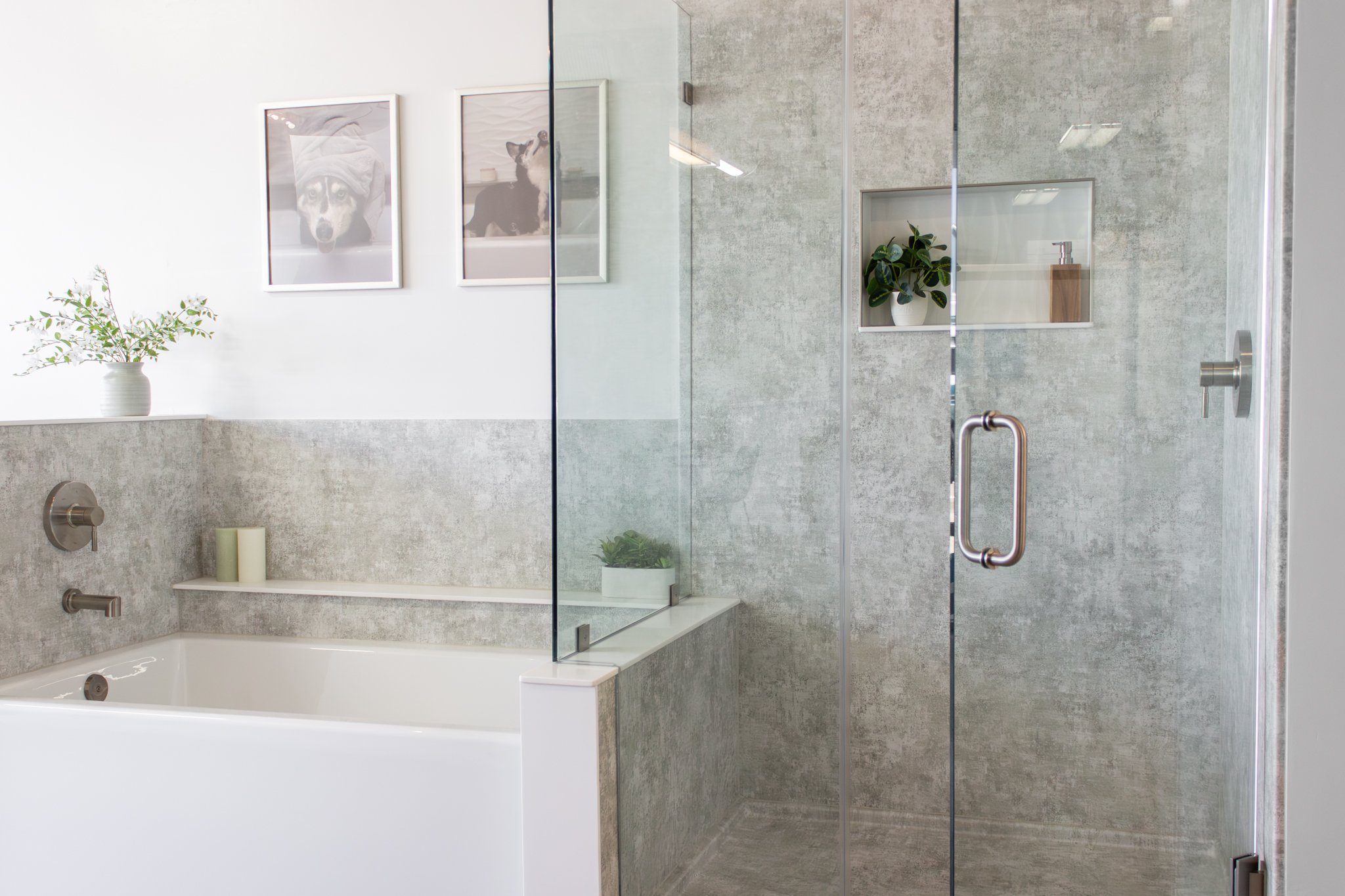
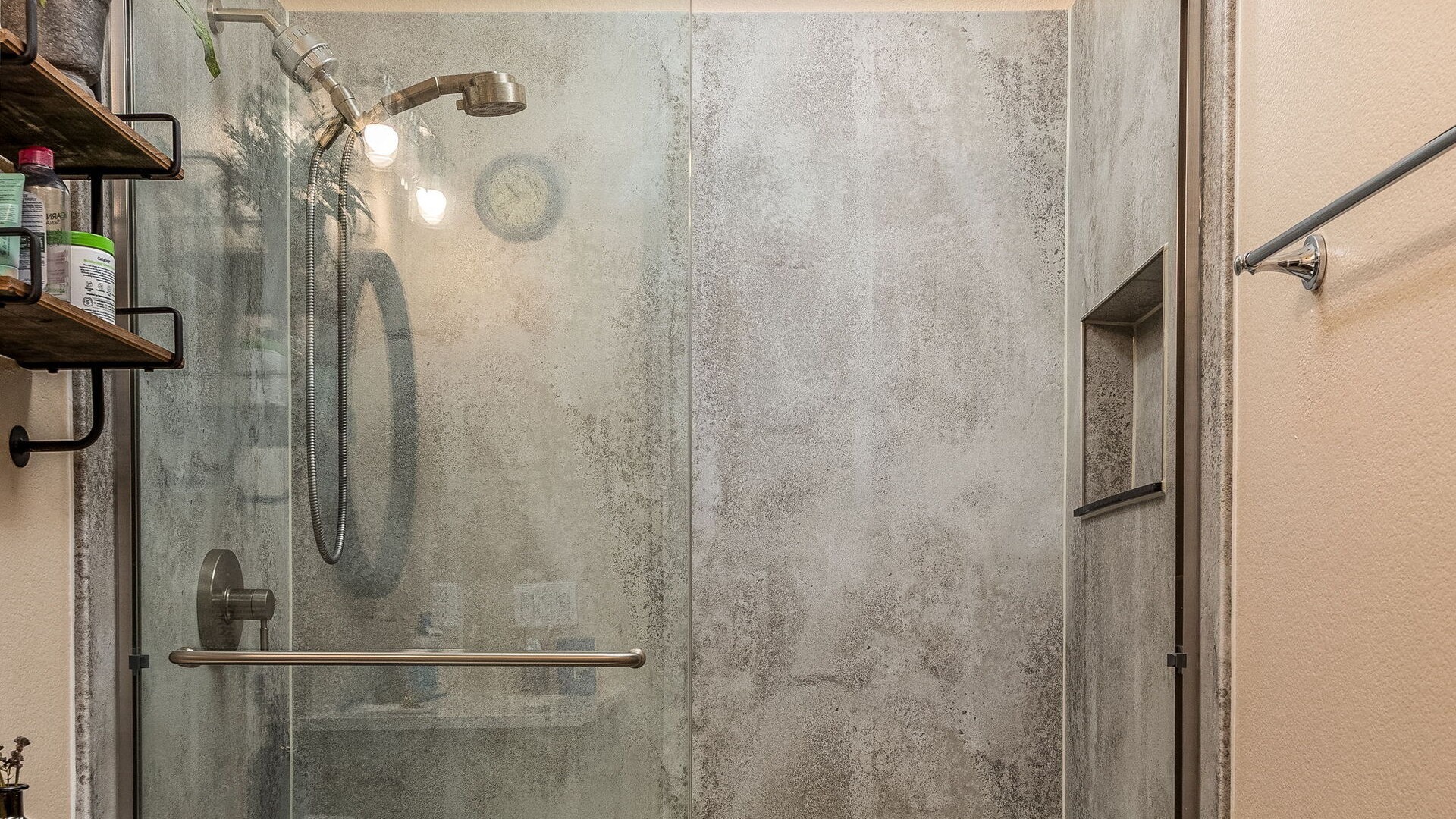
Non-porous composite materials are the best low-maintenance shower options. These include acrylic copolymers like BP-Cor2 and stone resin composites like Corian or Swanstone.
Both options resist moisture and staining. They can hold up without constant scrubbing or resealing. This means less time scrubbing and less risk of water damage behind the walls.
What Makes an Acrylic Copolymer the Best Low-Maintenance Shower Material?
Acrylic copolymer walls are non-porous, flexible, lightweight, and resistant to cracking. BP-Cor2 is one example of an acrylic copolymer. BP-Cor2 is made from a durable ABS core with a co-extruded acrylic surface layer.
The material is built by bonding a strong, flexible inner core to a protective outer surface layer. The outer layer protects the color and finish, meaning light scratches can be buffed out.
Acrylic copolymers require fewer seams since they can bend around corners without needing separate trim pieces. With fewer seams, there are fewer spots for water to work its way behind your shower walls. Cleaning an acrylic copolymer wall is as simple as wiping down or using a squeegee. You don’t need abrasive cleaners or to do heavy scrubbing.
Acrylic copolymer can also support a laser-etched design that looks like tile. BP-Cor2 offers hundreds of color and design combinations. You can have BP-Cor2 laser-etched with lines to look like tile. You can have the look of tile without the grout lines that need scrubbing and resealing every year.
What Makes Stone Resin Composite a Low-Maintenance Shower Wall Option?
Stone resin composite is a low-maintenance choice because it's non-porous and hard to scratch. Brands like Corian and Swanstone are made by mixing crushed stone with resin, similar to how quartz countertops are made.
The material is durable. Surface damage doesn't expose a different layer underneath.
Compared to an acrylic copolymer panel, stone resin is heavier and more rigid. Because of this, it needs more seams to fit into a shower space. More seams mean more areas for water to get into your shower walls. When installed correctly, stone resin composites are easy to wipe clean without abrasive cleaners or heavy scrubbing.
This material works well for homeowners who want the look of natural stone without the upkeep natural stone requires.
Are Acrylic Shower Walls a Good Low-Maintenance Option?
Standard acrylic shower walls are nonporous and easy to clean when installed. However, in comparison to acrylic copolymer walls or stone resin composites, standard acrylic shower walls are less effective since they’re more rigid and prone to cracking.
Acrylic shower walls are more likely to develop hairline cracks over time as your home shifts or as hot water causes the material to expand and contract. The material can also yellow or fade with regular light exposure.
Because they're rigid, acrylic shower walls often need trim pieces to cover seams at corners. The more seams, the more areas water could potentially get into your shower walls.
Acrylic shower walls typically last 10 to 15 years before they need to be replaced. An acrylic copolymer like BP-Cor2 is designed to last 30+ years or the lifetime of the home.
Is Shower Wall Tile a Good Low-Maintenance Option?
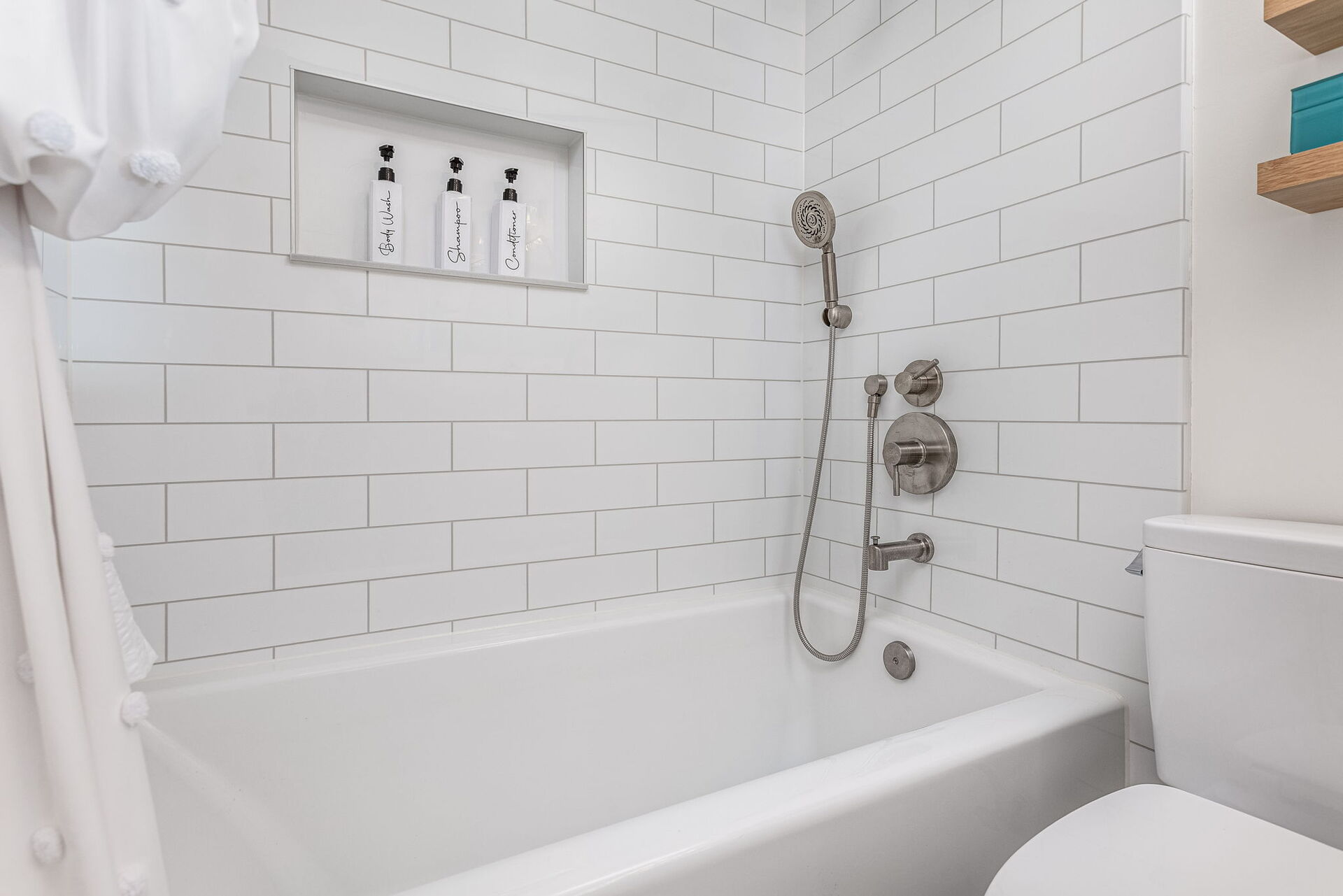
No, shower wall tile is not a good low-maintenance option. The material requires more upkeep because of the grout lines between tiles. Grout is porous and absorbs water and soap scum.
Moisture can move through the grout and into the wall behind it, making it high-maintenance. Grout needs resealing every six months to a year, which many homeowners forget.
Cleaning shower wall tile also takes more effort. You have to scrub between every tile line. Cracked grout or missing sealant means water is likely building up and causing damage behind your shower walls.
If your goal is a low-maintenance shower wall option, we recommend avoiding tile.
What's the Best Fit for Your Bathroom?
When something is low-maintenance, it comes down to how porous a material is, how many seams it has, installation quality, and whether it will hold up as well in 5-10 years as it did on day one. Acrylic copolymers and stone resin composites are not only great quality materials, but they’re easy to maintain.
If you're weighing these materials for your own bathroom, remember that they only hold up as well as the waterproofing behind them. Read our article on why waterproofing is the most important part of any shower remodel.
Want to see how an acrylic copolymer could fit into your space? Schedule a free consultation with Shugarman’s Bath so we can come out and look at your tub and shower area.
FAQs on Tub and Shower Remodeling:Q: How long does a typical shower remodel take?A typical shower remodel takes 1-2 days. More complex projects in larger areas can take longer. Q: What materials do you use for your tub and shower products?Our products are mainly composed of a material called BP-Cor2. It's a high-tech polymer made up of 15% acrylic and 85% ABS, the same material used to make football helmets. It's a step up from traditional tile and standard acrylic. We can laser-etch grout lines into the material to give it the look of tile without the cleaning and maintenance that comes with it. We call it Modern Tile. Q: How many design options does Shugarman's Bath offer?Shugarman's Bath offers 500-600 color and style options, so you can find a combination that fits your bathroom and your taste. |
Topics:
.png?width=1920&height=1080&name=VERSUS%20(1).png)
.jpeg?width=1900&height=1268&name=AdobeStock_493635552%20(1).jpeg)