
What Matters Most
|
A bathroom remodel isn't cheap. Doing your bathroom yourself skips the labor cost, lets you buy your own materials, and lets you handle it on your own schedule. It might work for you.
The tricky part is knowing where your DIY skills actually apply. Shugarman's Bath has completed over 6,000 tub and shower remodels in San Diego and Orange County. We've seen the results of DIY projects done well and projects that didn't go as planned.
This article will help you figure out which parts of a bathroom remodel you can possibly handle yourself and which parts carry enough risk to warrant a professional. That way, you can make the best decision for how to go about your remodeling project.
Table of Contents:
- Why Do Homeowners Consider DIYing a Bathroom Remodel?
- Which Bathroom Projects Can You Safely DIY?
- Why Should You Hire a Professional to Remodel the Shower Area?
- 5 Common DIY Shower Remodel Mistakes
- How Do the Timelines of a DIY and Professional Bathroom Remodel Compare?
- DIY vs. Professional Bathroom Remodel Comparison Table
- When Does a Bathroom Remodel Need a Professional?
Why Do Homeowners Consider DIYing a Bathroom Remodel?
Most homeowners who consider a DIY bathroom remodel do it for 2 reasons: to save money and keep the project simple.
The cost savings look great on paper since you skip the labor bill and buy the materials yourself. Most people don’t consider everything that comes to light once the walls are opened, whether it’s water damage, rotted wood, mold, or failing plumbing. These aren’t a cheap fix.
A full bathroom remodel requires plumbing, waterproofing, tiling, finish work, or more. In a 40-square-foot space, there’s little room for error.
Which Bathroom Projects Can You Safely DIY?
A toilet replacement is pretty close to plug-and-play, since all it requires is disconnecting the old one and installing the new one. Vanities are similar. These are reasonable DIY projects for someone comfortable with basic home repairs.
Things get complicated when the vanity isn't a standard size. Older homes can have non-standard dimensions. If the new vanity doesn't fit the existing space, you're looking at custom cabinetry and countertop work, which is generally a job for a contractor.
Flooring is trickier. Some modern plank-and-click-together options are designed for DIY installation. The issue is making sure the surface is level and the layout is correct, which takes patience and skill.
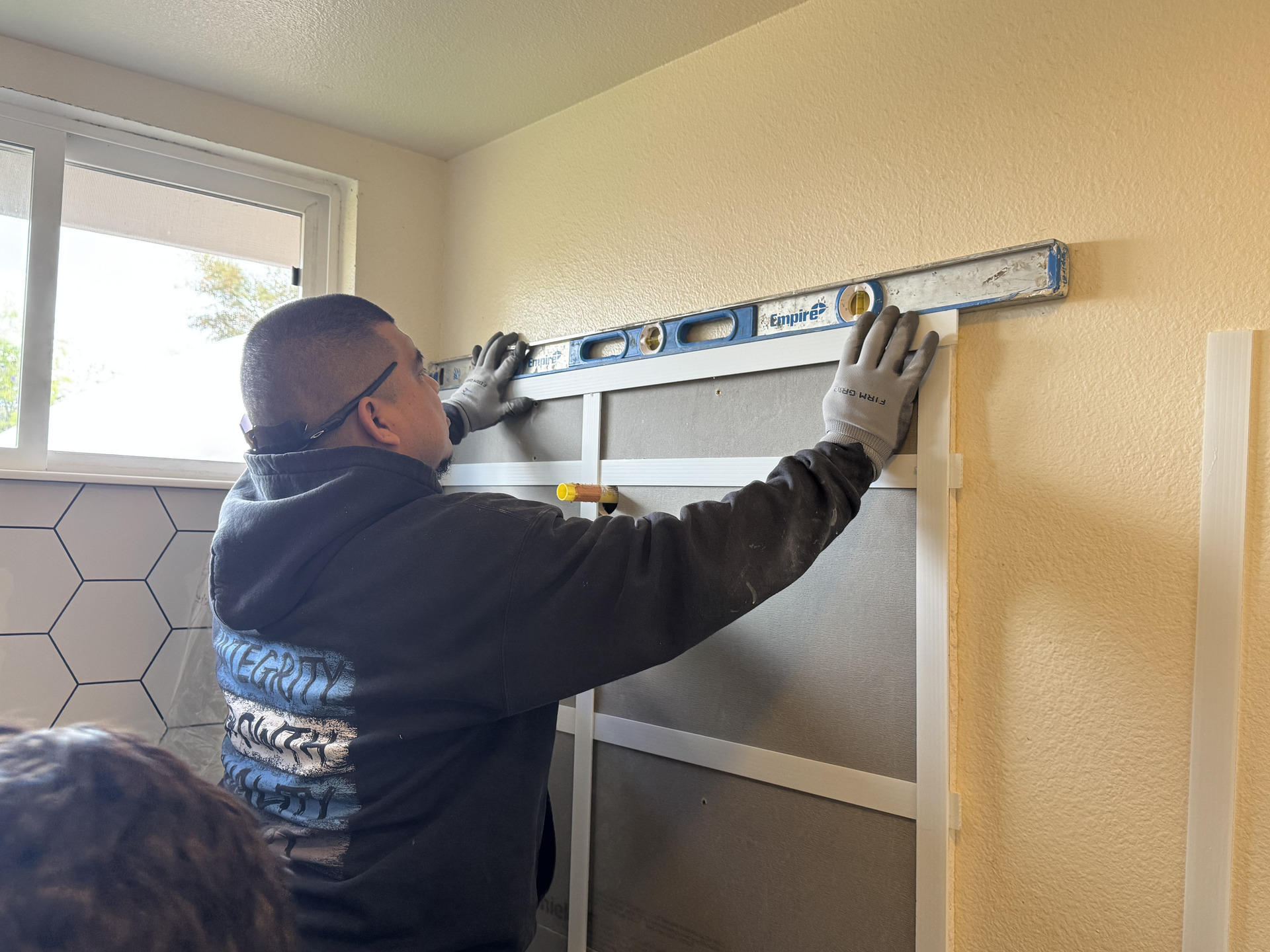
A homeowner can attempt a shower remodel on their own, but it’s one of the easiest areas to do wrong. The consequences of getting the tub and shower area wrong can cost you a lot of money, as water can get behind the walls. This is one area where it’s worth hiring a professional.
Why Should You Hire a Professional to Remodel the Shower Area?
Every time you use your shower, roughly 17.2 gallons of water come into contact with the walls and floor of the area. Your home will face moisture damage if you don’t waterproof properly.
A beginner will run into problems if they do this on their own, since it requires specific knowledge and tools to do the tub and shower area right. There is little margin for error.
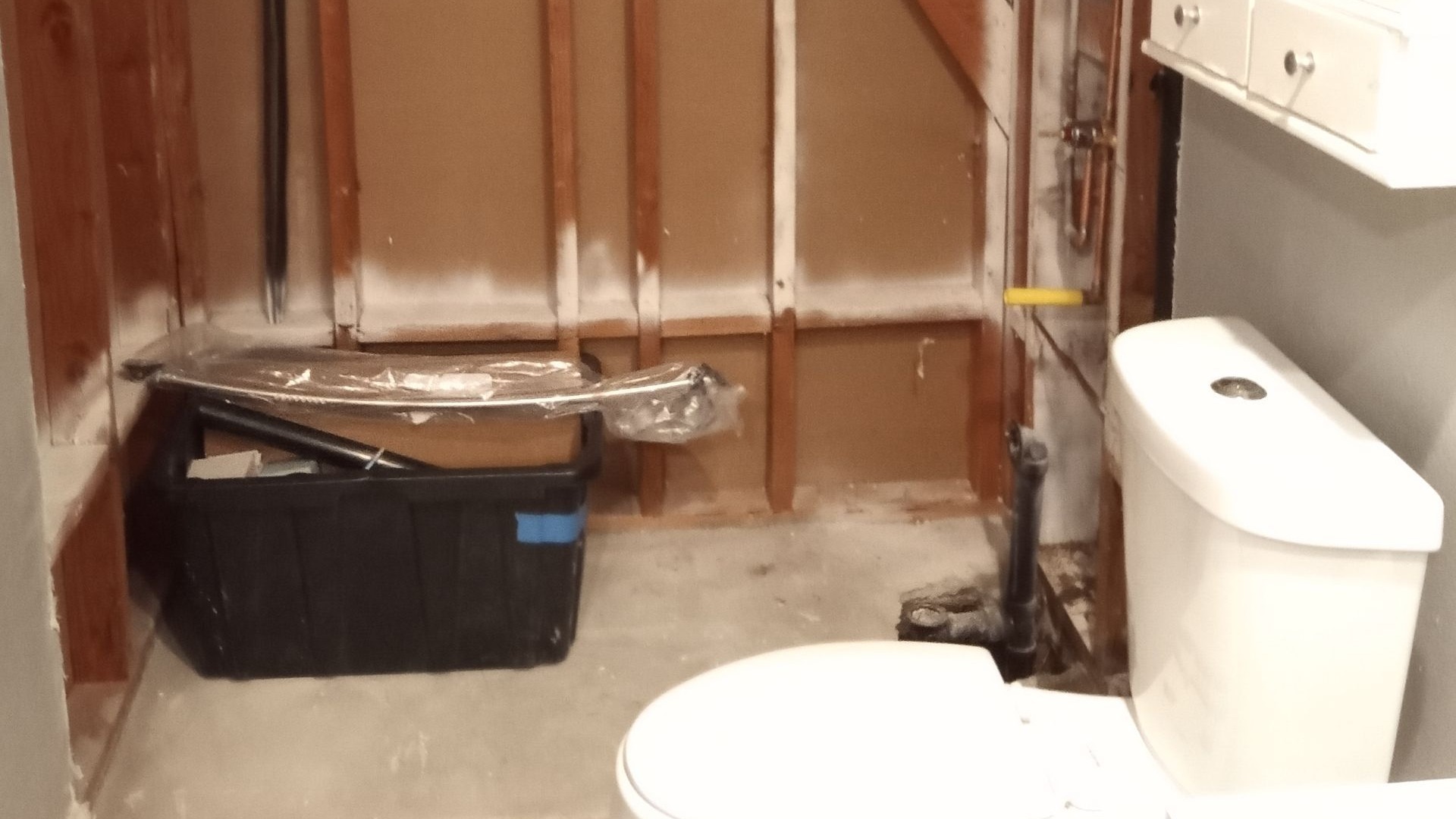
Unplanned costs add up once the walls are open. You might find water-damaged wood after opening the walls. That has to be replaced to protect your home. You might also find mold, which will require a remediator to address. We DO NOT recommend removing mold on your own.
The job itself has material requirements that add up fast. You need moisture-resistant backer board, proper plumbing, and sealant applied correctly. Most people underestimate how much sealant a tub-and-shower installation requires.
On top of that, the sealant professionals use isn't sold in stores. It comes directly from manufacturers and distributors. What you find on a retail shelf is a lower-quality version, and it performs like one.
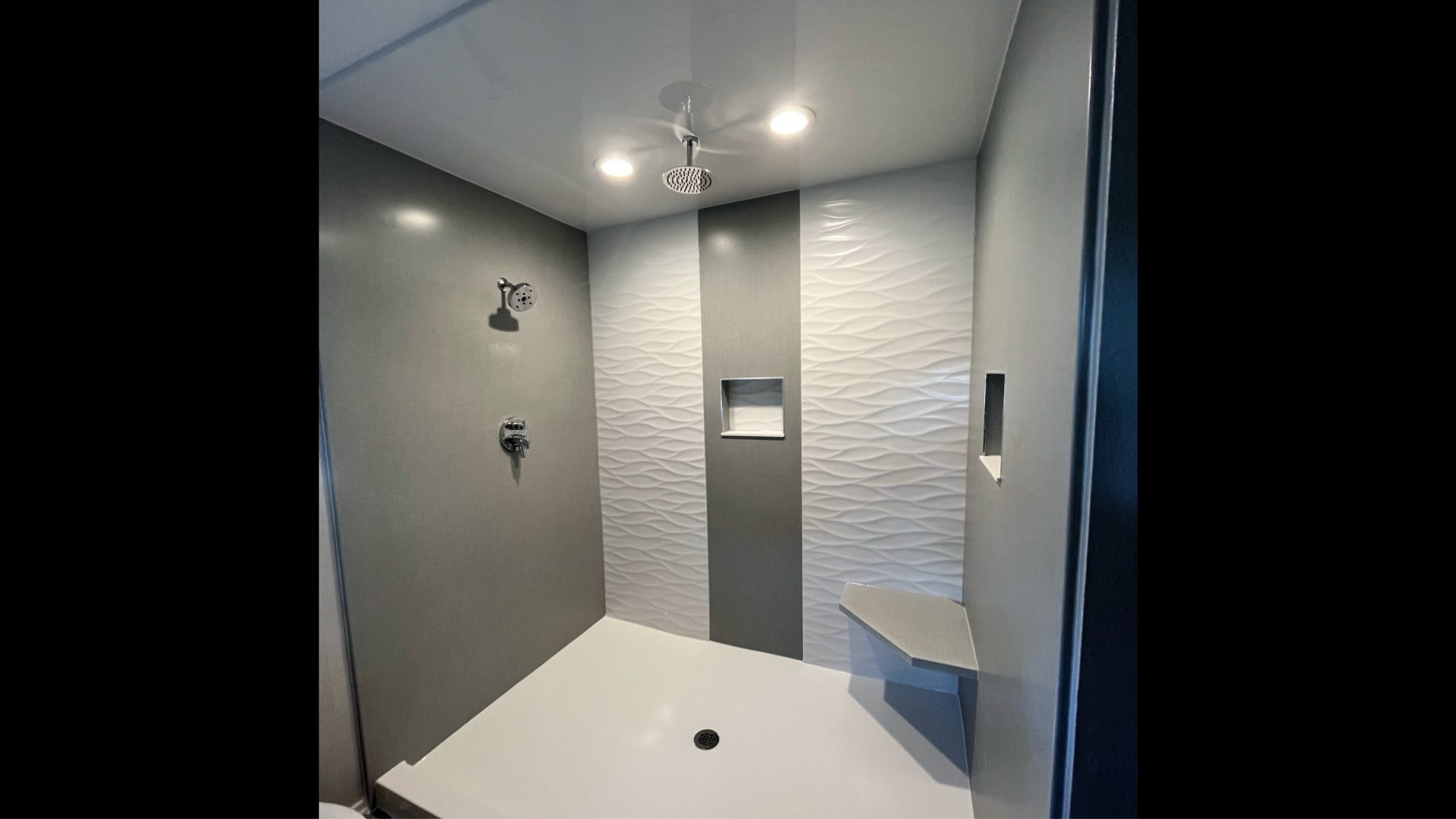
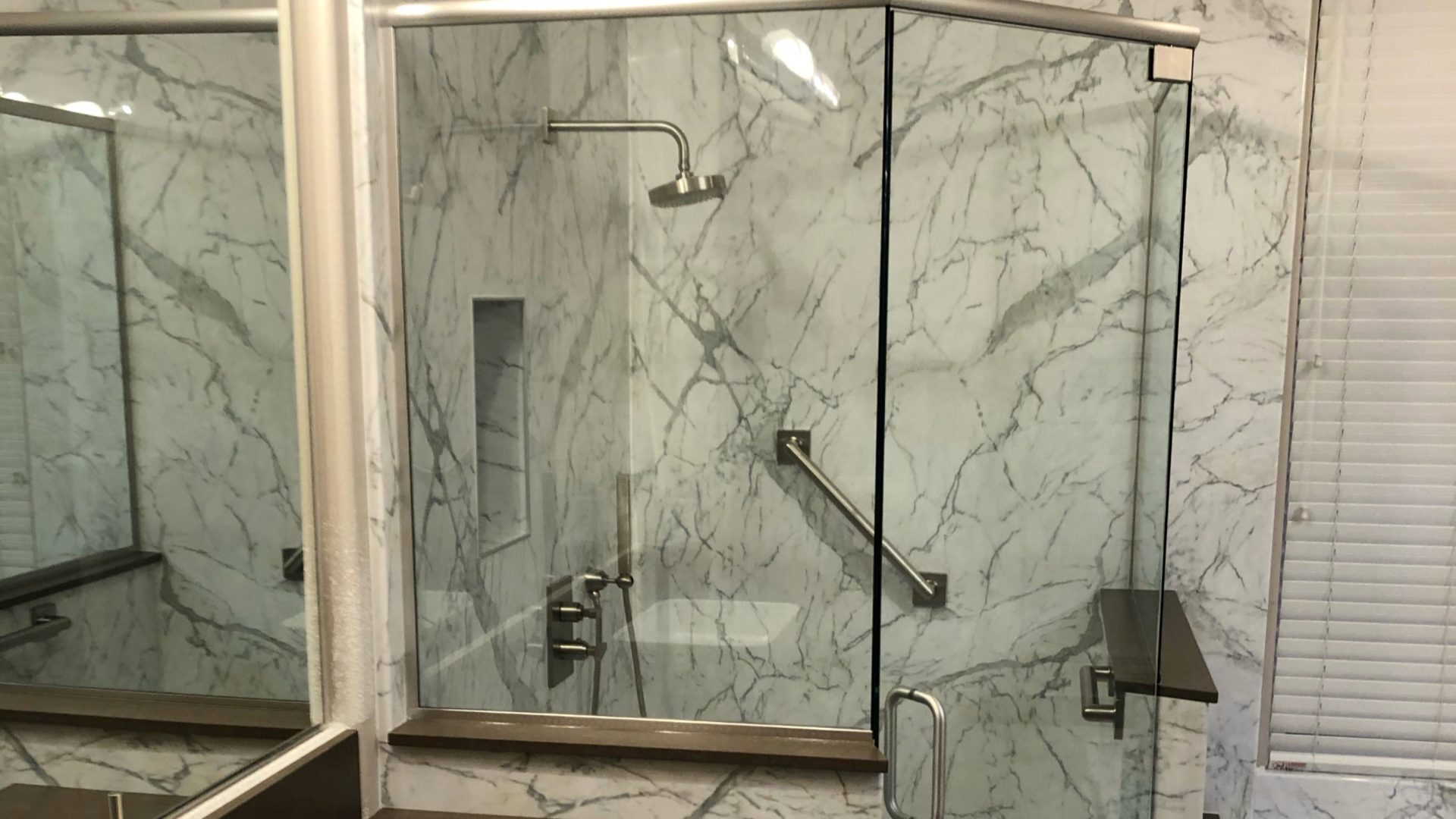
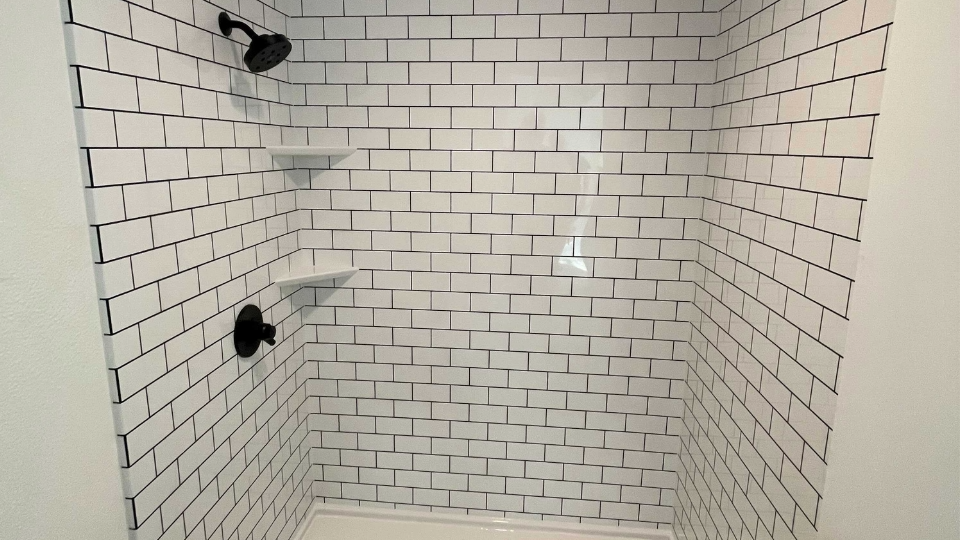
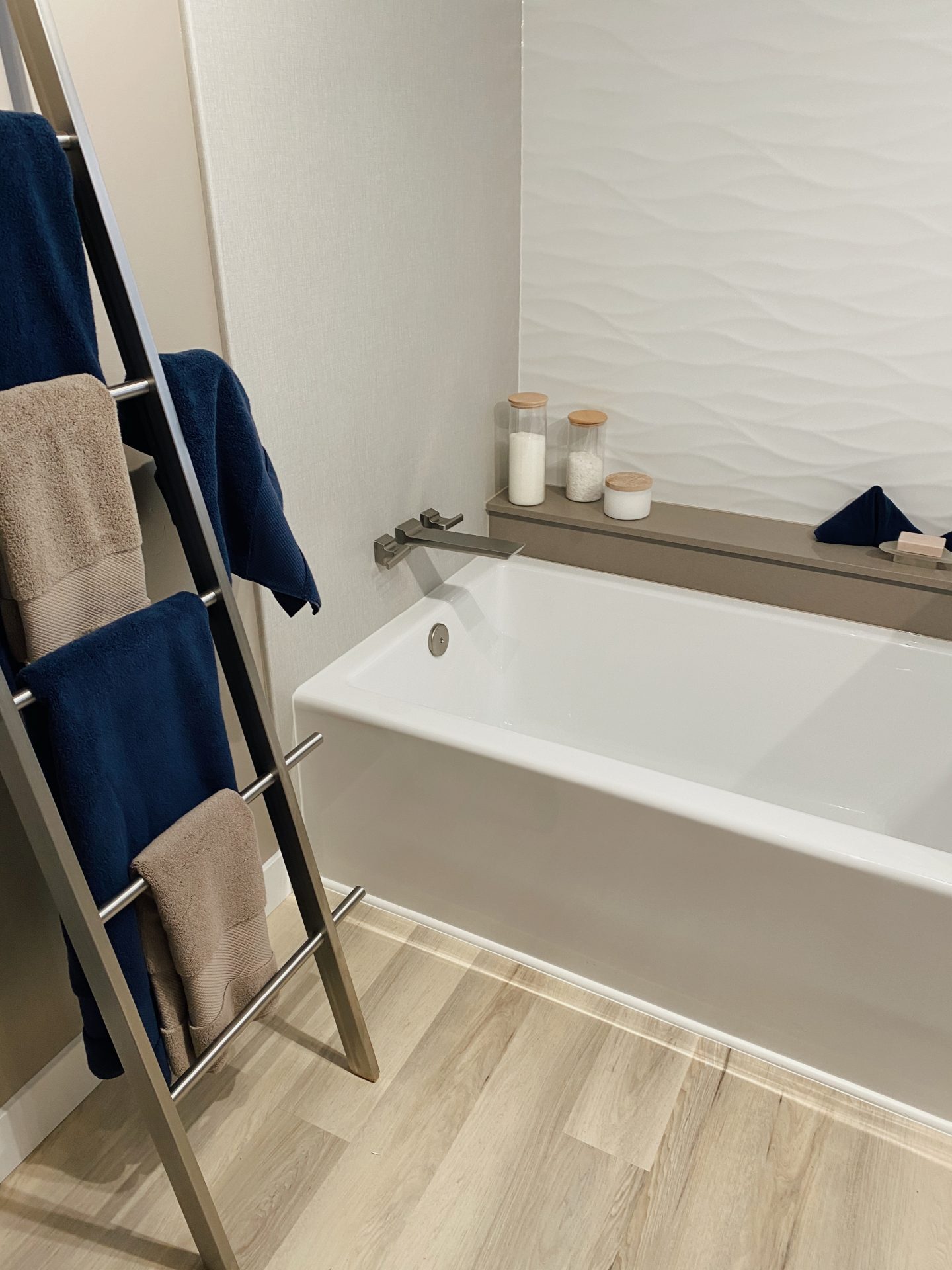
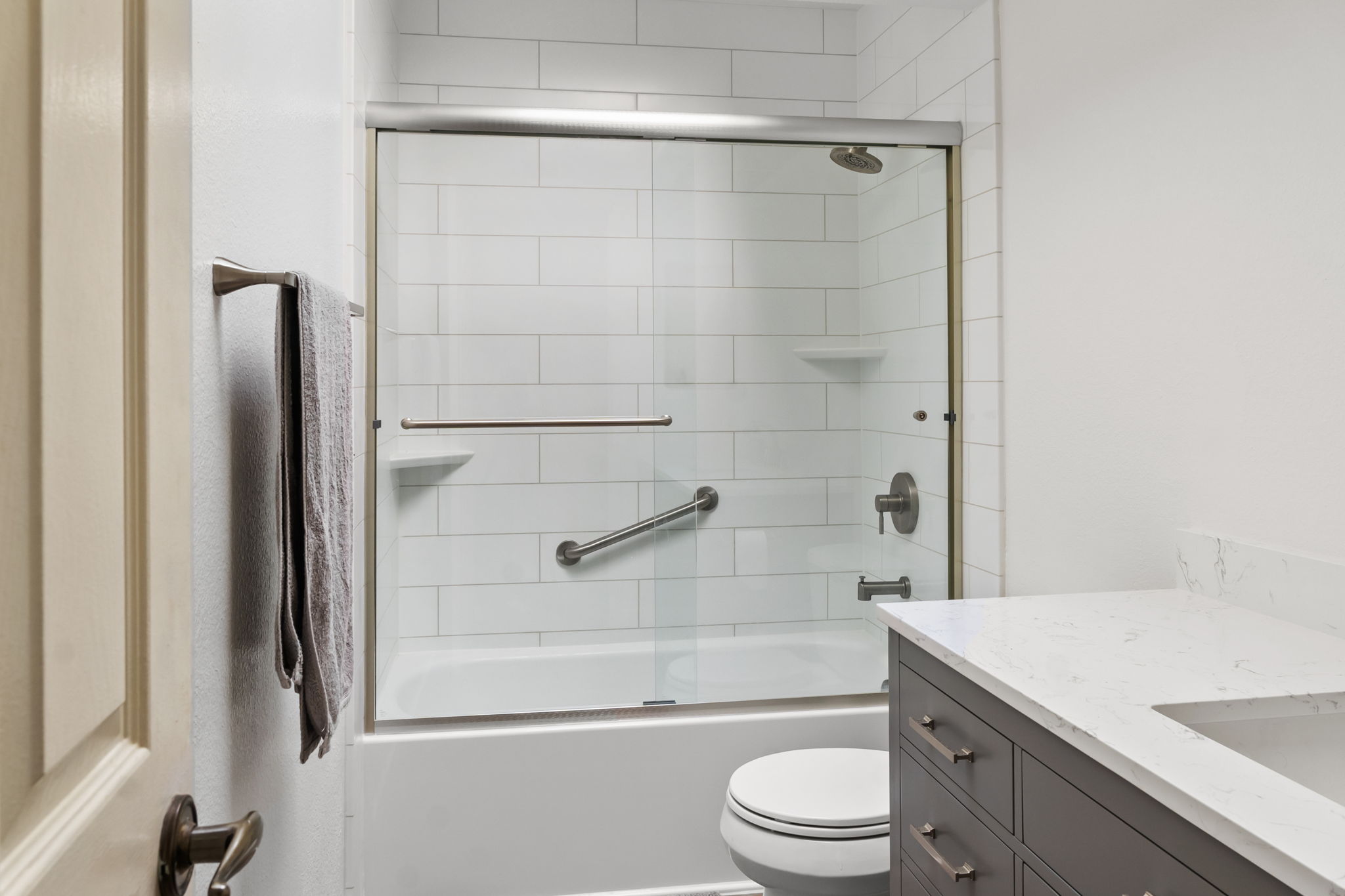
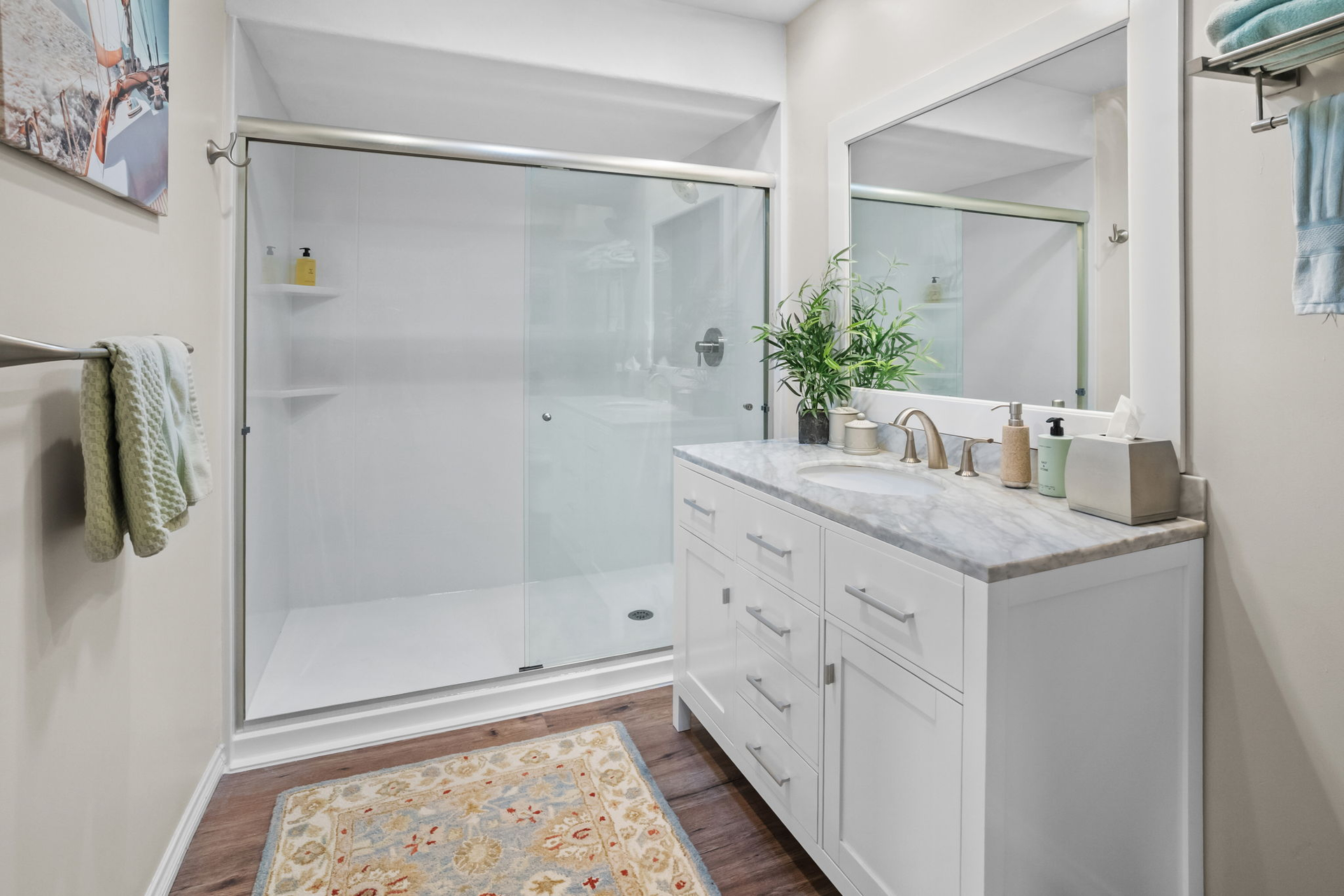
See how a professionally done shower can look in your home.
5 Common DIY Shower Remodel Mistakes
Here are some of the most common DIY shower mistakes homeowners make:
- Sealant lines are done wrong - DIYers frequently apply the sealant unevenly or incompletely. It looks bad, and it doesn't hold. Water gets in behind it, and the damage starts from there.
- The wrong sealant is used - A common mistake is that DIYers will use caulking instead of silicone. Caulking is built for dry areas or spaces that see occasional moisture. In a space that gets hit with water every single day, standard caulk will shrink, crack, and peel.
- Issues with the P-Trap - If you install the P-Trap incorrectly, water won't drain properly from the tub and shower area.
- Skipping or skimming on moisture-resistant backer boards - Moisture resistant backer boards go behind the surface walls before the wall surround or tile goes up. It's what keeps moisture from reaching your home's structure. Many DIYers either skip it, use the wrong type, or don't install it correctly, creating an expensive mistake to fix later.
- Underestimating what’s behind the walls - You might find water damage or mold after demolition starts. A professional should know how to handle both. Many homeowners aren’t prepared and don’t know how to address these issues. They’ll either cover up the problem or make a costly mistake trying to fix it later.
If a DIY tub or shower remodel goes wrong, water damage could travel through floors, onto walls, or seep into lower levels of your home. At that point, you’re paying for another remodel. The most expensive remodel is one you have to do twice.
There's also the insurance issue. If water damage occurs and an unlicensed person did the work, your homeowner's insurance may not cover it.
A DIY project could affect your home’s resale value. Buyers will likely notice lackluster work, which can complicate the sale or come up in negotiations.
How Do the Timelines of a DIY and Professional Bathroom Remodel Compare?
If you’re doing a DIY remodel to save money, you’ll instead pay for it in time spent on your project. DIY timelines depend on how much work you’re willing to put in, which can vary. A toilet swap might take an afternoon. A vanity replacement could be a weekend project. You work at your own pace.
For the tub and shower area, a DIY timeline depends entirely on skill level and how much time a homeowner can devote to it around work and other responsibilities. One homeowner recently shared that his DIY bathroom project took 8 months. When you can only do the remodel work on weekends, and unexpected problems keep coming up, the timeline becomes harder to plan around.
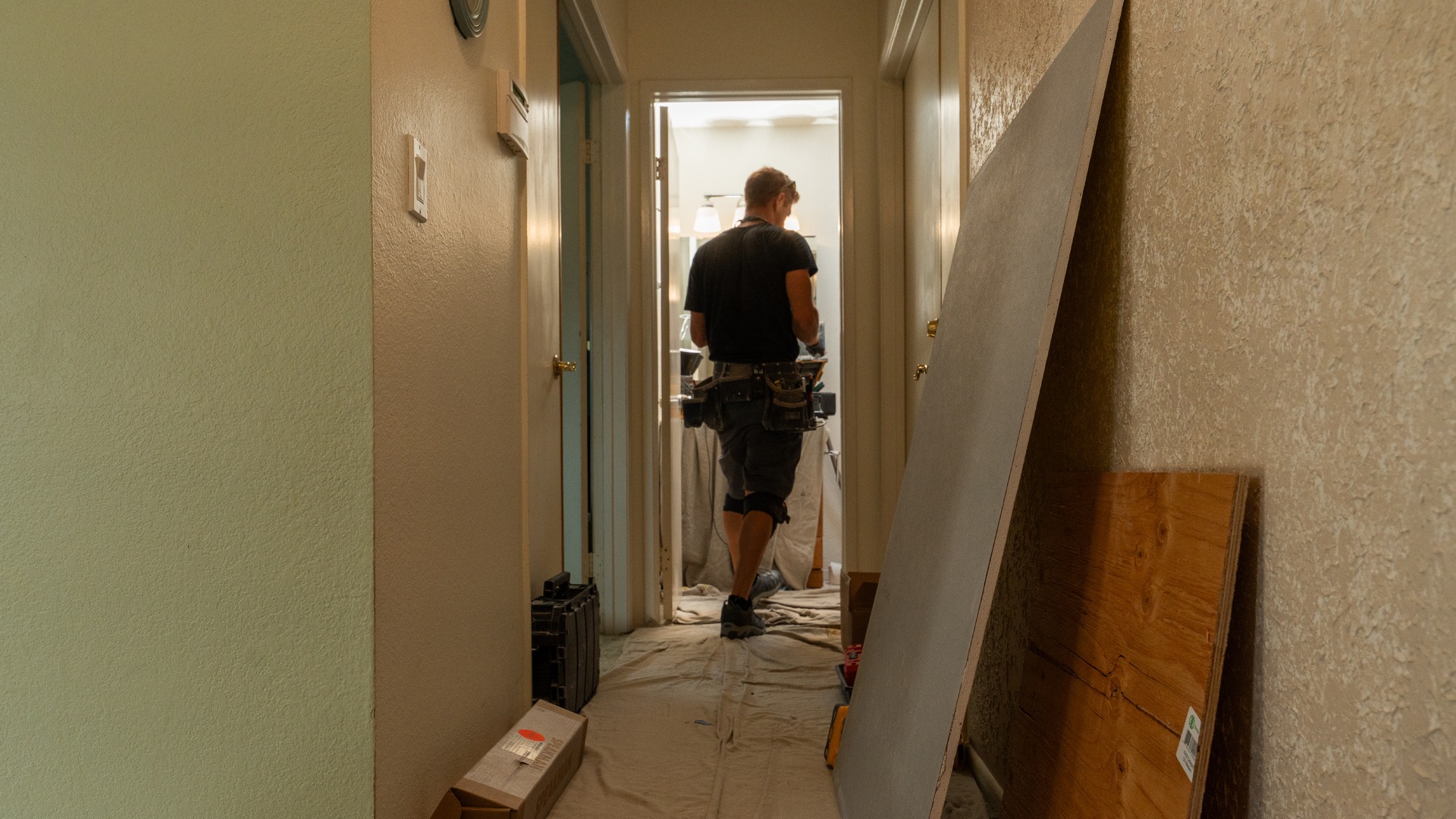
Some general contractors can take 1 to 2 weeks for the tub and shower area alone. A full bathroom remodel usually runs 2 to 4 weeks. Part of why traditional remodels take that long is coordination. A general contractor often works with multiple separate crews or subcontractors. You’ll have crews for the demo, plumbing, tile (if you choose to do tile), and carpentry going in and out of your home. Each crew has its own schedule, and each handoff adds time.
Shugarman's Bath handles the tub and shower area in 1 to 2 days. Our in-house crew specializes exclusively in tub and shower remodeling and handles every part of the job. There are no subcontractors, no scheduling gaps between trades, and no waiting on the next crew to show up. We’re even certified to remediate mold.
DIY vs. Professional Bathroom Remodel Comparison Table
|
Can You DIY? |
Should You Hire a Pro? |
|
|
Toilet Replacement |
Manageable for homeowners. |
Optional. |
|
Vanity Swap |
Yes, unless the sizing is non-standard. |
Optional. |
|
Flooring |
Doable with patience and the right materials. |
Optional. |
|
Tub and shower area |
Possible, but not recommended. |
Yes. Hire someone who understands the tub and shower area well. |
|
Typical cost |
Lower upfront costs; higher risk of costly mistakes and potential complications when selling your home. |
Higher upfront, more predictable final cost with little to no resale risk. |
When Does a Bathroom Remodel Need a Professional?
You might’ve come here thinking a DIY bathroom remodel job is all-or-nothing. The answer is a little more nuanced. A good chunk of work can be done on your own if you choose to go that route.
The tub and shower area is the part of your bathroom where there’s little margin for error. Getting that part wrong is an expensive fix. That's the area worth putting in the hands of professionals.
If you’re looking for professional help, read our article that talks about how to look for a qualified contractor.
Want a professional to look at the tub and shower area? Schedule a free consultation with Shugarman’s Bath to find solutions for the area and get a down-to-the-penny quote.

The opinions expressed in the referenced materials are those of the authors only, not necessarily of Shugarman’s Bath. While these referenced materials are useful in answering generalized questions, each bathroom is unique. For a particular question about your tub or shower remodeling project, contact your Shugarman’s Bath consultant.
Topics:


.png?width=1914&height=1075&name=Screenshot%20(174).png)


.jpg?width=1440&height=1080&name=Bazaart_CF3F9E2C-23B2-4FB0-8B3B-1D470C00D9FE%20(1).jpg)