
What Matters Most
|
Maybe you've started keeping one hand on the wall while you shower. Maybe your mom skipped her shower yesterday because no one else was around to help if something went wrong. A slip in the bathroom can easily turn into an emergency room visit.
Shugarman’s Bath has completed more than 6,500 tub and shower remodels. Many of those projects were installations for older adults or people with mobility issues. Those projects involved adding safety features to reduce the risk of falling.
This article covers who faces the highest risk of a bathroom fall, why that risk is higher for certain groups, and what changes can make your bathroom safer.
Table of Contents:
- Who Is Most at Risk of a Bathroom Fall?
- Why Are Seniors and Others More Likely to Fall in the Bathroom?
- What Can Lower the Risk of a Fall in the Shower?
Who Is Most at Risk of a Bathroom Fall?
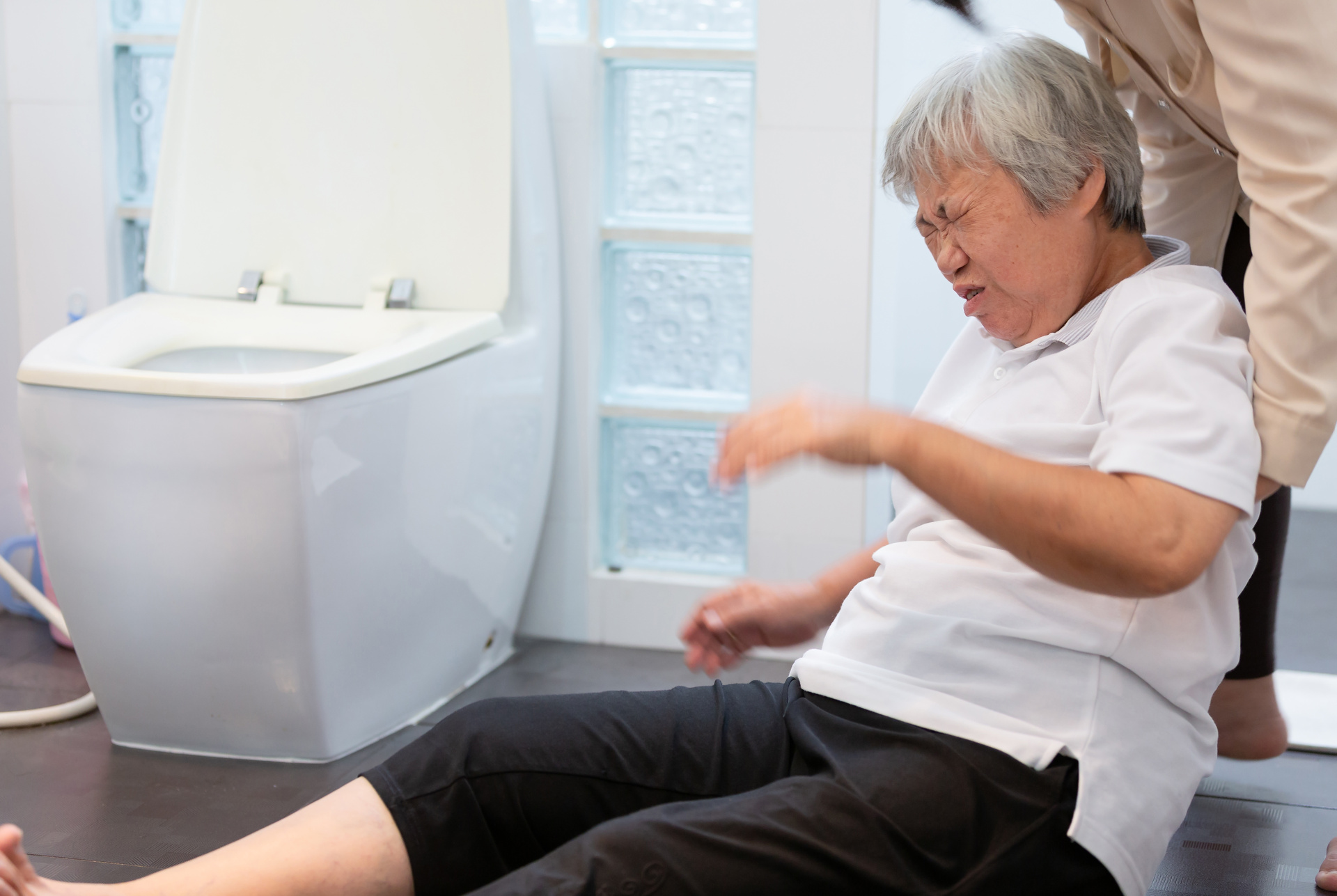
Older adults, or senior citizens, face the highest risk of a bathroom fall, especially with wet floors. Falls are the leading cause of injury-related death for people 65 and older. They caused more than 38,000 deaths in 2021. Emergency rooms treated almost 3 million older adults for a fall that same year.
Others who are at risk include anyone with arthritis, vertigo, or neuropathy. People with disabilities or special needs face similar risks.
Many homes were not built with people with disabilities in mind. Fewer than 50% of homes with someone who has a mobility disability have a bathroom big enough for a wheelchair. Fewer than 45% have grab bars installed.
Why Are Seniors and Others More Likely to Fall in the Bathroom?
The bathroom has several hazards that make it difficult for people with less balance, strength, or vision. Here are some reasons seniors and others are likely to fall in the bathroom:
- A slick, wet floor is risky for anyone, but it’s harder to recover if you have a weaker grip or use a cane or walker.
- Tubs have a 15-19 inch threshold and are tough to step over. This is difficult for seniors, people with arthritis, neuropathy, or vertigo, and anyone using a wheelchair or walker.
- It’s hard to catch your balance when grab bars are missing or aren’t secure.
- Poor lighting hides potential wet spots and makes it difficult to judge where you’re stepping.
- A cramped bathroom is difficult to move through with a mobility aid, especially when clutter becomes a tripping hazard.
- If there isn’t a place to sit, standing the entire shower gets tiring.
When seniors fall, recovery often takes longer, and the injuries are often more serious.
What Can Lower the Risk of a Fall in the Shower?
Here are several changes that can lower the risk of falling in a bathroom:
- Switch to a walk-in shower. A walk-in shower with a low or zero threshold removes the tub someone would have to step over.
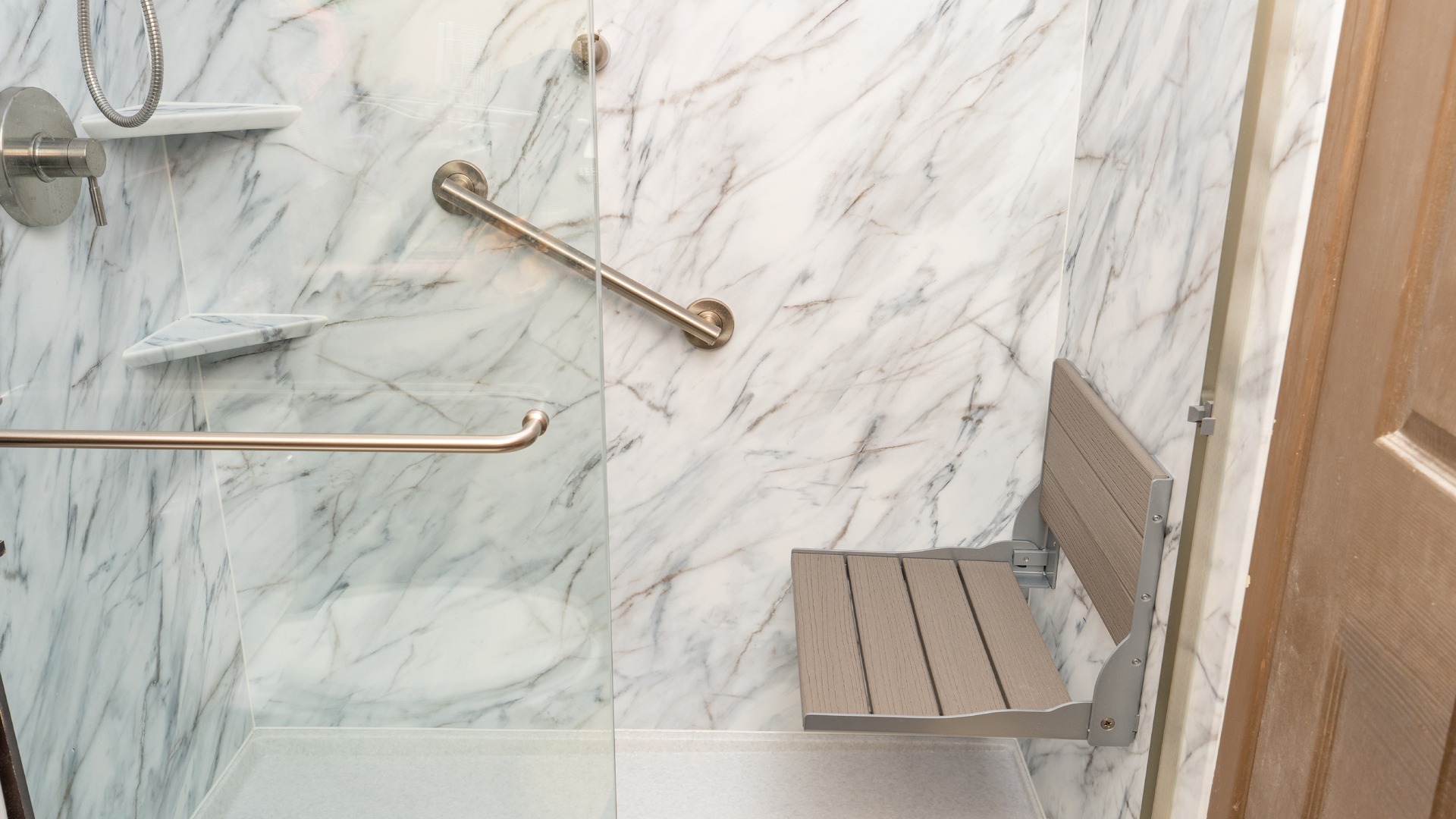
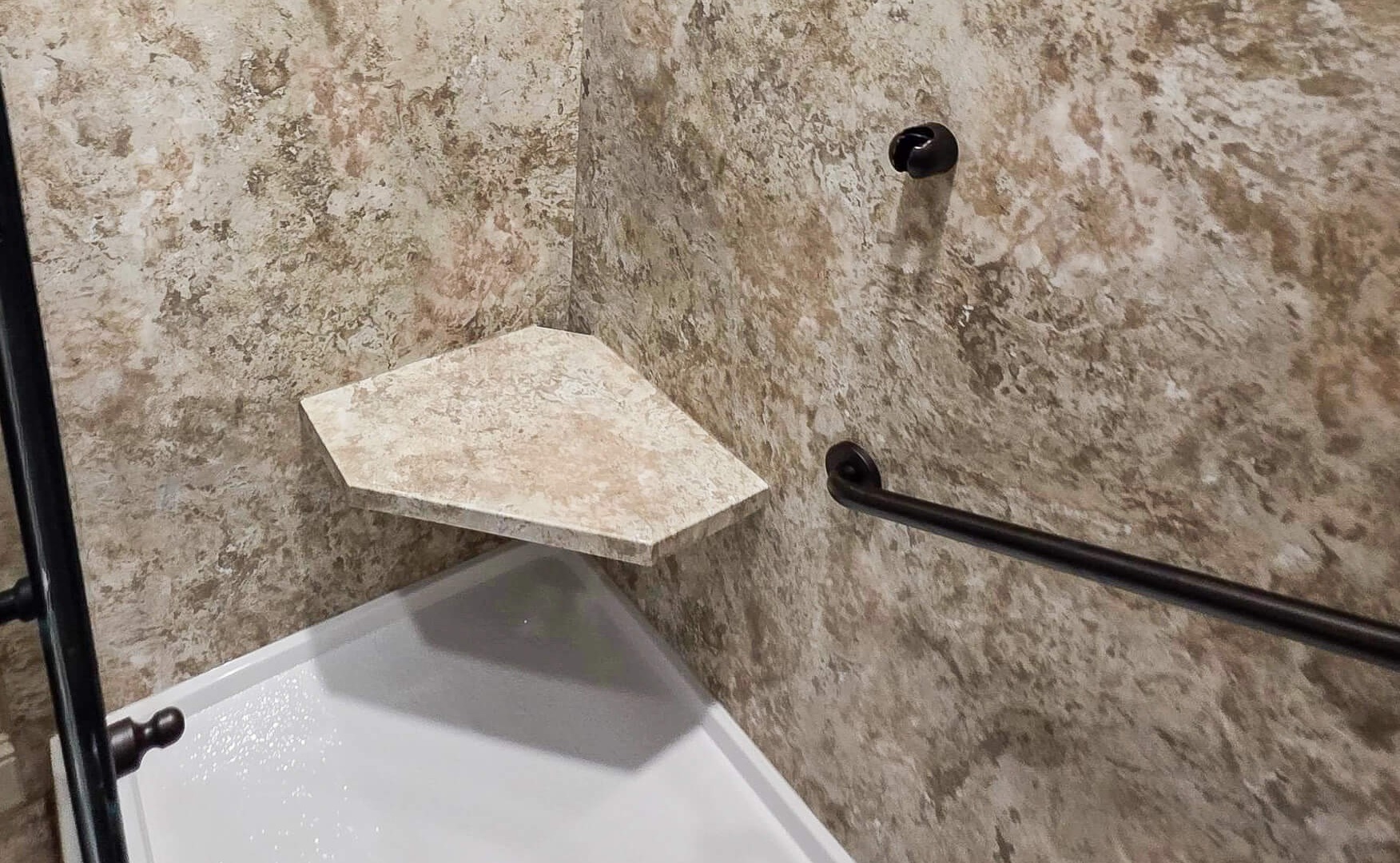
- Add permanent grab bars that support your weight. Anchor grab bars into blocking behind the walls. They can be angled to make it easier for someone to pull themselves up. The standard placement is one at the shower entry and one inside.
- Add a shower seat. Whether it’s built-in or portable, a seat means you don’t have to stand through the entire shower. This helps with fatigue, mobility, and balance issues.
- Make sure the flooring is slip-resistant. A textured shower base gives your feet more grip than an old or worn surface.
- Make improvements to bathroom lighting. Brighter lighting makes it easier to see wet spots and judge footing.
- Place a non-slip mat outside the shower for a safe landing spot when stepping out of the tub or shower.
- Add a grab bar near the toilet. A towel rack or toilet paper holder won’t cut it when you need something fixed and reliable to support full body weight.
- Add a comfort-height toilet, which sits 2-3 inches higher than a standard toilet. This makes standing easier. There is also the option to add a raised toilet seat.
- Clear clutter in the bathroom to remove tripping hazards.
You don’t need to do a full bathroom remodel to reduce fall risk. A shower remodel replaces the hazards in a commonly wet and risky area.
How Do You Start Making Your Bathroom Safer?
If you or someone in your home faces any of the risk factors above, start planning changes now. Don't wait for a fall to take the risk seriously. You don’t want to plan when someone is in the hospital.
Now that you know who's most at risk of a bathroom fall, read our guide on how to design an aging-in-place bathroom.
If you have questions about your bathroom or need suggestions on which changes to make, contact Shugarman’s Bath today to speak with an expert.

The opinions expressed in the referenced materials are those of the authors only, not necessarily of Shugarman’s Bath. While these referenced materials are useful in answering generalized questions, each bathroom is unique. For a particular question about your tub or shower remodeling project, contact your Shugarman’s Bath consultant.
FAQs on Making a Safer Bathroom:Q: How long does a typical shower remodel take?A typical shower remodel takes 1-2 days. More complex projects in larger areas can take longer. Q: Does Shugarman's Bath Do Repair Work?No, Shugarman's Bath does not do general repair work. Repairs are temporary fixes that buy time but don't solve the underlying problem. Most homeowners end up paying for the same repair more than once, or eventually replacing the materials anyway after spending money trying to maintain them. Q: Do you remodel the whole bathroom or just the tub and shower area?We're specialists in the tub and shower area. That's where our focus stays. For the remainder of the bathroom work, you can hire a licensed handyman or a general contractor. |